


Driving Plant-Based Beverage: Functional Solutions for a Growing Market
As consumers seek affordable daily indulgences, plant-based beverages are gaining popularity for their creamy textures, rich flavors, and functional benefits. Brands are innovating with foodservice-inspired drinks that offer both pleasure and nutrition. Lasenor supports this evolution with high-performance emulsifiers and functional systems that improve stability, texture, and overall product appeal.
Meeting the Demand for Everyday Indulgence
Reinventing Plant-Based Products for a New Generation of Consumers
As vegetarian and plant-based diets continue their global ascent, consumers are no longer just seeking alternatives — they crave functional, desirable, and indulgent experiences that rival traditional animal-based products. The increasing environmental awareness and demand for sustainable lifestyles are pushing brands to reimagine the sensory and nutritional appeal of plant-based formulations.

Figure 1. The percentage of consumers who report enjoying a treat-like drink or dessert at least once daily. Sample: 1,000 internet users aged 16–18 per market.
Lasenor is perfectly positioned to support the food industry with high-performance emulsifiers and functional systems in this dynamic scenario.
Understanding the Plant-Based Beverage Landscape
The Evolution of Plant-Based Beverages
Initially focused on milk and meat replacements, the plant-based movement now covers a broader spectrum — from ready-to-drink wellness beverages to dessert-style options for indulgent moments.
According to 2025 market reports, treating oneself has become a daily habit. The rising cost of traditional indulgences is opening the door for plant-based beverages to position themselves as more affordable, yet premium-perceived alternatives.
These drinks are no longer seen as mere substitutes. Thanks to improvements in flavor and texture, they’ve evolved into desirable products, featuring creamy textures, complex flavors, and added functional benefits.
Young European consumers increasingly report that plant-based drinkable yogurts taste as good as dairy products. In the U.S., nearly 47% of households consume plant-based alternatives because of the taste. This allows brands to retain loyal customers and attract new audiences through sensorially rich product lines.
Technical Considerations in Plant-Based Beverage Formulation
Due to the nature of their ingredients, plant-based beverages pose unique formulation challenges. Unlike dairy milk, they are aqueous dispersions with low solid content, leading to phase separation, sedimentation, and unstable emulsions.

Lasenor Solutions for Plant-Based Beverage Applications
Plant-Based Milks and Non-Dairy Drinks
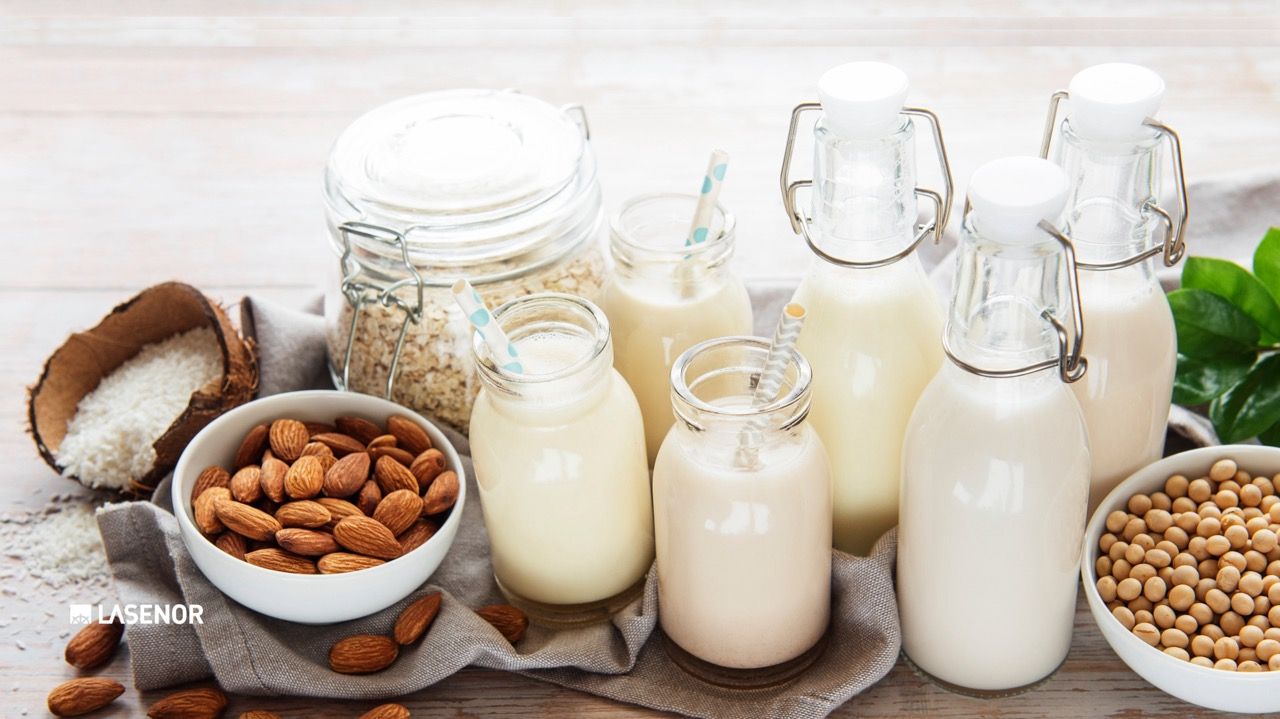
Typically formulated with water and a plant base (almond, oat, soy, etc.), these beverages require phase stability to ensure a pleasant, uniform texture. VEROLEC® HE (soy) and GIRALEC® HE (sunflower) hydrolyzed lecithinand the SWISSGUM® D functional system are designed to emulsify and stabilize high-water-content beverages. Incorporating these LASENOR solutions into plant-based beverage production yields significant improvements in the following areas:
- Prevention of phase separation and enhanced emulsification
- Improved product viscosity
- Better mouthfeel
- Enhanced texture and product homogeneity
Alignment with Global Trends
According to 2025 market research, plant-based beverages are increasingly considered dessert-style, combining flavors with creamy textures. Consumers are embracing new formats such as:
- Coffee creamers
- Flavored shakes
- Refreshing cocktails, with or without alcohol
These options deliver pleasure, affordability, and versatility at home and in barista-style experiences.
We invite you to contact our team to explore how we can support your product development with tailored lecithin solutions.
References
- Mintel Group Ltd. (2025). Plant-Based Drinks: The Next Craveable Treats.
- McClements, D. J. (2015). Food Emulsions: Principles, Practices, and Techniques. CRC Press.
- Dickinson, E. (2009). Hydrocolloids as emulsifiers and emulsion stabilizers. Food Hydrocolloids, 23(6), 1473–1482.
- Norn, V.; (2015). Emulsifiers in food technology. 2nd ed. Oxford: Wiley-Blackwell. ISBN 978-0-470-67063-7