The art of making ifunctional ce cream with SWISSGUM®
Ice cream has evolved from its origins in ancient civilizations to become a popular dessert worldwide, with a growing variety of options such as sorbets, gelati and vegan alternatives. Today, texture and taste are essential to stand out in the competitive frozen dessert market.
Ice cream has its roots in ancient civilizations that mixed snow with fruit and honey. The Romans and Chinese were pioneers, but it was not until the 17th century when modern ice cream emerged in Europe. It was 200 hundred years later, with the advent of machines that mass production popularised it worldwide.
The evolution of frozen desserts has expanded the options beyond traditional ice cream, with sorbets, gelati and vegan alternatives. This responds to gastronomic trends and the growing demand for healthier and clean label options.
Factors influencing ice cream quality
Functional ice cream depends on key factors such as a smooth and creamy texture, a balanced and authentic flavour, and an adequate fat content to add body. In addition, the balance between ingredients, the use of stabilizers to improve consistency, the amount of air incorporated (overrun), and proper freezing are essential to achieve a smooth, stable and delicious product. The combination of these elements guarantees a pleasant and complete ice cream experience:
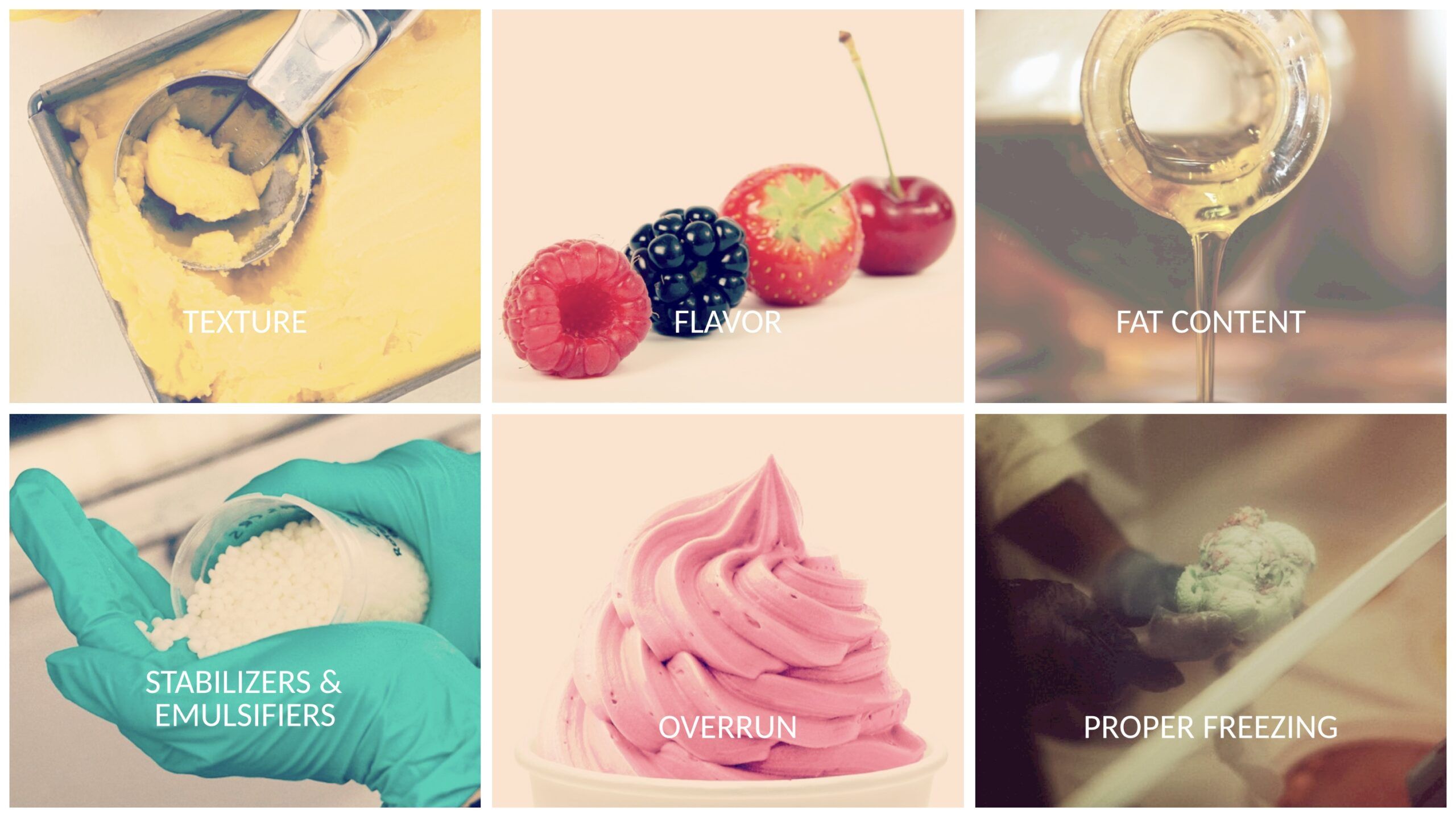
- Texture: obtained by controlling the incorporated air (overrun – the amount of air incorporated during freezing, affects the lightness of the ice cream), the size of the ice crystals and the stability of the ingredients. The balance between water, sugars, fat and solids is essential to avoid large crystals and to achieve a smooth and stable texture.
- Fat content: milk fat improves softness, body and mouthfeel. Higher quality ice creams tend to have more fat, which provides a richer and creamier texture. In vegan or low-fat options, other ingredients such as vegetable oils or stabilizers fulfil this function.
- Stabilizers and emulsifiers: ingredients such as LBG gum, guar gum or carrageenan within the SWISSGUM F range improve consistency, water retention and prevent the formation of large ice crystals, improving creaminess.
- Proper freezing: fast freezing prevents the formation of large crystals, improving the texture of the ice cream. A slow freezing process can result in hard and grainy ice cream.
- Flavour: intense, balanced and natural, with no artificial aftertaste. High-quality ingredients, such as dairy, fruit, chocolate or vanilla, are crucial for an authentic taste.
Functional systems applied in various types of ice cream and frozen desserts
SWISSGUM® functional systems in ice cream production play a crucial role in achieving products with the desired texture and quality. Ingredients such as emulsifiers make it possible to combine liquids that would not mix naturally, while stabilizers prevent the formation of ice crystals, which is key to a smooth texture. These systems are also essential for developing low-fat ice creams, helping to maintain creaminess and stability, avoiding watery textures.
In addition, with the increasing demand for lactose-free, low-calorie or high protein products, functional systems make it possible to create alternatives that do not sacrifice quality, texture or taste. Another challenge they address is syneresis, or liquid separation, which can occur during freezing or thawing. With the proper use of stabilizer systems, water biding is improved, and this undesirable effect is avoided, ensuring that the ice cream keeps its consistency and attractive appearance throughout its life cycle. This allows manufacturers to offer more versatile, healthier and higher quality ice cream.

Through the characteristics achieved with the functional systems of the SWISSGUM® category, it is possible to optimize the quality of functional ice cream and frozen desserts, depending on the type of product:
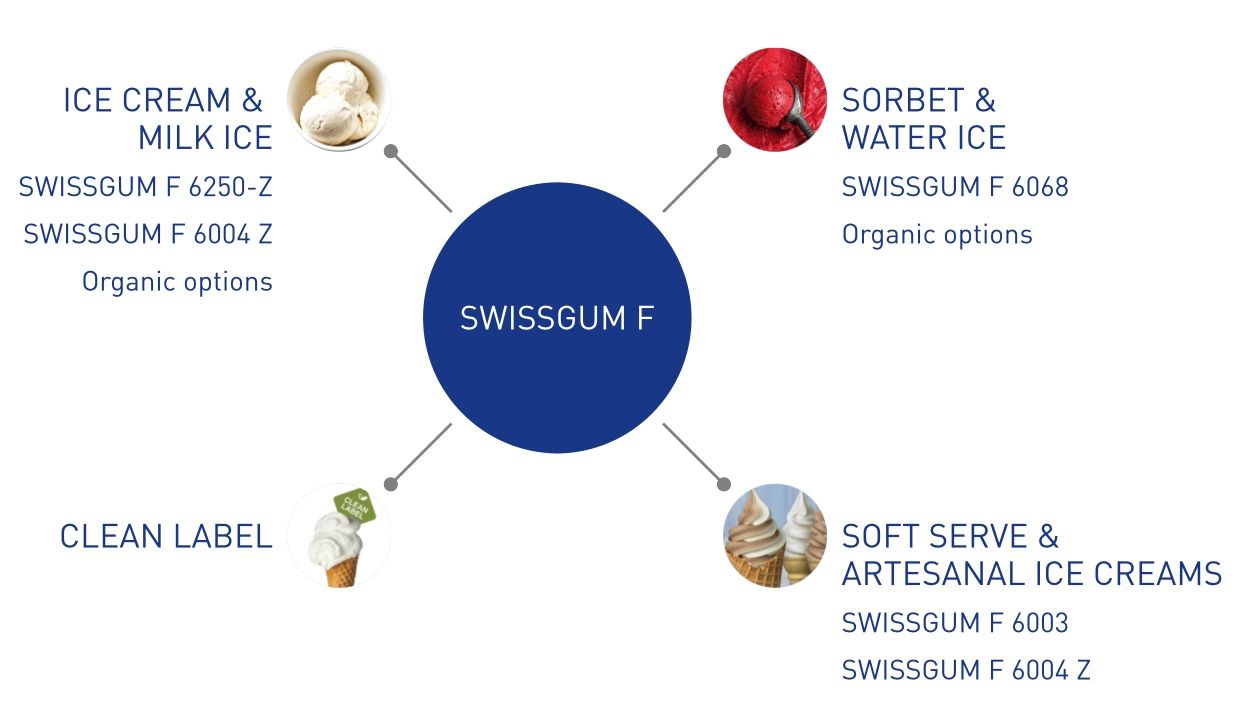
Ice Cream & Milk Ice – are two types of ice cream that vary mainly in their fat content. Traditional ice cream contains at least 10% milk fat, which gives it a creamy texture and an intense flavour. In contrast, milk ice has a lower fat content, between 2.5% and 8%, which makes it lighter, and potentially less creamy.
Clean Label – product alternatives that are not categorized with the E-number. The additives used may contain starches, inulin and gelatines. They are often used in ice cream based on vegetable milks (almond, coconut, oat).
Sorbet & Water Ice – are water-based ice cream products, which differ from traditional ice creams in the content of water and fruit, also they can contain fat and protein (Sherbet) or no fat and protein (Sorbet). However, water ice, which do not undergo overrun and do not contain emulsifiers, are based on water, flavouring and colouring.
Soft Serve & Artesanal Ice Creams – are products characterized by their soft and light texture, due to less incorporation of air during the freezing process. For artisanal products, the highlight is due to the use of natural and fresh ingredients.