dairy products

SWISSGUM®D and LASENOR®TP: Shaping the Future of Dairy Products

The dairy industry is evolving, driven by demand for clean labels, and healthier options like plant-based or high-protein products. Lasenor addresses these needs with solutions like SWISSGUM® D and LASENOR® TP, enhancing texture, stability, and production efficiency.

The dairy sector has long been a cornerstone of global food consumption, encompassing a variety of products from fermented goods like yoghurt and kefir to cheeses, creams, and milk-based desserts. Recently, consumer demand has shifted toward cleaner labels, indulgent experiences, and health-focused alternatives such as low-fat, high-protein, or plant-based options. Lasenor offers specialized ingredient solutions designed to enhance product performance. SWISSGUM® D stabilizing systems and LASENOR® TP, activated emulsifiers have been specifically developed to address the complexities of modern dairy products, ensuring premium textures, long-lasting stability, and efficient production.

Current Trends in the Dairy Industry

Several key developments are shaping the dairy industry today, bringing new challenges and opportunities for manufacturers:

Sin titulo 7

CLEAN LABEL & NATURAL PRODUCTS Consumers increasingly seek fewer additives and artificial ingredients, favouring clean-label solutions. Organic and plant-based alternatives are also gaining significant market share.

sensory

INDULGENCE & SENSORY EXPERIENCE
There is a growing demand for rich, creamy textures that provide an indulgent eating experience, even in products that are lower in fat or sugar.

Sin titulo 7 1

EXTENDED SHELF LIFE
 As the dairy market expands globally, products must maintain quality over longer periods and endure various environmental conditions during transport and storage.

Sin titulo 7 3

HIGH PROTEIN & FUNCTIONAL PRODUCTS
Dairy products, particularly high-protein yoghurts and beverages, continue to rise in popularity, necessitating solutions that enhance protein stability and texture without increasing viscosity.

Technical Challenges in Dairy Production

Manufacturers today face several technical challenges in creating modern dairy products, including:

  • Emulsion and texture stability in cream-based products, processed cheese, yoghurts, and milk-based drinks.
  • Preventing syneresis (water separation) in fermented products like yoghurt.
  • Improving shelf life while maintaining sensory qualities such as texture and mouthfeel.
  • Ensuring protein stability in high-protein drinks and low-viscosity dairy applications.

SWISSGUM®D: a functional solution for the dairy industry

The SWISSGUM®D stabilizing systems deliver outstanding texture, stability, and product consistency across a wide array of products, including fermented dairy, plant-based products, processed and fresh cheeses, as well as dairy drinks and desserts.

swissgum D products

SWISSGUM®D for fermented products

  • SWISSGUM®D-3347 & D-3349: Ideal for set or stirred yoghurt, these formulations are gelatine-free, improve mouthfeel, and reduce syneresis. SWISSGUM®D-3347 has the added advantage of having only one E-number, making it more appealing for clean-label solutions.
  • SWISSGUM®D-3276: A great option for drinking yoghurt, this formula is E-number-free, enhances mouthfeel, prevents syneresis and its suitable for vegetarians.
  • SWISSGUM®D-3172: Designed for sour cream or ayran, it is gelatine-free, provides a smooth mouthfeel, prevents syneresis, and is vegan-friendly.
  • SWISSGUM® BIO-7052: Tailored for organic or plant-based yoghurt, offering a creamy mouthfeel and preventing syneresis, ideal for products targeting the organic segment.
  • SWISSGUM® BIO-7552: For fermented dairy and plant-based drinks, providing excellent mouthfeel and stability in products with a pH below 5.0.

SWISSGUM®D for Fresh and Processed Cheese

  • SWISSGUM®D-3025-N & D-3044: These formulas provide a firm texture and help avoid stickiness in processed cheese slices. SWISSGUM®D-3044 is particularly useful for its good re-meltability and shiny surface.
  • SWISSGUM®D-3107 & D-3315: Offering textures ranging from honey-like to spreadable, these products ensure a creamy, full-bodied mouthfeel with no syneresis. SWISSGUM®D-3107 controls viscosity during filling, while D-3315 ensures consistency at ambient temperature.
  • SWISSGUM® BIO-7051: Ideal for organic, plant-based mozzarella, this formula ensures a pleasant mouthfeel and sliceable texture, requiring packaging before gelling begins.

SWISSGUM®D for Dairy Drinks and Desserts

  • SWISSGUM® D-3047: Perfect for barista puddings with a slightly gelled texture and a pleasant mouthfeel, adaptable for hot or cold processes.
  • SWISSGUM® D-3329 & D-3171: Suitable for panna cotta and plant-based alternatives, these solutions provide a creamy texture with slight jellification during cooling processes, offering good viscosity and stability.
  • SWISSGUM® BIO-7023: Developed for plant-based drinks, this organic formula guarantees a homogeneous texture, good viscosity, and improved mouthfeel, appropriate for pasteurized or UHT products.

LASENOR®TP: activated emulsifiers for dairy products

In addition to stabilizing systems, Lasenor offers a range of activated emulsifiers under the LASENOR®TP brand. These emulsifiers are specifically designed for whipping creams, desserts, and other aerated dairy products, where texture, volume, and stability are crucial.

whipping cream

Whipping Creams and Aerated Products

Whipping creams are prized for their light, fluffy textures. The LASENOR®TP range provides activated emulsifiers that ensure effective aeration, form stability, and adjustable viscosity:

  • Increased volume through effective aeration
  • Enhanced form stability to prevent water loss or collapse
  • Adaptable viscosity suited for achieving the desired consistency

Case Study: Enhancing Dairy Products with Lasenor Solutions

Lasenor’s SWISSGUM®D and LASENOR®TP h have significantly improved the production of various dairy products, allowing manufacturers to remain competitive in a rapidly changing market:

  • A milk-based beverage manufacturer used SWISSGUM®D to improve fat stabilization, preventing separation and extended shelf life.
  • A processed cheese producer incorporated SWISSGUM®D to improve elasticity, reduce costs, and enhance quality.
  • A whipping cream supplier utilized LASENOR®TP to boost aeration and form stability, which shortened production time and ensured a consistent product.
case study

As the dairy industry continues to evolve, the demand for advanced, customized solutions is greater than ever. Lasenor’s SWISSGUM®D and LASENOR®TP provide manufacturers with the flexibility and performance necessary to meet the expectations of today’s consumers—from indulgent textures to clean-label ingredients.

By partnering with Lasenor, you can ensure that your dairy products meet the highest standards of stability, texture, and sensory appeal.

Ready to elevate your dairy products? Contact us today to discover how our SWISSGUM®D stabilizing systems and LASENOR®TP emulsifiers can revolutionize your product lines, giving unmatched quality and performance.

gulfood manufacturing 2024

LASENOR & SWISSGUM at GULFOOD MANUFACTURING 2024

Lasenor and SWISSGUM showcased their innovative food solutions at Gulfood Manufacturing 2024 in Dubai, reinforcing their leadership and expansion in the Middle East. They connected with industry leaders, presented products like lecithin and emulsifiers, and aligned with market trends. This strengthened partnerships and highlighted their commitment to quality and innovation.

From November 5th to 7th, Lasenor and SWISSGUM participated in Gulfood Manufacturing 2024, one of the world’s most influential events for the food manufacturing industry. Held annually in Dubai, this event unites top industry players, manufacturers, suppliers, and innovators from across the globe. Our joint participation underscores both companies’ commitment to excellence and global expansion, as we showcased our high-quality, innovative solutions for the food industry, further strengthening our presence as trusted partners in the sector.

Gulfood Manufacturing is renowned for its focus on advanced food processing and packaging solutions, providing a platform for companies to engage with emerging technologies, build strategic partnerships, and exchange expertise. By participating in this renowned event, Lasenor and Swissgum highlight their shared dedication to advancing solutions that meet the demands of today’s dynamic food market, contributing to the industry’s growth and evolution.

A Strategic Presence in the Middle East

The participation in this event is part of our strategic expansion in the Middle Eastern market, where we have both established strong reputations for quality and innovation. This international platform allowed us to connect with a broad network of clients, distributors, and industry leaders, reinforcing our global footprint and expanding our reach within this rapidly growing region.
Our team had the opportunity to engage with current and prospective partners, sharing insights on food industry trends, technological advancements, and market needs. These exchanges not only strengthened our existing relationships but also opened new avenues for collaboration and growth as we explore innovative solutions together for the food processing sector.

lasenor at gulfood manufacturing 2024
swissgum at gulfood manufacturing 2024

Showcasing Innovation and Industry Expertise

At our booth, we presented a comprehensive portfolio of advanced solutions: lecithin, emulsifiers, stabilizers and release agents; all them designed for bakery, confectionery, dairy, and processed foods. Our booth attracted significant interest, sparking valuable conversations that underscored our reputation for reliability and quality. 
Participating in Gulfood Manufacturing also allowed Lasenor and SWISSGUM to learn from other industry experts, engage in meaningful dialogues, and gain a deeper understanding of the food sector’s changing dynamics. This alignment with industry trends ensures that both companies remain at the forefront of innovation, continuously refining our solutions to meet the latest market demands.

lasenor and swissgum team
A heartfelt thank you to everyone who visited our booth and engaged with us. Your support and interest fuel our dedication to innovation and excellence in the food ingredient industry.

If you missed the chance to connect with us at the event, we invite you to contact to the Lasenor and SWISSGUM team to learn more about our solutions and future initiatives.

Stay connected with us on our social media channels and visit our websites for updates on our latest industry contributions and innovations.

climate change

International Day against Climate Change: reflection and action towards a sustainable future

This day highlights the urgent need to address global warming, caused by human activities such as deforestation and the use of fossil fuels. Lasenor supports this effort by making sustainability a key pillar of its strategy, focusing on renewable energy and reducing emissions to help protect the environment.

This significant date, October 24, serves to raise awareness about the detrimental effects of global warming and the critical need for action. It underscores the urgency of addressing a challenge that impacts the entire planet.

Climate change is mainly caused by human activities such as burning fossil fuels and deforestation, leading to extreme events such as droughts, hurricanes and heat waves. This results in increased pressure to adopt sustainable policies at the global level.

In this context, Lasenor has made the fight against climate change and the preservation of the environment a key pillar of its corporate strategy. Through its sustainability policies, the company ensures that each stage of its production and operation chain minimizes its environmental impact, promoting the use of renewable energies and the reduction of greenhouse gas emissions, thus contributing to a more sustainable future.

sustainable future

Lasenor and its commitment to the environment

With a comprehensive approach to our environmental policy, we are implementing measures to mitigate the impact of our activities. Key areas of work include energy efficiency and clean energy generation. At the same time, we are taking action to reduce water consumption, an essential resource in our region, efficiently manage waste generated and promote the circular economy.

During the years 2022 and 2023, work has been carried out on the Sustainability Report, implementing concrete measures that reflect the commitment to these actions, where we highlight efforts in the:

  • Decarbonization: we have taken a clear approach to decarbonization, categorizing our emissions into three scopes under the Greenhouse Gas (GHG) Protocol. Scope 1 includes direct emissions generated by our operations; Scope 2 covers emissions from the energy we purchase; and Scope 3 refers to indirect emissions linked to the sourcing of our raw materials. We have reduced by 20% from 2022 to 2023 at our plant in Olesa de Montserrat and aim to reduce all emissions generated by our operations globally by 50% by 2035.

CCF OLESA 2022 2023
LASENOR GROUP 2023 CCF TABLE
  • Water management: in response to the need to save water and optimise the efficient use of this vital resource, we have implemented a water consumption monitoring system in our different plants. From 2022 to 2023 we have reduced water consumption at Olesa de Montserrat plant by 6.4%. In addition, by maintaining high standards of purification at our wastewater treatment plant, we have a firm objective to reduce water consumption by 20% by 2030 for the entire Lasenor Group.
water management
  • Waste management: to minimise our environmental impact, we follow the principles of the circular economy. We are committed to giving a second life to the waste generated and to recycling those materials or products that allow it. This strategy ensures that we manage waste in a more sustainable way, reducing its ecological footprint and promoting a more efficient life cycle for the resources used.

    With that, the targets for a significant reduction until 2030 will demand some actions:

14 OBJETIVOS REDUCCION RESIDUOS 2023 ENG

Commitment to biodiversity and a future against climate change

International Day against Climate Change reminds us of the importance of acting in the face of the global challenges posed by global warming. Lasenor has made this commitment as part of its corporate strategy, integrating sustainability policies that seek to minimise its environmental impact in all areas of its operation. From the implementation of renewable energies to efficient waste and water management, the company is taking concrete steps towards a more sustainable future. However, there is a lot of work to be done to achieve the ambitious goals set for the coming years, so let’s continue to act, today and every day, to protect our planet.

Please do not hesitate to contact us for more information about our Sustainability Report and to understand how we work to maintain environmental well-being.

ice cream with swissgum

The art of making ifunctional ce cream with SWISSGUM® 

Ice cream has evolved from its origins in ancient civilizations to become a popular dessert worldwide, with a growing variety of options such as sorbets, gelati and vegan alternatives. Today, texture and taste are essential to stand out in the competitive frozen dessert market.

Ice cream has its roots in ancient civilizations that mixed snow with fruit and honey. The Romans and Chinese were pioneers, but it was not until the 17th century when modern ice cream emerged in Europe. It was 200 hundred years later, with the advent of machines that mass production popularised it worldwide.

The evolution of frozen desserts has expanded the options beyond traditional ice cream, with sorbets, gelati and vegan alternatives. This responds to gastronomic trends and the growing demand for healthier and clean label options.

Factors influencing ice cream quality

Functional ice cream depends on key factors such as a smooth and creamy texture, a balanced and authentic flavour, and an adequate fat content to add body. In addition, the balance between ingredients, the use of stabilizers to improve consistency, the amount of air incorporated (overrun), and proper freezing are essential to achieve a smooth, stable and delicious product. The combination of these elements guarantees a pleasant and complete ice cream experience:

key factors ice cream
  • Texture: obtained by controlling the incorporated air (overrun – the amount of air incorporated during freezing, affects the lightness of the ice cream), the size of the ice crystals and the stability of the ingredients. The balance between water, sugars, fat and solids is essential to avoid large crystals and to achieve a smooth and stable texture.
  • Fat content: milk fat improves softness, body and mouthfeel. Higher quality ice creams tend to have more fat, which provides a richer and creamier texture. In vegan or low-fat options, other ingredients such as vegetable oils or stabilizers fulfil this function. 
  • Stabilizers and emulsifiers: ingredients such as LBG gum, guar gum or carrageenan within the SWISSGUM F range improve consistency, water retention and prevent the formation of large ice crystals, improving creaminess. 
  • Proper freezing: fast freezing prevents the formation of large crystals, improving the texture of the ice cream. A slow freezing process can result in hard and grainy ice cream.
  • Flavour: intense, balanced and natural, with no artificial aftertaste. High-quality ingredients, such as dairy, fruit, chocolate or vanilla, are crucial for an authentic taste.

Functional systems applied in various types of ice cream and frozen desserts

SWISSGUM® functional systems in ice cream production play a crucial role in achieving products with the desired texture and quality. Ingredients such as emulsifiers make it possible to combine liquids that would not mix naturally, while stabilizers prevent the formation of ice crystals, which is key to a smooth texture. These systems are also essential for developing low-fat ice creams, helping to maintain creaminess and stability, avoiding watery textures. 

In addition, with the increasing demand for lactose-free, low-calorie or high protein products, functional systems make it possible to create alternatives that do not sacrifice quality, texture or taste. Another challenge they address is syneresis, or liquid separation, which can occur during freezing or thawing. With the proper use of stabilizer systems, water biding is improved, and this undesirable effect is avoided, ensuring that the ice cream keeps its consistency and attractive appearance throughout its life cycle. This allows manufacturers to offer more versatile, healthier and higher quality ice cream.

types of ice cream

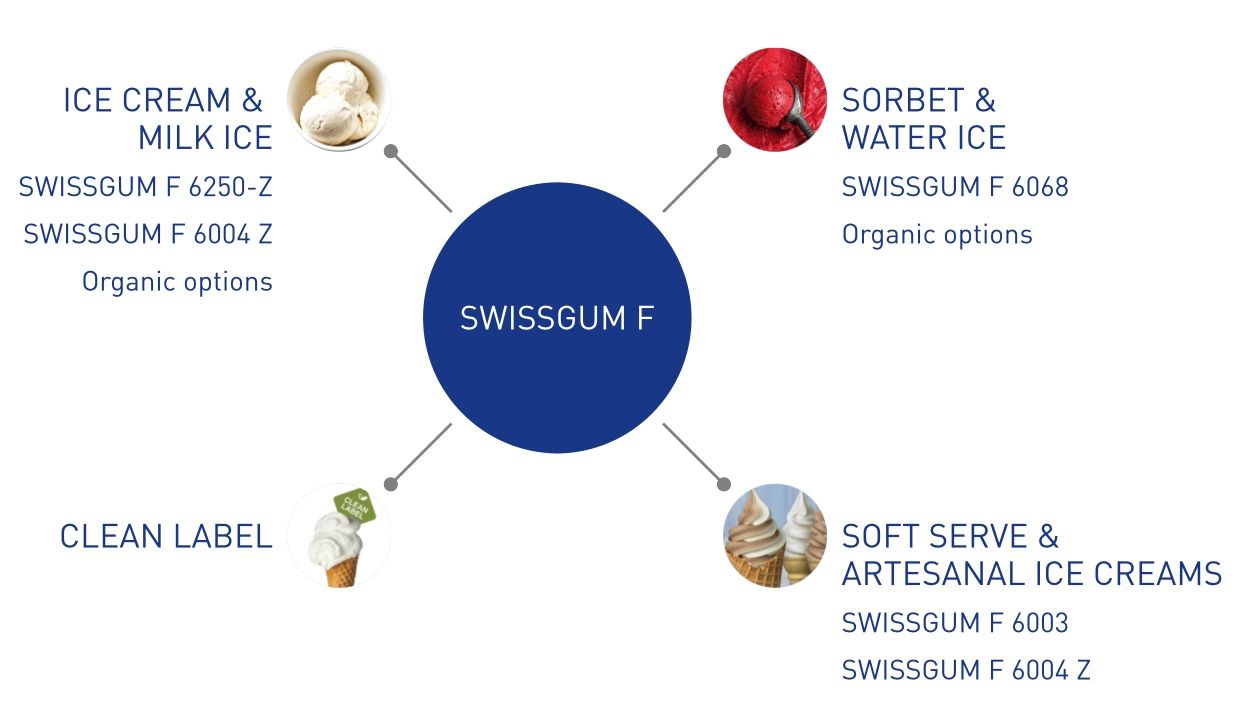
Through the characteristics achieved with the functional systems of the SWISSGUM® category, it is possible to optimize the quality of functional ice cream and frozen desserts, depending on the type of product:

Ice Cream & Milk Ice – are two types of ice cream that vary mainly in their fat content. Traditional ice cream contains at least 10% milk fat, which gives it a creamy texture and an intense flavour. In contrast, milk ice has a lower fat content, between 2.5% and 8%, which makes it lighter, and potentially less creamy.            

Clean Label – product alternatives that are not categorized with the E-number. The additives used may contain starches, inulin and gelatines. They are often used in ice cream based on vegetable milks (almond, coconut, oat).     

Sorbet & Water Ice – are water-based ice cream products, which differ from traditional ice creams in the content of water and fruit, also they can contain fat and protein (Sherbet) or no fat and protein (Sorbet). However, water ice, which do not undergo overrun and do not contain emulsifiers, are based on water, flavouring and colouring. 

Soft Serve & Artesanal Ice Creams – are products characterized by their soft and light texture, due to less incorporation of air during the freezing process. For artisanal products, the highlight is due to the use of natural and fresh ingredients.

swissgum products
The products in the SWISSGUM F range are positioned as a comprehensive and efficient solution for functional ice cream industry, providing versatility in the creation of products that not only meet consumer expectations, but also respond to current health and wellness trends. Its ability to guarantee stability, creaminess and adaptability allows the development of everything from traditional ice creams to artisan and healthier versions, such as low-calorie, lactose-free or reduced fat options, without sacrificing taste or texture, making it a powerful range of products for the sector.
Do not hesitate to contact us for more information about our products or to access professional recipes adapted to your needs. 
yogurt with swissgum

Yogurt: production and innovative solutions with SWISSGUM®

Yogurt, a millennia-old food from the Middle East and Central Asia, is valued for its health benefits and versatility. Its production involves the fermentation of milk by bacteria that convert lactose into lactic acid, which gives it its distinctive flavor and texture. Additionally, stabilizers improve its consistency and shelf life.

Introduction to the world of Yogurts

Yogurt is an ancient food originating from the Middle East and Central Asia, dating back to when nomadic peoples stored milk in skin containers, allowing it to ferment naturally. Over time, this product became popular in various cultures, valued for both its nutritional content and digestive properties, especially in ancient Greece and Rome. The term “yogurt” comes from the Turkish word yoğurt, referring to its thick texture.

Nowadays, yogurt is a food valued for its protein, calcium, B vitamins, and probiotics, which support digestive health and strengthen the immune system. With a wide variety available on the market, from classic and Greek yogurts to drinkable and fruit-infused options, yogurt has become a nutritious and versatile choice for all types of diets.

Production process of Yogurt

The ingredients required by legislation for making yogurt are regulated to ensure that the product meets certain standards of quality, safety, and authenticity.

production of yogurt

Although regulations may vary slightly by country, the basic ingredients and allowed additives are common in most regulations:

Milk and dairy products: the main ingredient must be cow’s milk or milk from other animals, such as goat or sheep, depending on the type of yogurt. Whole, semi-skimmed, or skimmed milk can be used. Additionally, it is quite common to use powdered milk, or milk concentrates to adjust the milk solids content and improve its texture.

Specific bacterial cultures: live dairy bacteria (Lactobacillus bulgaricus and Streptococcus thermophilus) are essential for the fermentation of the product; through this process, they convert lactose into lactic acid, creating the characteristic flavor and texture of the product.

Sweeteners and sugars: used in flavored versions, with fruits, or in low-calorie versions.

Stabilizers and thickeners: commonly used to improve physical properties such as texture, as well as to prevent whey separation.

The processing stages begin with the reception and standardization of the milk. Then, if necessary, stabilizers and sweeteners are added, and the mixture is homogenized before pasteurization, eliminating the risk of pathogens. After cooling, the product undergoes fermentation, where the bacteria convert lactose into lactic acid, creating the characteristic texture and flavor. Depending on the type of yogurt, the fermentation process varies in temperature and pH.
 

Finally, the yogurt is packed and stored under refrigeration.

yogur process

Types of Yogurts on the market

The market is filled with a wide variety of products, each with specific and unique characteristics in terms of flavor, texture, and health benefits. The main types of yogurts found in the market are:

types of yogur

The role of hydrocolloids as stabilizers in Yogurts

In yogurt production, legislation allows the addition of stabilizers such as hydrocolloids, which are commonly used to enhance the physical properties of the products. Hydrocolloids, water-soluble polymers, form gels or viscous solutions upon dissolution, contributing to the modification of the texture and foods viscosity. They also help maintain the homogeneity and stability of the product, preventing the separation of ingredients and extending its shelf life.

The SWISSGUM D range is designed for dairy and plant-based fermented products, providing greater stability, viscosity, and texture while protecting proteins during high-temperature stages. Additionally, SWISSGUM® aligns with current consumer trends by offering clean-label solutions with fewer artificial additives and greater transparency in ingredients. This makes it an ideal choice for developing plant-based yogurts, maintaining the desired stability and texture, thereby responding to the growing demand for natural and healthy products.

swissgum products

To sum up, the use of stabilizing systems in yogurt production offers numerous advantages, such as improved texture, stability, and water retention, which contribute to a longer shelf life and a better sensory experience for the consumer.

By choosing products from the SWISSGUM D range, yogurt manufacturers can take advantage of our innovative solutions that ensure excellent stability and protein protection during processing, enabling the creation of both traditional and plant-based yogurts.

Additionally, SWISSGUM D responds to the growing demand for more natural and clean-label products, helping to reduce additives and offering healthier options for the current market.

Feel free to contact us for more information about products or to access professional recipes customized to your needs.
food ingredients india

Lasenor at Food Ingredients India: driving innovation and global expansion

From September 25th to 27th, Lasenor had participating in Food Ingredients India, one of the most important events in the food industry in the region. This event brings together leading companies, manufacturers, and suppliers of food ingredients from around the world, providing a key platform for innovation, networking, and strategic partnerships. Our participation in this event highlights Lasenor’s commitment to excellence and global expansion, showcasing our high-quality solutions for the food industry while continuing to contribute to the sector’s growth and development.

Food Ingredients India, a prominent event in the food industry since 2006, has evolved into a major platform for manufacturers and suppliers from around the globe. Held from September 25-27 in Bangalore, this year’s event provided a unique opportunity for networking, innovation, and collaboration. As a key player in the sector, Lasenor India was proud to participate, contributing our innovative solutions and building strategic partnerships. Our involvement underscores our ongoing commitment to delivering high-quality solutions and driving the advancement of the food industry both regionally and globally. 

Lasenor India was established in 2008, when the Lasenor Group decided to expand its operations and set up a subsidiary in India to meet the rapidly growing market demand for high-quality food ingredients. This unit is headquartered in Nagpur, Maharashtra, where its manufacturing plant is located. Nagpur’s strategic location provides access to a broad network of clients across India and the region. 

Over the years, Lasenor India has achieved steady growth, gaining recognition for its commitment to quality and innovation. The company has collaborated with various sectors, including baking, confectionery, dairy, and processed foods, becoming a trusted partner for many manufacturers in the country. Our ongoing dedication to excellence continues to strengthen our position within the industry, as we look forward to further contributing to its future growth and success.

mapa india

A successful participation at Food Ingredients India 2024

Lasenor India had an exciting and fruitful experience at this year’s Food Ingredients India event. As a leading platform for manufacturers and suppliers in the food industry, the fair provided a unique opportunity to engage with customers, business partners, and industry colleagues. Our booth received an amazing turnout, fostering insightful conversations and valuable exchanges that strengthened our relationships and opened new doors for collaboration.
Fi India

In addition to showcasing our products, the event allowed us to engage with industry professionals on evolving trends and gather insights into the changing landscape of the processed food industry in India. This exchange of ideas aligns with our long-term vision and business plans, helping us better anticipate and respond to the needs of the market. 

A special thanks goes out to everyone who visited our booth. The show provided an invaluable opportunity to reconnect personally with numerous industry colleagues and business partners, reinforcing our commitment to fostering strong relationships within the industry. 

Looking ahead, we are excited about the new avenues of opportunity and collaborations that are on the horizon. Lasenor India remains dedicated to its journey of innovation and excellence in the food ingredient sector and looks forward to sharing future advancements while continuing to explore new opportunities for growth and partnership.

sales team india

If you have missed this opportunity to connect with us, you can contact Lasenor India team and schedule a meeting.

Follow us on our social media channels and visit our website to stay informed about our latest innovations and industry contributions.

egg free baking

Egg-Free Baking: sustainable alternatives

As consumers  seek healthier alternatives, the demand for egg-free baking is on the rise. This shift brings unique challenges, especially in replicating the texture and structure of traditional recipes like sponge cakes. Emulsifiers and stabilizers play a key role in achieving these results . Discover how our innovative solutions in the LASENOR® BK-range and our SWISSGUM® C-4040 help create soft, airy, and perfectly structured egg-free sponge cakes.

A changing food demand: the rise of vegetarian options

In recent years, the food industry has seen a significant shift toward more sustainable, plant-based products as consumers seek healthier, environmentally friendly alternatives. This trend has led to an increase in vegetarian diets, driven by growing awareness of health concerns and environmental sustainability. One of the most noticeable changes in the food landscape is the surge in egg-free recipes, particularly in baking, as more people opt for these options. 

Additionally, the use of alternative raw materials presents an excellent option for those who are allergic to eggs, a common ingredient in many recipes. This search for alternatives not only benefits those seeking healthier options but also promotes greater diversity in cooking. 

According to a 2023 report by Euromonitor International, the global plant-based food market is expected to reach $162 billion by 2030, showing the strong momentum behind this movement. This demand has also impacted on the baking sector, where traditional egg-based recipes are being reformulated to meet consumer needs.

Imagen 1

The challenge of egg-free baking

Eggs play a crucial role in many baked goods, particularly in sponge cakes, where they act as emulsifiers, stabilizers, and leavening agents. Their unique properties help create the light, airy texture and moist crumb that define a perfect sponge cake. Replacing eggs without sacrificing these qualities is a challenge, especially for those in the professional baking industry. As more consumers seek eggless alternatives—whether due to dietary restrictions or ethical reasons—there is a growing need for innovative solutions. Emulsifiers and stabilizers play a pivotal role in achieving the perfect egg-free bake. 

Emulsifiers help create a fine crumb structure, while stabilizers ensure that the batter maintains its integrity during baking, resulting in a just as soft, tender, and moist cake as its egg-based counterpart. 

At Lasenor, we have developed specific ingredients to help bakers master sponge cakes out of eggs. Our LASENOR® BK range is a family of high-performance emulsifiers that contribute to a larger cake volume, a fine, even crumb structure, and a smooth surface. It simplifies the baking process by reducing whipping time and allowing an efficient all-in method, making it easier for bakers to create consistent, high-quality results 

Stabilizers like our SWISSGUM® C-4040 are essential, in combination with emulsifiers, This product improves  batter stability before baking, ensuring a smooth and uniform texture. During baking, it forms a reversible gel that helps retain moisture, resulting in a softer, more tender crumb. It also enhances the cake’s overall structure, yielding a higher volume and a more uniform texture.

egg-free

Sponge cakes without eggs: a winning solution

Sponge cakes are a beloved staple in bakeries worldwide, but the no-egg version offers several benefits beyond being suitable for vegetarians and those with egg allergies. Free from egg sponge cakes provide a cost-effective solution by avoiding the fluctuating prices and supply issues associated with eggs, particularly in markets where eggs are less used. The longer shelf-life of these egg-free products makes them a more practical choice for large-scale production.

Lasenor’s innovative ingredients, LASENOR® BK-range, and SWISSGUM® C-4040, enable bakers to produce sponge cakes that retain the desirable qualities of the traditional recipe—lightness, a delicate crumb, and softness—while offering a viable egg-free alternative that meets today’s market demands.

iStock 1344262164 1 scaled
As the trend toward raw materials used in baking continues to grow, finding reliable and effective ingredients is more important than ever. The demand for eggless sponge cakes is part of a broader movement toward healthier, more sustainable food choices. Using specialized emulsifiers and stabilizers, bakers can achieve the same quality and texture as traditional recipes, ensuring that no compromises are made in pursuing delicious, ethical baking.

At Lasenor, we are committed to helping the baking industry meet these challenges. Whether you’re looking for a specific ingredient or need guidance on how to reformulate your recipes, we are here to support you.

Don’t hesitate to contact us for more information about our products or to access professional recipes tailored to your needs.
lecithin news

lecithin news q3 2024

Lasenor is actively present in the main sourcing areas for NON GMO lecithin. We will offerregular insight on its evolution as a diagnostic tool.

MARKET OVERVIEW

In the Q1 2024 edition, we mentioned that some buyers had only fulfilled part of their 2024 needs, hoping for further adjustments in Q2 2024. The July-August period, traditionally calm, saw no significant movement. Regarding sunflower lecithin, there has been a greater-than-expected price decrease due to ample supply in the current season. Higher-than-expected crushing and processing rates drove this. The premium of sunflower lecithin compared to Indian Non-GMO soya lecithin, valid in Q1 2024, has significantly reduced. Sunflower lecithin is now quoted at the same price level as non-GMO IP soya lecithin in Europe. Conversely, major vegetable oils experienced an uptrend during Q2 & Q3 2024, supported by a bullish supply outlook and reduced stocks at the start of the season.

NON-GMO SOYA LECITHIN - IDENTITY PRESERVED

The monsoon in India is progressing well. Key soybean production regions, Madhya Pradesh and Maharashtra, received abundant rainfall, leading to expectations of a good crop. However, it is still too early to estimate the crop yield as the monsoon is still ongoing.

In addition to soybean production, three key factors need to be considered:

1.Indian soya meal prices are expected to remain under pressure due to a bumper crop of soybeans announced in the USA and aggressive pricing in Brazil and Argentina.

2.Despite a good crop, a setback in soya crushing is anticipated in 2024/2025 due to tough competition on Indian soya meal on the world market.

3.The soybean market in India is currently below the minimum support price due to the ample prospective crop and low price of soya meal.

Tablas newsletter India Prices

In such a configuration, it seems there is no room for further price reductions. Conversely, decreased sales of soya meal result in reduced crushing, leading to lower soya oil and, consequently, lower soya lecithin production.

SUNFLOWER AND RAPESEED LECITHIN

The EU rapeseed harvest is lower this year due to an 8% decrease in plantings compared to last year and unfavourable weather conditions. The estimated crop for 2024 is 17.3 million tons (MnT).

Tablas newsletter RAPESSED

The situation in Ukraine is similar, with smaller crop yields estimated at 3.9 million tons compared to 4.63 million tons in 2023. As a result, world rapeseed production is expected to decrease by 2.3 million tons in 2024/2025.

In the case of sunflower production, countries like Ukraine, Romania, Russia, Bulgaria, and Moldova have experienced below-normal rainfalls and above-normal temperatures, leading to compromised crops and significant losses. The Black Sea sunflower production, which accounts for 70% of the world’s crop, is estimated to be 56 million tons, down by 2.6 million tons in 2023. Ukraine’s crop estimate is currently at 13.4 million tons, with the possibility of downward adjustments.

These challenges will impact the crushing industries in the European Union and Turkey, which have also experienced adverse weather conditions, resulting in domestic sunflower seed losses. The updated forecast for EU crushing in 2024/2025 is 8.8 million tons.

Tablas newsletter Sunflowerseed

Currently, global sunflower seed production is facing a deficit of approximately 5 million tons, leading to a reduction in crushing of at least 3.4 million tons. The most significant decrease in processing will occur in Russia and Ukraine.

CONCLUSION

After analyzing the market fundamentals, there is a mismatch between the current prices of non-GMO lecithin and the expected supply of sunflower and rapeseed lecithin. Furthermore, a decrease in crushing is anticipated in India, which means that soya oil and lecithin will need to maintain firm prices to compensate for the lost crush value on the soya meal.

The bullish impact of the poor crops has been undervalued over the past three months. In the upcoming months, it would not be a surprise to see less non-GMO lecithin availability in the coming months, leading to a moderate upward pricing.

At Lasenor, we are committed to closely monitoring market dynamics, providing timely insights, and offering comprehensive support to help you make well-informed decisions. We welcome the opportunity to collaborate with you and help you realize the full potential of your products in this changing market.

chocolate

Celebrating Chocolate: Lasenor's Role in Sustainable Chocolate Production on International Chocolate Day

On International Chocolate Day, we celebrate chocolate’s timeless appeal and highlight Lasenor’s key role in the industry. Chocolate producers can use lecithin and emulsifiers to enhance their products’ quality while optimizing costs in today’s challenging economic climate.

Introduction: Celebrating Chocolate and Lasenor’s Role in the Industry

September 13th marks International Chocolate Day, a global celebration of one of the most beloved treats. Chocolate has long been a symbol of pleasure and indulgence, enjoyed by people across all cultures. However, behind the delightful flavor lies a sophisticated production process in which lecithin and emulsifiers are critical in adjusting the rheological parameters.

In liquid form, chocolate’s consistency is defined by two key factors:

  • Yield Value: the force needed to initiate the movement
  • Plastic Viscosity: the force required to maintain that movement.

These properties are essential for molding, coating, and ensuring the smooth texture of chocolate.

Lasenor, a leading provider of lecithin and emulsifiers, offers a range of products tailored for the chocolate industry. Our solutions, including lecithin from various sources, PGPR, ammonium phosphatides, citric acid esters, and crystallizers, are designed to improve product quality, consistency, and cost-effectiveness. In today’s economic climate, where cacao prices are volatile, our products help manufacturers optimize their processes while maintaining the highest standards of flavor and texture.

A Brief History of Chocolate

iStock 617741488

Chocolate has its origins in the ancient civilizations of Central and South America, where the cacao tree was cultivated for centuries. The Maya and Aztecs prized cacao, not only for its use in beverages but also for its cultural and economic significance. In the 16th century, cacao was introduced to Europe, and over time, innovations in processing led to the development of the solid chocolate that we know today.

Today, chocolate is a global commodity with a vast and complex supply chain. From harvesting cacao beans to producing the finished product, the journey of chocolate involves many steps, with emulsifiers like lecithin being essential in ensuring smooth and consistent production.

The Chocolate-Making Process

Chocolate production begins with cacao pod harvesting, primarily in West Africa, Southeast Asia, and South America. The beans inside these pods are fermented and dried before being processed into chocolate liquor, which forms the base for all chocolate products.

Mapa growing cocoa 2024

To create the chocolate we enjoy, manufacturers blend chocolate liquor with sugar, milk (in the case of milk chocolate), and cocoa butter. This mixture is then refined and conched to ensure a smooth texture. At critical stages of the process, lecithin and emulsifiers are added to control viscosity and improve the overall flow and consistency of the product.

After refining and conching, the chocolate is tempered to stabilize the desired crystalline structure, ensuring a smooth, shiny product with the perfect snap.

Infografia Cacao v2

The Current Cacao Market and Industry Trends

The global cacao market faces significant challenges, including rising production costs due to labor shortages, environmental factors like climate change, and geopolitical instability in key growing regions such as West Africa.

Fluctuating prices of cacao butter, a critical ingredient in chocolate manufacturing, also pressure producers. The 2023 surge in cocoa prices, reaching multi-year highs, is mainly due to unpredictable weather patterns and political unrest in major producing countries like Côte d’Ivoire and Ghana, which account for more than 60% of global cacao production.

These challenges are driving chocolate manufacturers to find cost-effective ways to maintain the quality and texture of their products. Emulsifiers like lecithin play a crucial role in this context, helping manufacturers lower production costs while ensuring the chocolate retains its desirable qualities, such as smoothness and proper viscosity. The growing demand for clean-label products has increased interest in natural emulsifiers, a trend Lasenor supports with its wide range of lecithin.

Lasenor's Products for Chocolate Production

Lasenor offers a wide range of lecithin and emulsifiers specifically designed to improve the efficiency and quality of chocolate production. Our solutions help chocolate manufacturers optimize texture, viscosity, and cost-effectiveness.

LECITHIN

Lecithin is a universal emulsifier used in chocolate production to reduce the need for additional fats like cocoa butter, ensure a smoother texture, and reduce costs. Lasenor provides a variety of lecithin options from different botanical origins:

  • VEROLEC NON GMO® – Non-GM soy lecithin
  • VEROLEC ORGANIC SRN® – Organic soy lecithin
  • GIRALEC® – Sunflower lecithin
  • GIRALEC ORGANIC SRN® – Organic sunflower lecithin
  • SEMILEC® – Rapeseed lecithin.

From the beginning, we have focused on responsibly sourcing raw materials, established our supply network, and built factories in key lecithin-producing regions to ensure sustainable practices throughout the supply chain.

AMMONIUM PHOSPHATIDE

VEROLEC YN® is our brand name for AMP, which stands for Ammonium Phosphatide. It is an alternative to the natural emulsifier lecithin. This emulsifier offers greater control over viscosity, making it ideal for applications where stability is crucial, such as ice cream coatings. Its low viscosity also simplifies processing.

CRYSTALLIZING AGENTS

CrystAgents

Crystallizing agents are crucial in creating the correct crystal structure and expediting the fat crystallization process. They offer numerous benefits, including enhanced resistance to fat bloom, a shinier surface, improved snap when using non-hydrogenated vegetable fats, potential time reduction in the cooling tunnel, and increased productivity.

Lasenor offers two types of crystallizers:

  • VEROL CRS® family, which includes E-471 for optimized performance
  • NORGRAS CRS® family, which is considered clean-label

Moreover, NEOVEROL 65® (Sorbitan Tristearate, E-492) can be used to prevent fat bloom.

These crystallizing agents bring significant advantages to fillings and spreads. They help reduce the risk of oil separation on the product’s surface, resulting in a higher perceived quality, providing a smoother, glossier surface, and improving texture.

By offering this extensive portfolio, Lasenor provides chocolate manufacturers the flexibility to choose the right emulsifiers for their specific needs, ultimately improving the performance and cost-effectiveness of their products.

On International Chocolate Day, Lasenor is proud to be a key partner in producing high-quality chocolate. Our emulsifiers and lecithin allow manufacturers to improve product quality while managing production costs, a critical advantage in today’s market.

We invite you to contact us to learn more about our innovative solutions for chocolate production. And, of course, take a moment today to enjoy the irresistible pleasure of chocolate!

GLOBAL TALENT 2024 BLOG V3

Lasenor Global Talent Acquisition Day

We celebrate Global Talent Acquisition Day on the first Wednesday of September. This day highlights the critical role of talented professionals in driving organizational growth and success.  Lasenor is proud to create a work environment that supports continuous development and sustainability in a competitive and tech-driven industry.

At Lasenor, we believe that the well-being and professional development of employees are rooted in a culture of trust, respect, diversity, and opportunity for all. Therefore, we work together to foster an inclusive culture where everyone can grow.


Today, September 4th, the first Wednesday of the month, we celebrate Global Talent Acquisition Day. This occasion highlights the importance of having key talents for the development, growth, and success of any organization. Special recognition is given to human resources experts, who not only recruit employees but also build strong teams, foster organizational culture, and contribute to the long-term sustainability of the company. Their work ensures that the right people are in the right positions, as employees are the heart of any company, and their training is essential for ensuring future success and sustainability.


In our sector, technology and competition are constantly intensifying, making employee development and training essential. In this regard, Lasenor, with its strong family heritage, prides itself on fostering a work environment that goes beyond being just an organization.

Talent Creation and Retention

Imagen 4 9 24 a las 16.01 1

Due to recent growth driven by increased demand in the lecithin and emulsifiers market, we have significantly expanded our operations and the need for our products and services. To successfully navigate this transformation process, we have brought in new talent across almost all departments.


Our commitment to cultural diversity, present in our company due to its international reach, is reflected in the integration and support of new hires, helping them adapt to their new work environment and, in many cases, to a different country.

Work-Life Balance

At Lasenor, we prioritize work-life balance by offering flexible schedules and personalized leaves based on individual needs, without discrimination. We value only the knowledge and talent required for the job.

We continue to prioritize employee care to maintain health and safety at work and enable them to enjoy life fully.
well beeing Lasenor

Empowerment of People

Our mission is to build an attractive work environment that supports the well-being of our employees, beyond just financial compensation. To achieve this, Lasenor offers a range of fundamental incentives: from health and wellness programs, a company restaurant, flexible working hours, to an inspiring workspace.

Additionally, we promote internal training sessions where our own employees actively share their experience and knowledge with their colleagues, as well as external training through collaborations with universities, certification companies, and specialized entities. We also offer language courses to enhance communication in our international environment.

Training programs are distributed as follows:

  • Food Safety: Essential for our food ingredient production industry, ensuring we maintain the highest standards of quality and safety.
  • Occupational Risks: Emphasizing our commitment to the safety and well-being of our employees in the workplace.
  • Skills Development: Specific courses designed to improve and enhance the skills of our employees according to their roles and departments.
  • Corporate Social Responsibility and Environment: Training related to equality, corporate social responsibility, and environmental practices, reflecting our commitment to responsible and sustainable business practices.

Building Relationships and Strengthening Teams

In addition to training, we carry out differentiated actions, such as team-building activities, so employees from our different subsidiaries can connect with our culture, values, and customs to feel integrated into our community. The goal is to foster teamwork, reinforce our commitment to employee well-being, and contribute to a more harmonious work environment.


We organize integration activities involving the entire company or smaller groups, as well as international fairs that facilitate meetings and idea exchanges between employees from different locations. In the same vein, we hold the Quality Week annually with the quality team from the entire Lasenor group, and a commercial meeting once a year where commercial representatives from each unit meet at headquarters to discuss future projects.
CentreTecnic CMYK05

Therefore, the adoption of strategies within the company is more than just a tool to fill vacancies; it is an investment in the culture and future of the company. By attracting and retaining the best professionals, we are not only enhancing our capabilities and competitiveness but also sending a clear message to our employees: we value their diversity, perspectives, and unique contributions to the team. This approach not only enriches our human capital but also creates an environment where every employee feels recognized and valued. By continuing to invest in global talent acquisition, we are building a more inclusive and robust company where everyone can see their value and potential for growth reflected.

Discover more about us and how we value Lasenor’s people!
Contact us today for more information and personalized solutions.