




The market for instant powders continues to expand across a wide range of applications, from cocoa beverages and dairy powders to protein supplements, meal replacements, and nutritional products. Although formulations and target consumers may vary considerably, all these products share a common expectation: they must be easy to prepare and deliver a consistent drinking experience.
Consumers expect powders to disperse rapidly, mix smoothly, and achieve a homogeneous appearance without excessive stirring. When these expectations are not met, the perception of product quality can be negatively affected, regardless of the final product’s nutritional profile or flavor.
In today’s competitive market, convenience has become a key purchasing driver. Consumers are looking for products that deliver reliable results every time they prepare them, whether at home, at work, or on the go.
For manufacturers, this means that reconstitution performance is no longer just a technical requirement. It has become an important element of the overall consumer experience.
Achieving excellent instant properties is becoming increasingly challenging as powder formulations evolve.
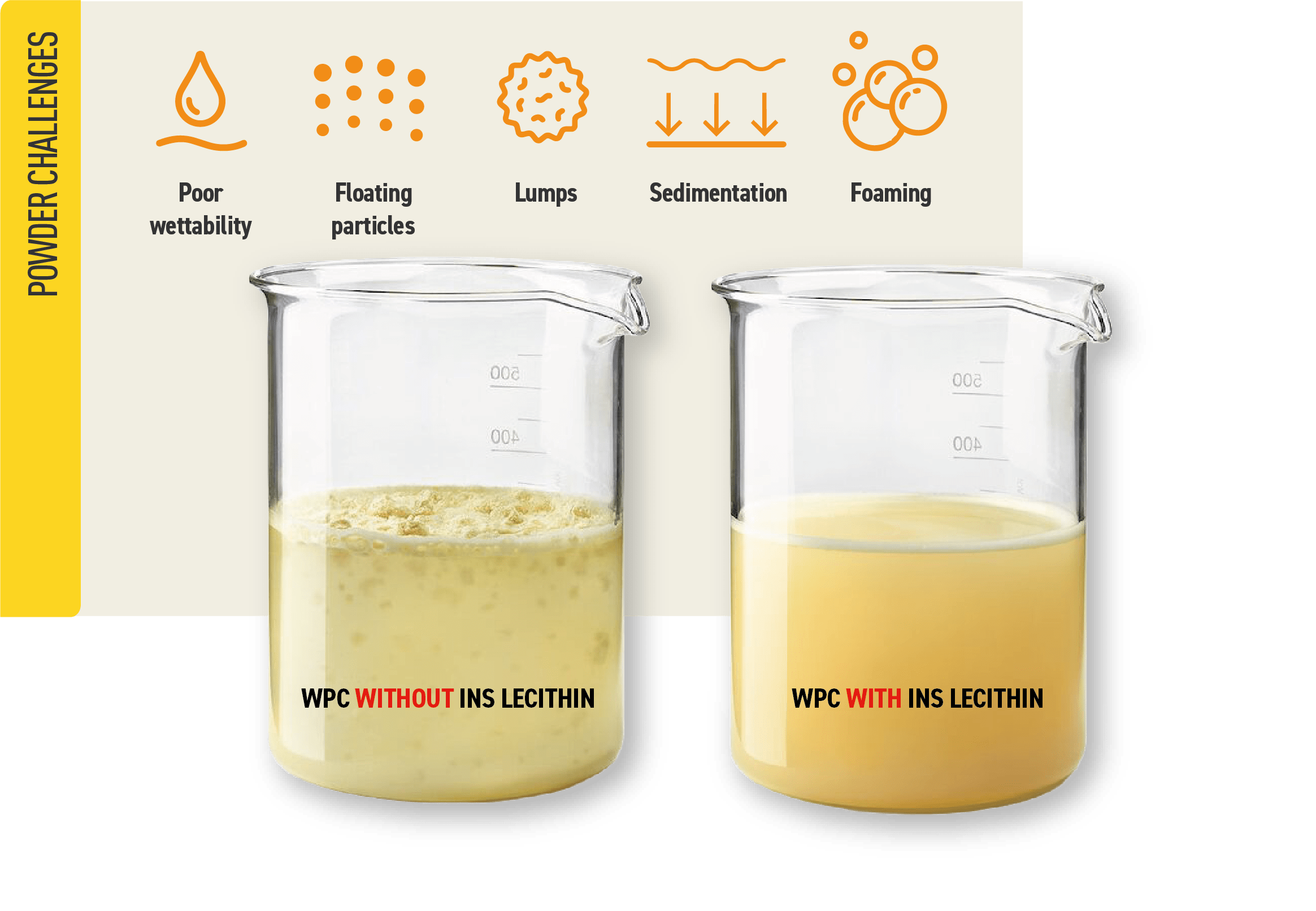
Common challenges include poor wetting, floating particles, lump formation and inconsistent dispersion. These issues can negatively impact product perception and reduce consumer satisfaction, even when the nutritional and sensory profile of the product is excellent.
As formulations become more sophisticated, selecting the right functional ingredients is increasingly important to ensure consistent performance.
Lecithin is one of the key ingredients used to improve the reconstitution behaviour of instant powders.
By modifying the interaction between powder particles and liquids, lecithin helps enhance wettability, improve sinkability and promote a more uniform dispersion. The result is a powder that incorporates more easily into water or milk, providing a smoother and more consistent preparation experience.
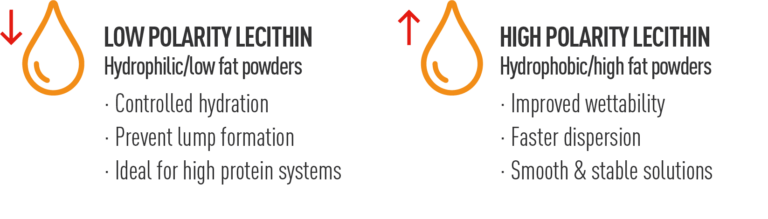
However, not all instant powders require the same lecithin solution. The effectiveness of lecithination depends on factors such as formulation composition, fat content, processing conditions and final product requirements.
A high-fat cocoa powder presents different challenges than a protein-rich nutritional beverage. Similarly, dairy-based and plant-based formulations often require different approaches to achieve optimal instant properties.
The selection of the appropriate lecithin can help optimise powder performance while maintaining process efficiency and product consistency. Different lecithin profiles can be tailored to meet the needs of a wide variety of applications, ensuring the desired balance between wettability, dispersion and overall preparation performance.
Ultimately, consumers do not evaluate the technology behind an instant powder. They evaluate how easily it mixes, how it looks in the glass, and how consistently it performs each time they prepare it.
Delivering this experience requires the right combination of formulation expertise and functional ingredients.
Through specialized lecithin solutions and extensive application expertise, Lasenor helps manufacturers transform reconstitution performance into a tangible product advantage, producing instant powders that meet today’s consumers’ expectations and support long-term brand success.
Let’s create the best approach for your instantanization.
Contact us and take your innovation to the next level.

Organic ice cream transforms indulgence with clean ingredients and sustainable methods. Once a niche trend, it is now entering mainstream markets, driven by innovations in natural emulsifiers, gums, and plant proteins. As consumers look for products that blend pleasure, health, and environmental responsibility, organic ice cream emerges as the ideal balance of taste, transparency, and accountability.
Ice cream has long been a symbol of comfort and pleasure, but today, indulgence means more than just flavor. Consumers now want products that not only perform well but also feel good, providing benefits for their bodies, the planet, and the people behind them.
This change has driven the growth of organic ice cream, where clean ingredients and sustainable production meet sensory delight. Once limited to artisanal shops and niche brands, organic ice cream is now entering mainstream markets and redefining what “premium” means in the frozen dessert category. It embodies a philosophy of transparency and responsibility, respecting nature while delivering the same creamy texture and rich flavor as traditional ice creams.
Organic ice cream is characterized by its ingredients and how it’s made. To qualify as “organic,” at least 95% of the agricultural ingredients must come from certified organic sources, and only a few natural additives are permitted.
In the EU, this is regulated by Regulation (EU) 2018/848 and identified by the green Euro-leaf logo, while in the U.S., the USDA Organic seal ensures compliance with the National Organic Program.
Production facilities must also adhere to strict guidelines to prevent cross-contamination and utilize only approved cleaning agents and processing aids. In essence, organic ice cream represents clean ingredients, transparent sourcing, and responsible manufacturing, proof that indulgence and sustainability can coexist in every scoop.

Creating organic ice cream involves more than just swapping ingredients. The main challenge is to keep creaminess, flavor, and shelf life intact while adhering to strict organic standards. Without synthetic emulsifiers or stabilizers, it’s harder to achieve a smooth, stable texture — natural gums like guar or locust bean can perform differently, influencing melt and crystal formation.
Other hurdles include the limited availability of certified inclusions (like cookies or syrups), color and flavor fading over time, and higher production costs due to ingredient scarcity and certification requirements.
Even so, innovation in organic lecithin, gum blends, and process optimization is narrowing the gap with conventional products, demonstrating that indulgence and clean labeling can coexist successfully.
Innovation in natural ingredient technology is helping overcome the challenges of organic ice cream formulation.
Modern organic lecithin, derived from soy or sunflower, acts as a natural emulsifier, dispersing fat and enhancing air incorporation to deliver a smooth, creamy texture that fully complies with organic standards.
New stabilizing systems based on organic gums and starches enhance viscosity, prevent ice crystal growth, and control melting in both dairy and plant-based recipes. Additionally, fibers and plant proteins from organic sources, such as citrus or pea, provide structure, water retention, and nutritional benefits.
Many suppliers now offer pre-balanced organic bases, simplifying production while ensuring consistency and clean-label integrity for both artisanal and industrial ice creams.
Although still a niche, organic ice cream has steadily grown over the past decade as consumers seek products that blend indulgence with healthier choices. North America and Europe remain the strongest markets, supported by mature organic food sectors and high consumer awareness.
Globally, approximately 6% of new ice cream launches now carry the “organic” claim, nearly double the number ten years ago. The trend evolves alongside other major claims:
While “vegan” and “low-sugar” products dominate headlines, organic ice cream continues to earn recognition for its authenticity, quality, and environmental integrity. Reflecting these preferences, flavor innovation remains crucial with classic favorites still leading global consumer choices (see Figure 1).
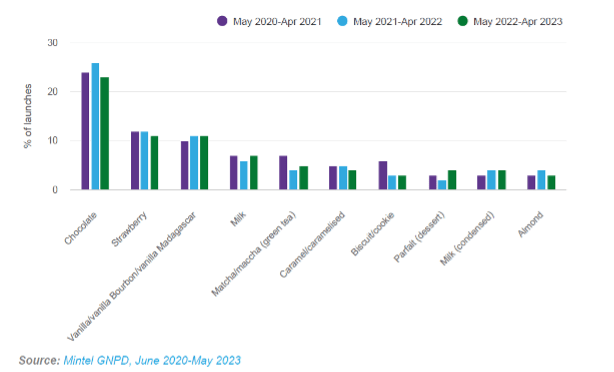
Globally, there is a strong demand for both premium traditional flavors and innovative new ones. For example, in Europe and North America, consumers continue to find comfort in familiar flavors, such as chocolate and vanilla. Still, they are also eager to explore new and adventurous options, especially when inspired by baked goods or desserts. In summary, while classic flavors such as vanilla, chocolate, and strawberries remain popular, there is a growing consumer interest in bakery-inspired, floral, cheese, fruit, and inventive flavor combinations, reflecting a desire for both comfort and novelty experiences.
Let’s create the perfect solution for your organic ice cream together!
Visit our pilot plant and take your innovation to the next level.

Egg prices have climbed sharply in many markets since 2022, adding volatility to cake production costs and planning. Eggs remain essential for structure, aeration, and tenderness; however, they are costly, and exposed to supply shocks. A pragmatic path forward is reducing egg usage while preserving indulgence. LASENOR® VP-100, a texturized pea protein co-developed with Meala, helps bakeries keep softness, volume, and shelf life while lowering recipe exposure to egg-price swings and supporting cleaner labels.
Egg is considered an ideal functional food ingredient, containing a mix of proteins, fatty acids, phospholipids, minerals, vitamins, and antioxidants. Its composition makes it a versatile material used for various purposes such as gelation, emulsification, foaming, binding, coloring, and flavoring. This versatility enhances many food products, offering a wide range of textures from salad dressings to foams, cakes, omelets, and more.
The main contributors to the diverse functions of eggs are the protein content in both the egg white and yolk. Egg white contains globular proteins that help create aerated systems like foams, because of their stable structure at the liquid-air interface. Yolk proteins, meanwhile, have more flexible structures that perform well at water-oil interfaces, forming stable emulsions. Both egg white and yolk can form gels, but the properties differ due to the different protein structures in each phase.
There is a growing demand in the market for egg substitutes due to many reasons, including price fluctuations and an unstable supply chain as primary factors. Plant proteins are promising candidates to replace eggs, offering an alternative with a more stable supply chain, consistent prices, and a sustainable nature. However, so far, plant proteins have not provided a satisfying alternative to eggs’ diverse functionality.
After a mostly stable 2024, prices rose again in early 2025 due to avian influenza, higher feed and energy costs, stricter biosecurity, and logistics frictions. In industrial cakes, where eggs can make up a large part of the formula, these swings increase production costs, complicate purchasing and inventory planning, and reduce margins. Since eggs are essential for structure and aeration, bakeries need to rethink recipes and processes to maintain quality while managing egg-related cost risks.
As production scales and lines become more automated, manufacturers are optimizing formulations for machinability, cost-efficiency, and extended shelf life. The goal: maintain indulgence while reducing dependency on volatile inputs like fresh eggs.
Advances in food science have expanded the functionality of egg alternatives with improved gelling, foaming, and binding tailored to bakery needs. Emulsifiers, hydrocolloids, and vegetable proteins help replicate traditional characteristics with less egg, enabling products that meet economic constraints and rising demand for sustainable, reliable, clean-label ingredients across diverse regional styles.
Technological innovations in food science have expanded the functionality of egg alternatives, offering improved gelling, foaming, and binding properties tailored to specific bakery needs. Ingredients such as emulsifiers and hydrocolloids are increasingly incorporated into formulations, allowing bakers to replicate traditional product characteristics with reduced reliance on fresh eggs.
One key strategy to gain momentum is reducing or eliminating eggs from recipes that were once irreplaceable. Advances in formulation and functional ingredients now make it possible to preserve the expected texture, taste, and appearance of baked goods while improving margins and mitigating supply chain risks.
Egg alternatives are becoming increasingly relevant in the bakery applications industry, particularly given the vast diversity of products and regional preferences, ranging from traditional pound cakes to unique local specialties. These solutions address economic constraints and meet a growing demand for sustainable, reliable ingredients.
Lasenor provides a toolkit to reduce or eliminate eggs in industrial baking without compromising quality. At the core is LASENOR VP-100, a texturized pea protein specifically designed for bakery products that enhances aeration, softens the crumb, and slows staling. This allows for partial or complete egg replacement with a clean-label, neutral taste profile. Its effectiveness comes from an innovative texturization process: a controlled bioprocess, physical texturization, and a targeted enzymatic step that reorganizes the protein network for improving its properties.
Complementing VP-100, the LASENOR® BK range of activated emulsifiers and advanced functional systems like SWISSGUM C-4040 help optimize machinability, stability, and moisture in whipped and fermented products, making reformulation faster, more reliable, and more cost-efficient at scale.
The LASENOR VP-100 is specifically designed for bakery use. In cakes, such as sponge cakes and pound cakes, it enhances aeration, delivers a softer, finer crumb, and delays staling. Designed to replace or complement eggs, it supports clean-label strategies and maintains a neutral taste with no off-flavors.
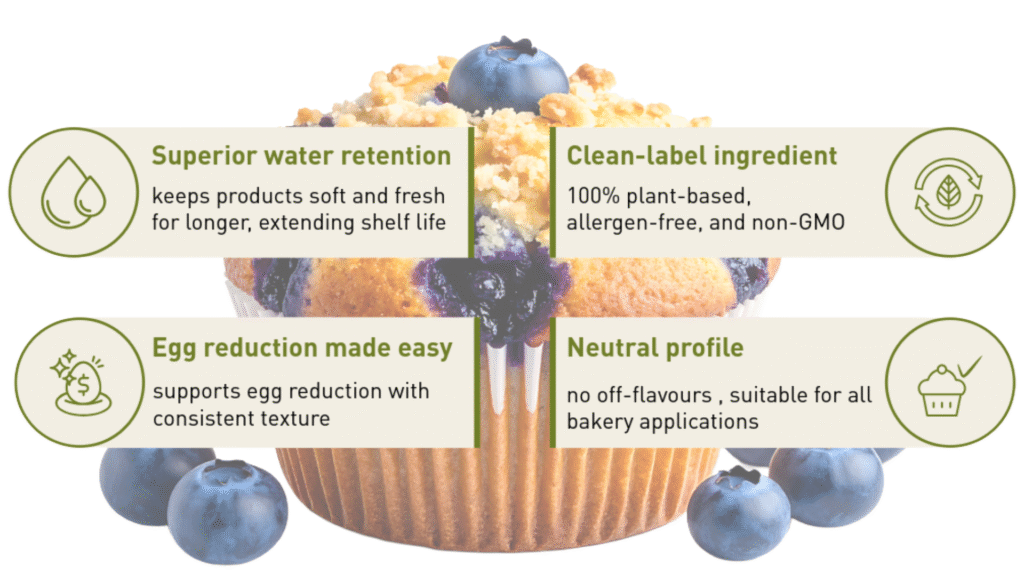
Replacing part—or even all—of the egg in bakery recipes, whether in whipped batters or fermented doughs, is an effective way to stabilize production costs in times of rising egg costs. By reducing a formula’s exposure to egg-price volatility, bakeries can plan more confidently and protect margins. With LASENOR® VP-100, you can preserve softness, structure, and shelf life while decoupling a meaningful share of the recipe from egg-driven fluctuations.
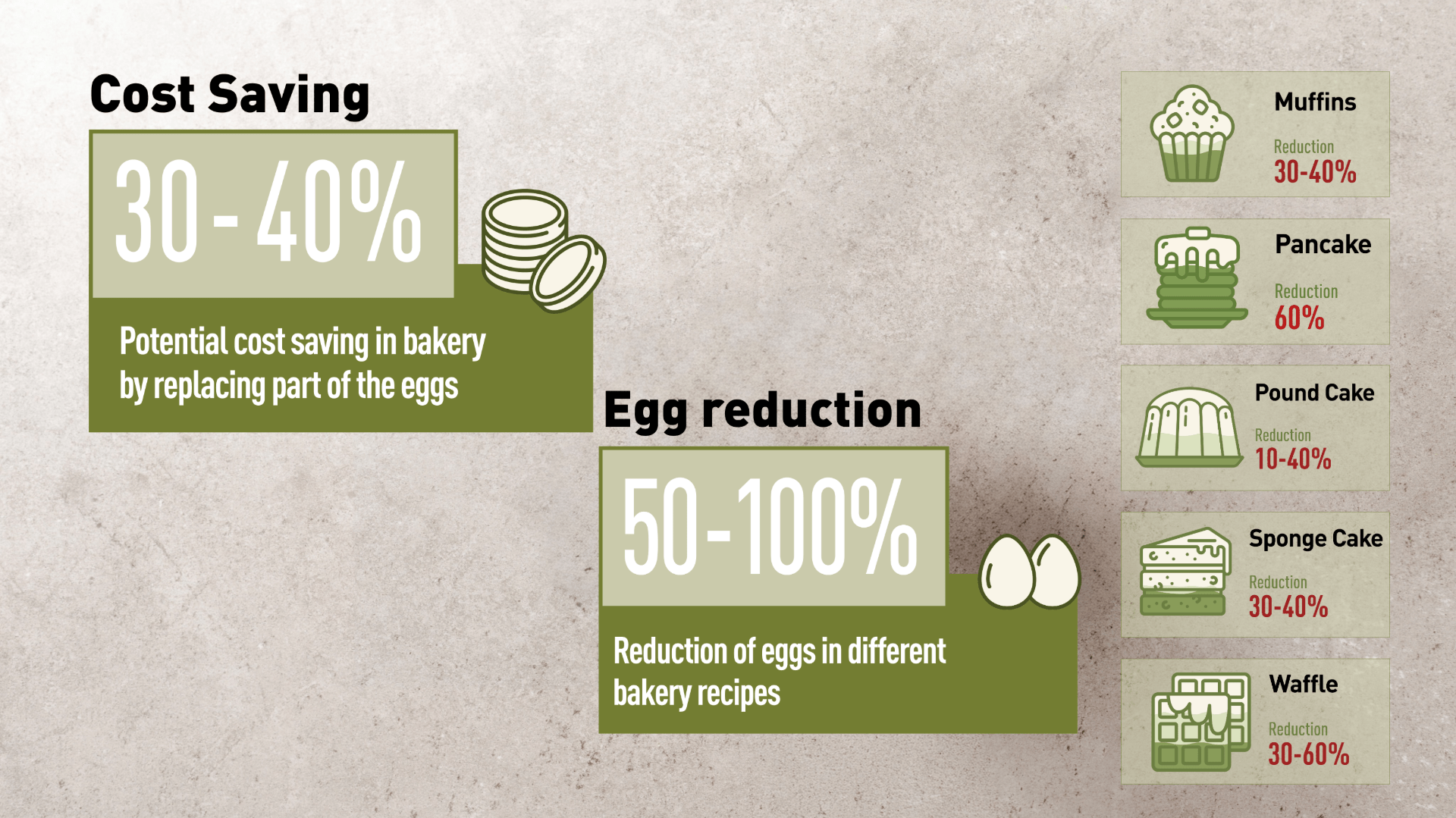
If you want to explore how LASENOR® VP-100 can help optimize your formulations or estimate potential savings, get in touch with Lasenor or speak with one of our application experts. We’re here to support your next innovation.

Organic lecithin is a certified soy or sunflower emulsifier produced under EU/US organic standards with full traceability. It supports the shift toward sustainable food systems as promoted by FAO/WHO Codex. Used in bakery, chocolate, cookies, margarines, plant-based drinks, and instant powders, it enhances performance and final product quality. As organic demand grows, EU/US rules require organic lecithin when available. Lasenor meets this need by transferring know-how to crushers, monitoring residues, and providing trusted expertise across the lecithin value chain.
Years of conventional farming have led to soil and water pollution. The heavy use of pesticides and synthetic inputs damages ecosystems and biodiversity, posing risks to human health as well. These consequences highlight the urgent need for a more sustainable agricultural model that can consistently provide enough food over the long term.

Organic farming provides such a model. As defined by the FAO/WHO Codex Alimentarius Commission (1999), it is a holistic production system that enhances the health of agro-ecosystems, biodiversity, biological cycles, and soil biological activity by relying, wherever possible, on agronomic, biological, and mechanical methods rather than synthetic materials.
The growing awareness of health risks and the importance of environmental protection has accelerated the shift toward organic production. Global demand for organic foods continues to rise, and these products are now readily available not only in specialty stores but also in mainstream supermarkets. While the production and sales of organic goods are primarily concentrated in highly developed markets, many less-developed countries are becoming significant producers and exporters of organic products.
Lecithin is a natural mixture of phospholipids (e.g., phosphatidylcholine, phosphatidylethanolamine) widely used in food as an emulsifier, dispersant, and processing aid. In food, it typically comes from soy or sunflower, in fluid or de-oiled forms.
Organic lecithin is produced from certified-organic crops and audited processes (EU/US standards), ensuring full supply-chain traceability.
Organic oil extraction cannot use petrochemical solvents, such as hexane. Instead, oil, and therefore lecithin, is obtained via mechanical methods (e.g., expeller pressing at controlled temperature). Mechanical extraction generally yields less lecithin than conventional solvent processes, which affects availability and price.
Two structural constraints drive cost and scarcity:

Average lecithin yield (per 1 metric ton of oil)
In food, organic lecithin serves as a versatile emulsifier and processing aid across multiple categories.
Not all crushing companies have the technology or the interest to obtain crude organic lecithin suitable for food-grade lecithin specialists. Lasenor provides the technical know-how to crushers to complete the process and get proper crude organic lecithin.
To secure the integrity and quality of certified-organic lecithin, Lasenor operates a residue analysis program that confirms reliability and compliance with organic standards.
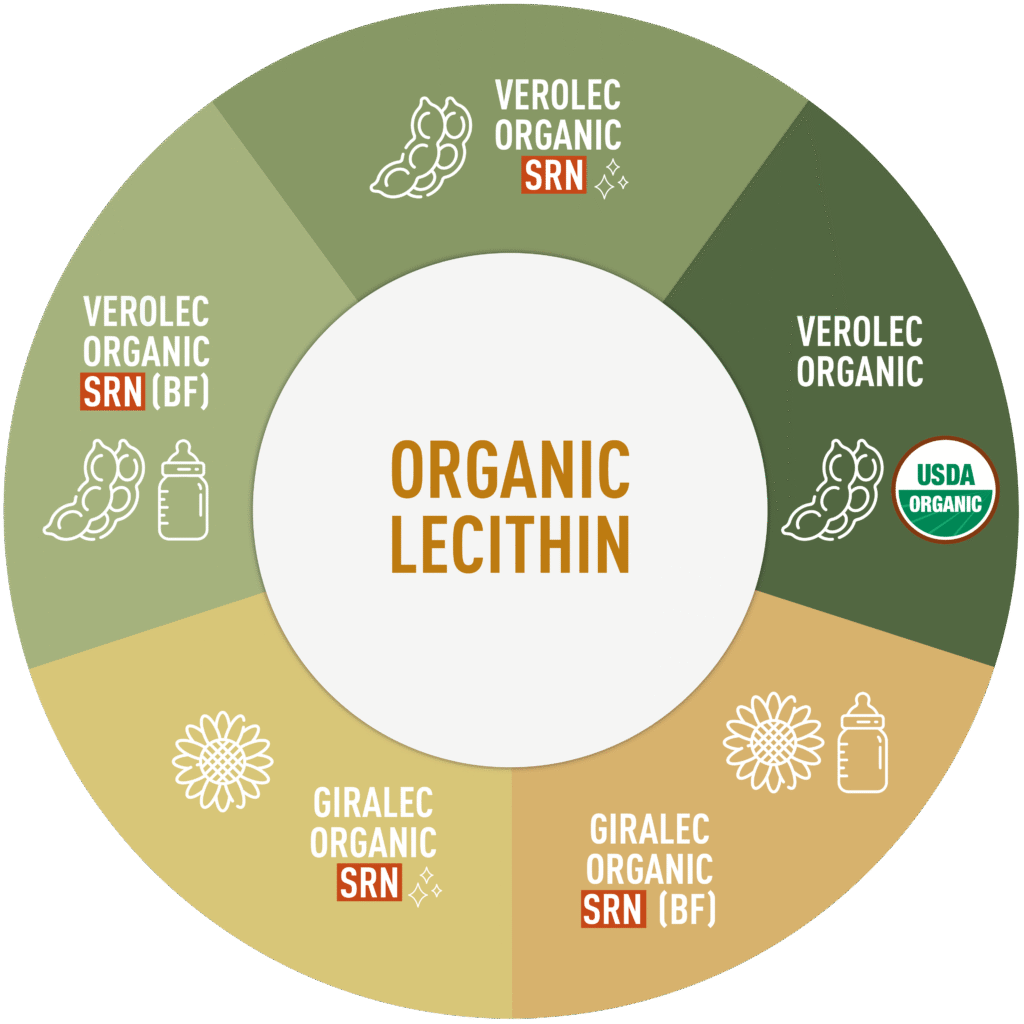
Organic development starts here — contact us to know our solutions!
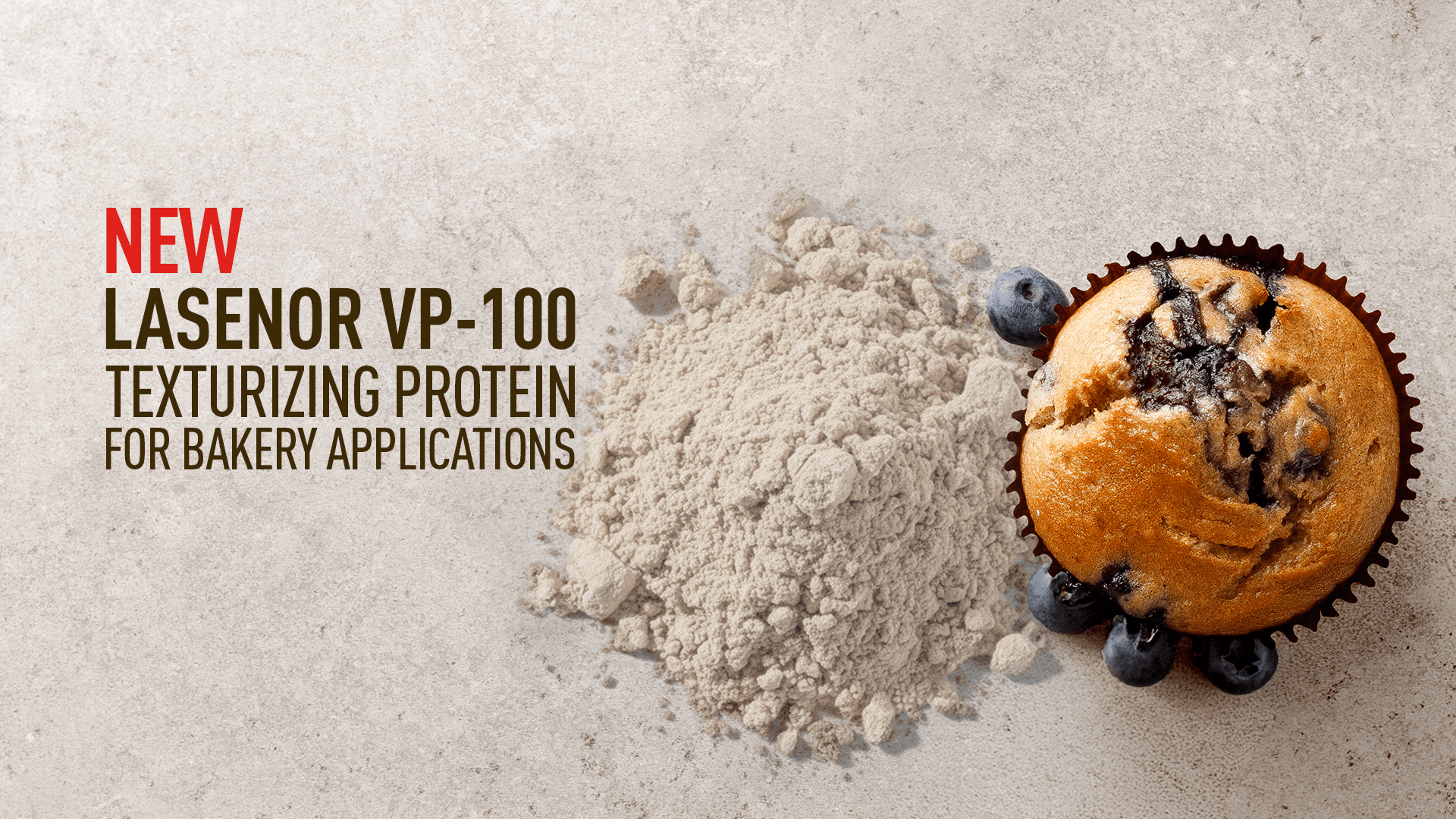
LASENOR® VP-100 is Lasenor’s new texturing pea protein, designed for bakery and pastry uses. It improves aeration, helps create a softer crumb, and slows staling in cakes and similar items. This protein was co-developed with our partner Meala FoodTech, experts in protein texturization technology. We employed an innovative approach to enhance an existing process, improving its functional performance.
LASENOR® VP-100 is a texturizing, plant-based pea protein optimized for bakery and pastry products, for example, sponge cakes, muffins, cakes, and more.
Lasenor offers bakery solutions that can be especially appealing across multiple areas:
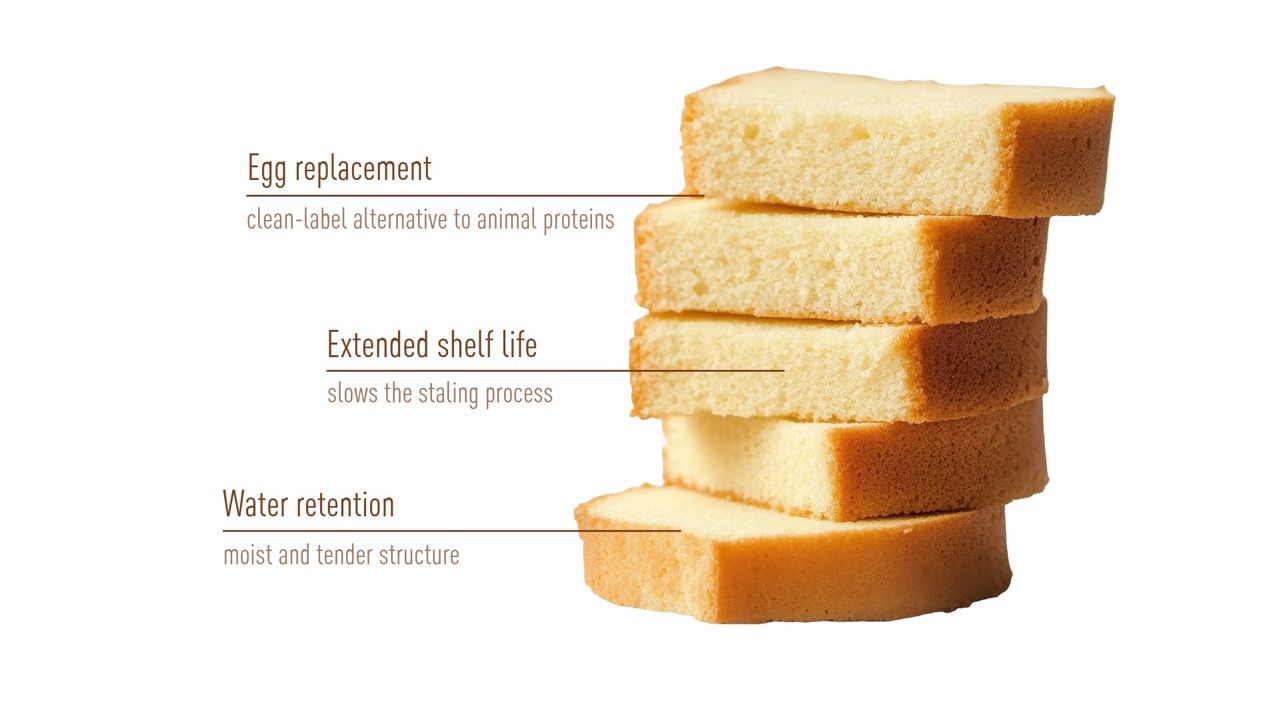
The bakery and pastry category is a key platform for innovation in plant proteins. Increasingly, functional and nutritional ingredients—especially this type of protein—are being added to meet the rising consumer demand for healthier, more sustainable, and allergen-free products. In this context, pea protein is becoming more prominent as a functional ingredient because it allows the creation of products that combine functionality, nutritional value, sustainability, and technological flexibility. Within this landscape, pea protein stands out as a strategic ingredient—and LASENOR® VP-100 as a unique option with concrete applications, particularly in bakery and pastry.
This trend reflects a clear global pattern: demand for products rich in plant protein, allergen-free, clean label, and made with recognizable, functional ingredients. For example, in Europe, 47% of German consumers reported increasing their intake of plant-based products in 2025.
Today’s consumers prefer products that offer functional benefits and simple formulations. Plant-based proteins, and pea protein in particular, meet these demands for several reasons. Additionally, the baking industry still relies heavily on eggs to achieve the desired texture, structure, and volume. However, eggs, like other traditional texturizers, are increasingly challenged by higher costs, supply fluctuations, and growing pressure for cleaner, more sustainable options.

This is a texturizing pea protein produced using a patented process developed by Meala FoodTech, our specialized technology partner. Meala has filed two patents that detail how the protein structure is reorganized through a combination of bioreactor processing, physical treatment, and an enzymatic step. This innovative approach enhances the protein’s gelling capacity, binding, water retention, and thermal stability.
Recommended dosage: 0.5–2.0% of the total formula.
Within bakery categories, plant proteins are used far more in sponge cakes, pound cakes, and sweet baked goods than in biscuits.
At Lasenor, we provide not just ingredients but customized solutions. Our broad experience in bakery allows us to tailor Lasenor® VP-100 to meet the specific requirements of each recipe, process, and label goal.
Our technical team collaborates closely with customers to create application guides, reference recipes, speeding up plant validation and ensuring reliable results. If you’re aiming to reformulate with less or no egg to enhance aeration, tenderness, and shelf life, or to move toward a clean label, we’re ready to support you from pilot trials to full-scale industrial implementation. Let’s discuss and develop the solution your brand needs.
Contact us to help you with a clean-label alternative for bakery productions!

Ice cream and frozen desserts have evolved from their ancient origins into popular treats worldwide, now offered in a wide range of options such as sorbets, gelato, American ice cream, and vegan choices. Today, texture and flavor are key to standing out in the competitive frozen dessert market. In these complex formulations, where each ingredient affects the final product’s quality, emulsifiers and stabilizers work together as functional systems, providing customized solutions for the ice cream industry.
The origins of ice cream date back to ancient civilizations that mixed snow with fruit and honey. The Romans and the Chinese were among the first to innovate, but it wasn’t until the 17th century that modern ice cream appeared in Europe. Two hundred years later, the introduction of machinery allowed for mass production, making ice cream popular worldwide. The development of frozen desserts has broadened the category beyond traditional ice cream, reflecting both culinary trends and the growing demand for healthier, clean-label options.

The quality of ice cream depends on several key factors, including a smooth and creamy texture, a well-balanced and authentic flavor, and an appropriate fat content that adds richness. Additionally, making a high-quality product involves carefully balancing ingredients, using stabilizers to improve consistency, controlling the level of air incorporation (known as overrun), and applying proper freezing techniques. These elements work together to create a smooth, stable, and indulgent ice cream that provides a complete and satisfying sensory experience.
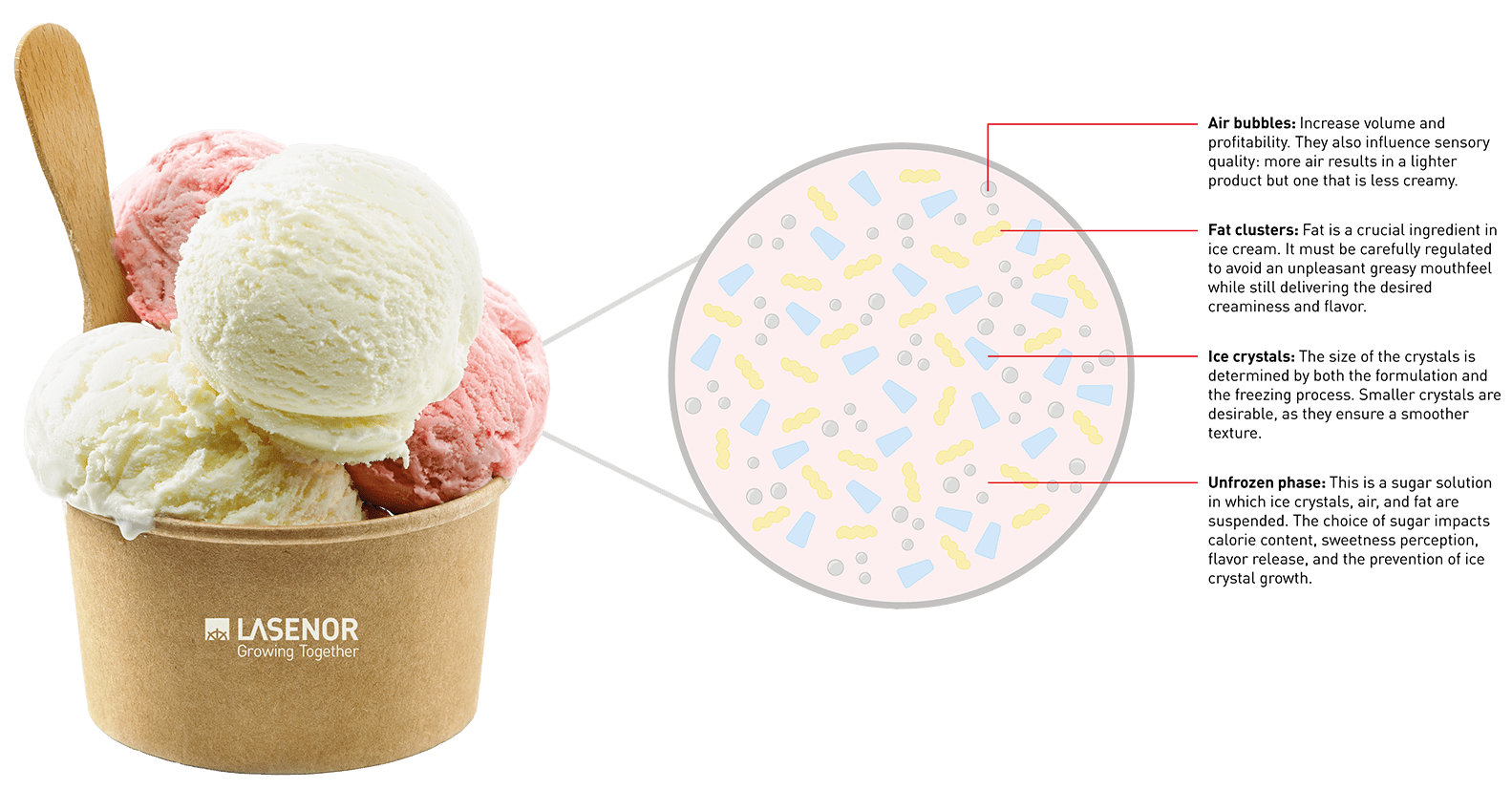
These molecules possess amphiphilic properties: one part of their structure is hydrophilic, while the other is lipophilic. This dual nature allows them to position themselves at the interface of an emulsion, reducing surface tension between phases. In food applications, this leads to a much more stable matrix. The primary emulsifiers used in ice cream are mono- and diglycerides (E-471), lactic esters (E-472b), and propylene glycol esters (E-477).
Their benefits include:
These are water-soluble polysaccharides derived from plants, algae, or microorganisms. They are valued for their gelling ability and impact on viscosity. Key benefits include:
Ensuring quality and performance in ice cream and frozen dessert formulas requires a careful balance of ingredients and technological expertise. In this context, partnering with Lasenor provides a clear advantage: from single ingredients to custom-made functional systems, designed to meet the specific needs of each application. This allows the creation of products with the texture, stability, and sensory qualities demanded by today’s increasingly competitive and diverse frozen dessert market.
New product innovation is crucial for market growth. Brands focus on innovation in flavors, textures, and formats to create excitement, stand out, and grow their consumer base.
In Europe, new ice cream launches grew by 7% in 2023 after several years of decline, outpacing innovations in categories such as yogurt and chilled desserts. This renewed momentum has also pushed up the average selling prices of new products.
Ice cream innovation goes beyond flavors: Asia leads in texture innovations and plant-based bases, while the Americas emphasize ethical claims, sugar reduction, and functional benefits. Globally, single-serve formats and “novelty” items are gaining ground as they adapt to one-person households and on-the-go lifestyles.
The “clean label” trend is accelerating especially in plant-based and water-based ice creams, with more “no additives or preservatives” claims than in dairy. In Europe, the Middle East, and Africa, dairy ice cream is lagging (around 3% adopts eco or clean-label positioning), while brands are shortening ingredient lists amid concern over ultra-processed foods (69% of Britons consider dairy alternatives to be highly processed). In the Middle East and Africa, launches without artificial colors, flavors, or preservatives are steadily growing (53% of Nigerians actively avoid preservatives). Overall, “clean-label” ice cream is defined by short ingredient lists, natural ingredients, and fewer additives, with plant-based and water-based products leading the trend.
At Lasenor, we combine decades of expertise in emulsifiers with the advanced know-how of SWISSGUM® functional systems, creating a unique value proposition for the ice cream industry. Thanks to this integration, we can supply both individual ingredients—such as emulsifiers and hydrocolloids—and custom-made functional systems designed to meet each customer’s specific needs.
Our investment in a dedicated ice cream pilot plant reinforces this commitment, enabling us to develop and test formulations under real production conditions. This capability allows us to provide our partners with more precise, technical, and practical support, ensuring consistent product performance.
You also might be interested in: functional ice cream.
Contact us to help you create the perfect solution for your ice cream!

In less than a decade, Lasenor Brasil has evolved from producing lecithins to becoming a key regional hub for innovation in the food industry. The recent launch of ester production in 2025 marks a new chapter, expanding our solutions while reaffirming our commitment to quality, certified excellence, and close collaboration with customers throughout Latin America.
Since its foundation in 2018, Lasenor Brasil has become a cornerstone of the company’s global strategy to strengthen its presence in Latin America. Established with the purpose of being closer to customers and raw materials, our brazilian subsidiary started operations by producing soy and sunflower lecithin. These essential ingredients positioned us as a trusted partner for the food industry, offering functional and innovative solutions that contribute to the development of a wide range of products.
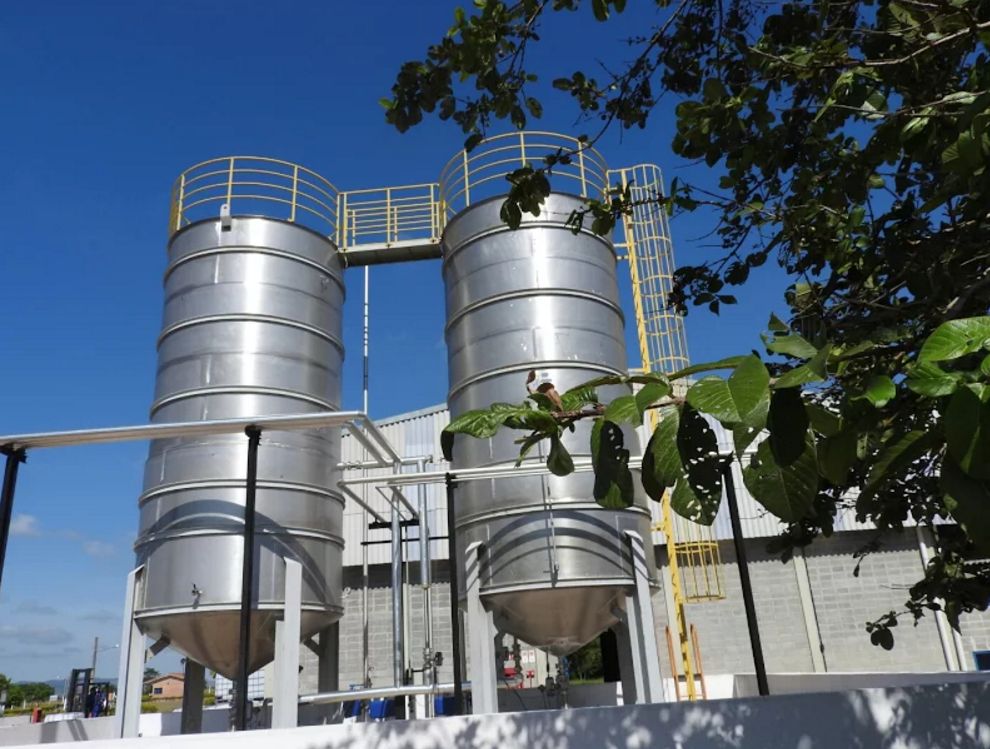

Lasenor Brasil 2018
Lasenor Brasil 2025
Over the years, Lasenor Brasil has continued to expand its portfolio and strengthen its capabilities. Today, we are proud to celebrate a new chapter in our industrial journey: the start of local production of esters, synthetic emulsifiers. This milestone, achieved in 2025, consolidates our role not only as a producer of lecithins but also as a supplier of a broader set of solutions that support food manufacturers in their innovation processes.
An essential element of our growth in Brazil has been the implementation of rigorous quality and safety standards. From the beginning, Lasenor Brasil has invested in certifications that demonstrate our commitment to excellence and align with the requirements of both local and international customers.
Among the certifications obtained – FSSC 22000, Kosher, Halal, FoodChain ID, ProTerra – which guarantee that our processes comply with the highest industry standards.
Our certifications serve as proof of our commitment to delivering consistent quality, ensuring that both multinational companies and regional players in the food industry can rely on Lasenor Brasil as a solid and trustworthy partner.



To highlight this milestone and share it with our customers and partners, Lasenor Brasil participated in Food Ingredients South America (FISA) 2025, held in São Paulo from August 26 to 28. The event offered an excellent opportunity to present the start of our ester production and to reinforce our commitment to being close to the brazilian and Latin American markets.
FISA is recognized as the leading event in Latin America for the food and beverage industry. Every year, it brings together local and international companies, suppliers, and innovators, providing a unique platform to exchange knowledge, discover trends, and develop new partnerships. For Lasenor, participating in FISA 2025 was more than an exhibition—it was a chance to demonstrate our industrial growth, connect with customers face to face, and celebrate the evolution of our presence in the region.
Throughout the three days, our team welcomed visitors to our booth, where we shared the history of Lasenor Brasil, presented our new industrial capacity, and engaged in discussions about how our solutions can add value to our customers’ product development processes. The fair also allowed us to strengthen bonds with long-term partners and establish new relationships supporting future growth.
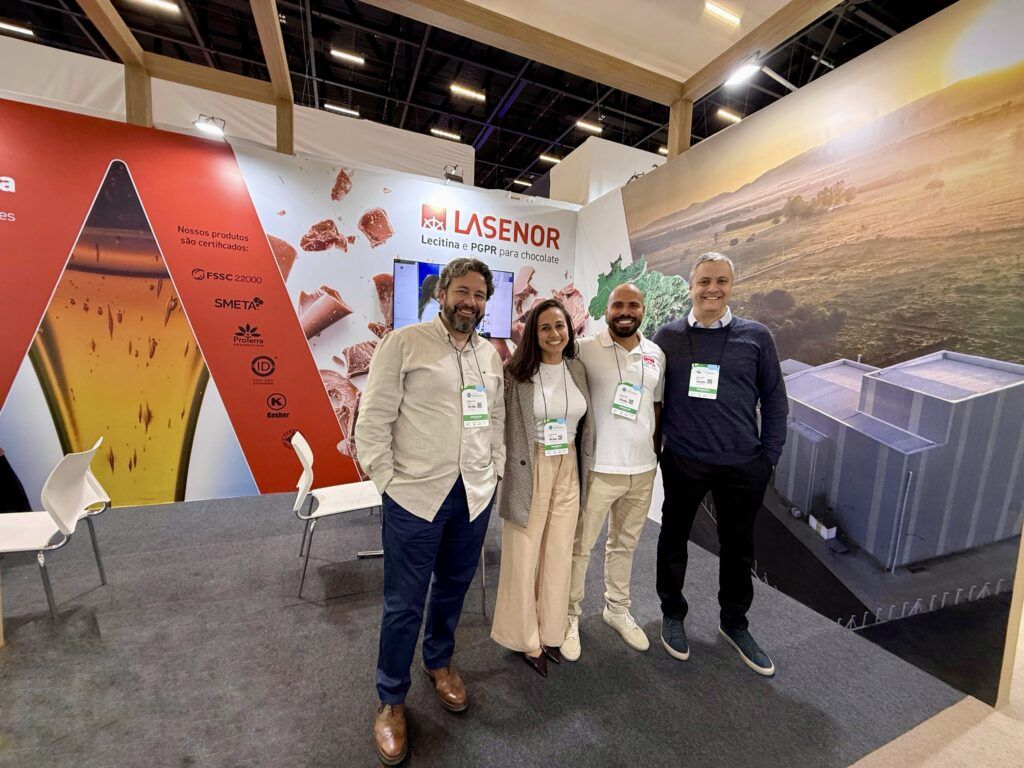
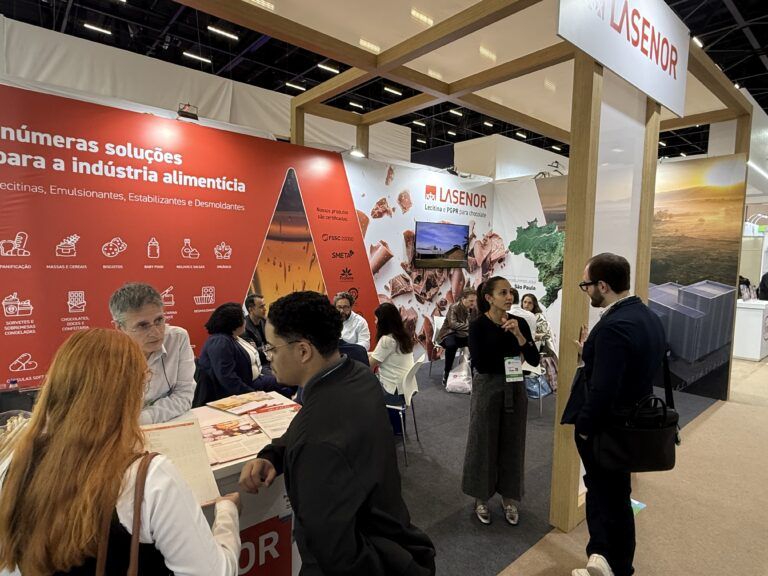
The expansion of our brazilian plant is part of Lasenor’s global philosophy: always being close to raw materials and close to customers. By producing lecithin and esters locally, we achieve several advantages. First, it allows us to reduce lead times and improve logistics efficiency, ensuring that our customers receive products faster. Second, it strengthens our ability to serve not only Brazil but also the entire Latin American continent more effectively. Furthermore, having local production means greater flexibility to adapt to the specific needs of the market.
The launch of ester production in Brazil is not an endpoint but a step forward in Lasenor’s long-term vision. Our commitment remains to continue investing in innovation, expanding our portfolio, and ensuring that our customers have access to solutions that anticipate and respond to the challenges of the food industry.
With a strong foundation of certifications, local expertise, and proximity to both raw materials and customers, Lasenor Brasil is ready to support the development of the industry in the region and to strengthen its contribution to the company’s global growth.
We invite you to learn more about our facilities and vision for the future by watching our corporate video. Discover how Lasenor Brasil continues to grow, innovate, and support the food industry locally and across Latin America.
Contact us to know more about our products manufactured in Brasil

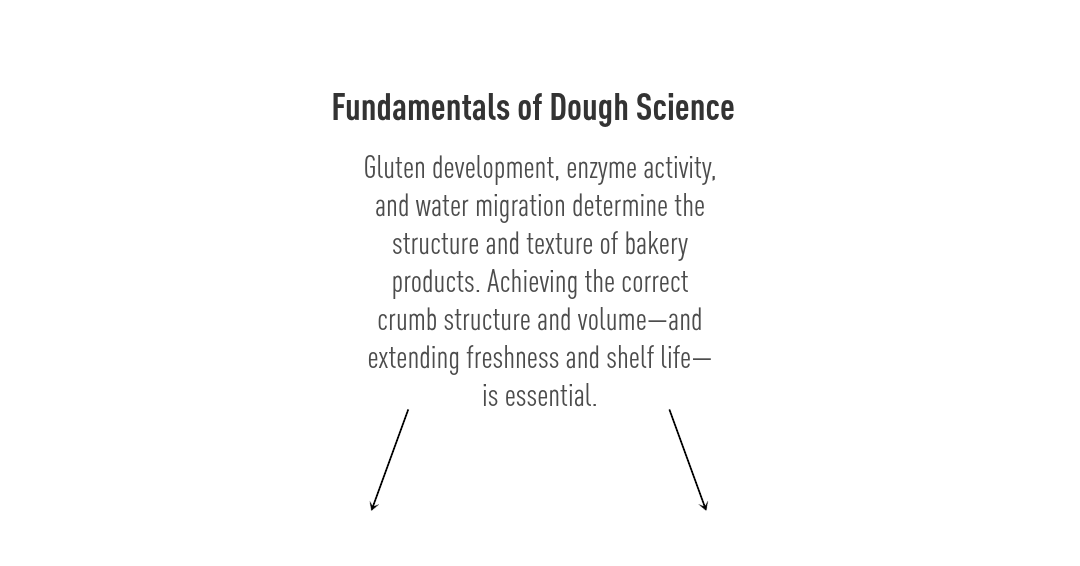
This article examines replacing the synthetic emulsifier DATEM (E 472e) with natural soy and sunflower lecithin. It analyzes the functional role of emulsifiers in bakery products, focusing on sliced bread and sugar cookies.
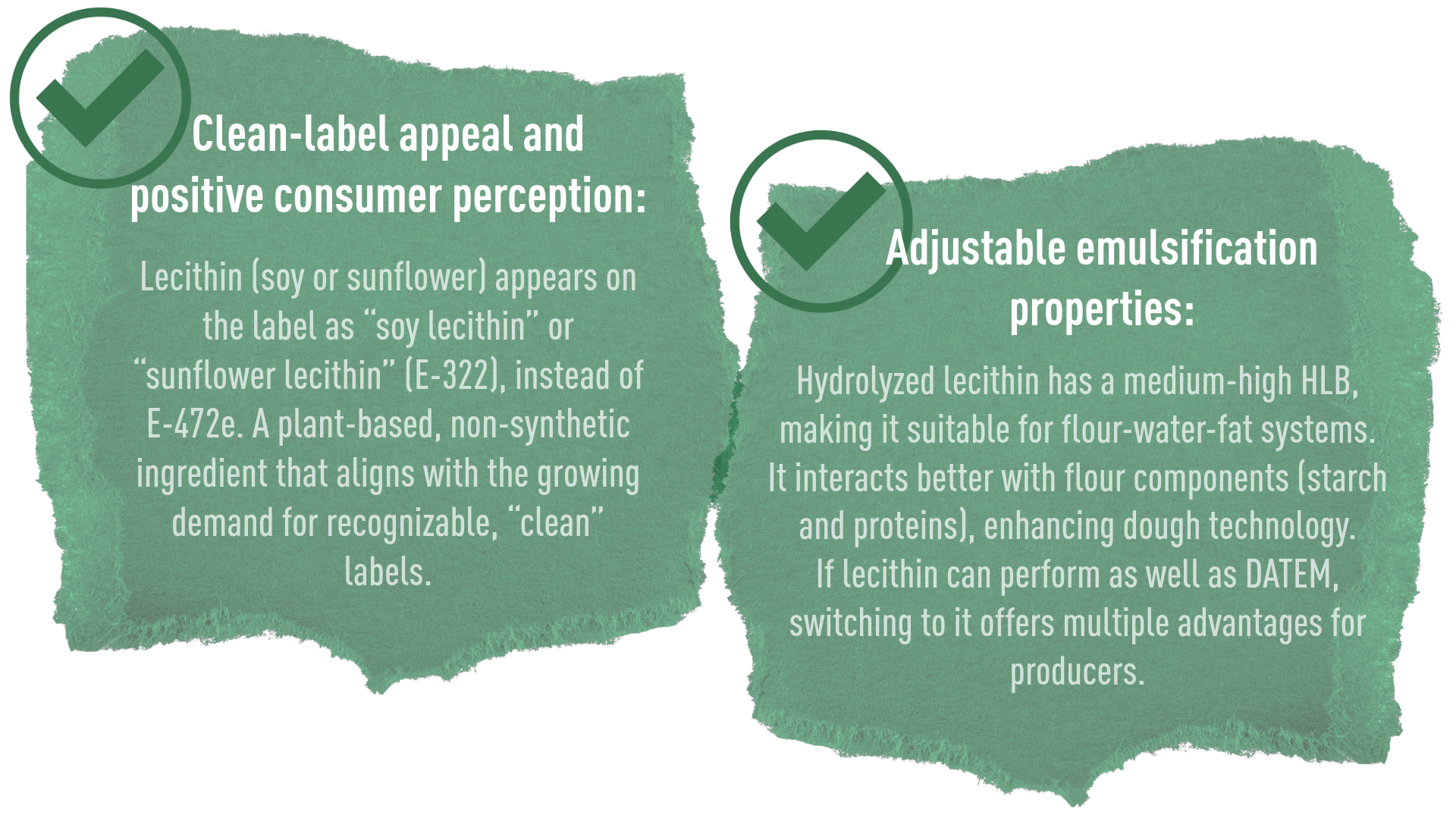
Hydrolyzed lecithin shows improved interaction with starch and gluten, offering a clear, clean-label benefit over DATEM.
Emulsifiers are essential in bakery production because they stabilize fat–water mixtures, enhance gas retention, and slow crumb firming. An emulsion is a mixture of two immiscible phases where the dispersed droplets are usually between 0.1 and 10 µm in size. Its stability relies on an emulsifier’s ability to:
In this study, we focus on DATEM and lecithin.
DATEM (E 472e) are diacetyl tartaric acid esters of mono- and diglycerides. Their main characteristics are:
Lecithin is a by-product of oil refining. It is a natural emulsifier (medium HLB) that supports oil-in-water emulsions and acts as a starch-and protein-complexing agent, offering:
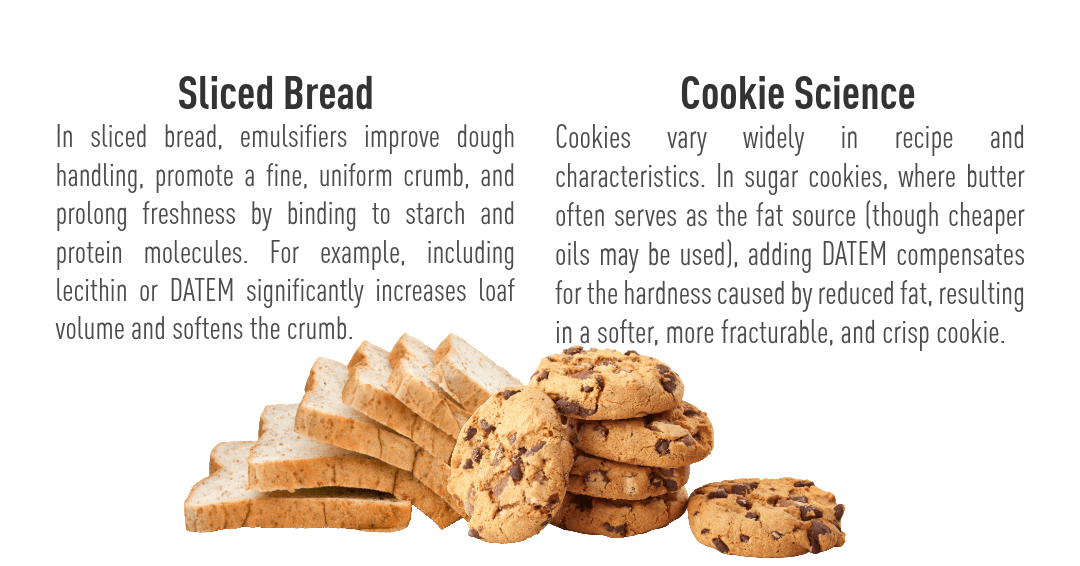
Replacing a synthetic emulsifier like DATEM with a natural alternative such as lecithin provides both functional and marketing benefits:
SLICED BREAD
In collaboration with a leading Greek bakery, we successfully reformulated their sliced-bread production by replacing conventional emulsifiers (DATEM E-472e and standard soy lecithin) with our hydrolyzed soy lecithin VEROLEC HE NON GMO IP plus enzymes. The client reported excellent results and approved the new formulation for commercial use.
Our hydrolyzed soy lecithin VEROLEC HE NON GMO IP combined with enzymes functions as a natural emulsifier and dough improver.
Main benefits in sliced-bread applications:
SUGAR COOKIES
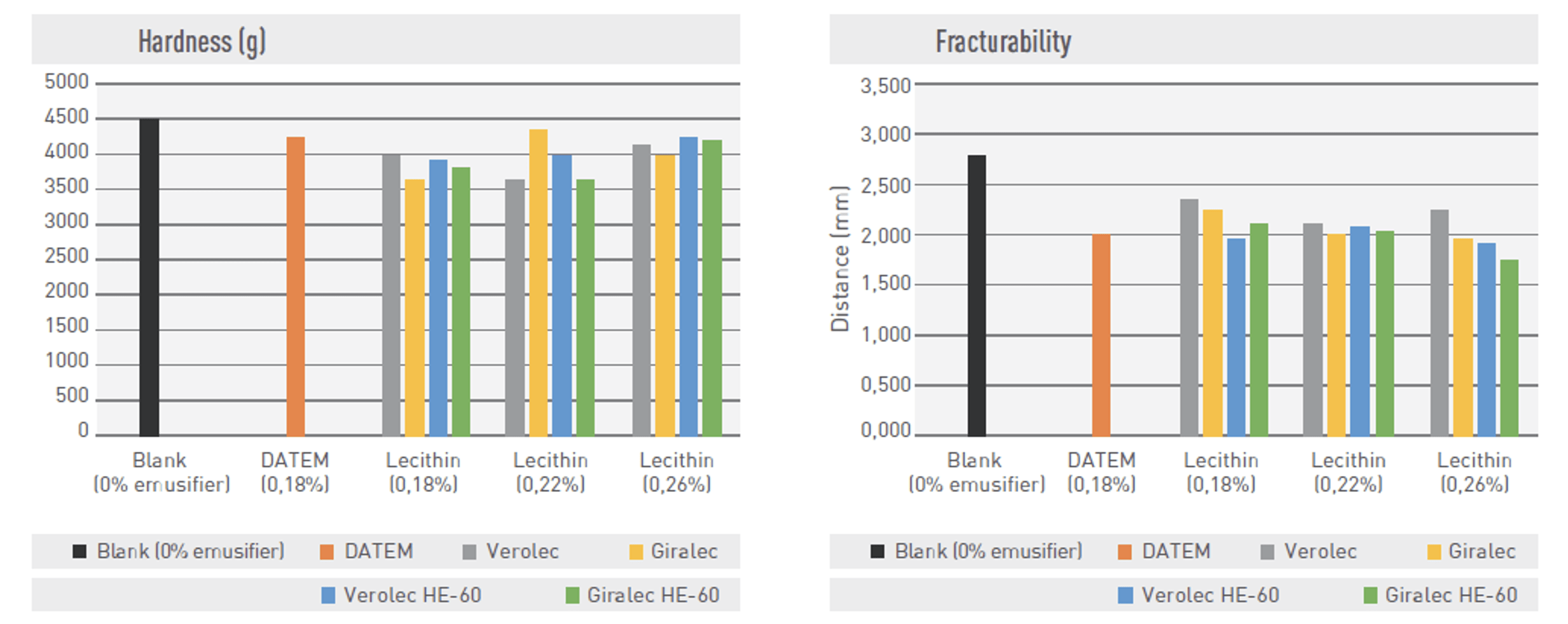
First, a blank batch containing 0% emulsifier was produced. Then, the effect of DATEM at 0.18% (typical dosage) was evaluated. From that baseline, cookies were made, replacing DATEM with each lecithin at the exact 0.18% dosage. Finally, higher lecithin levels (0.22% and 0.26%) were tested.
The results are shown in the bar charts. The first (black) bar represents the blank (0% emulsifier). Observe how DATEM (orange bar) improves over the blank, then compare those improvements with each lecithin at the different dosages. Since the objective is to exceed the blank and match DATEM’s performance, it can be concluded that lecithin can be comparable to DATEM. Fracturability is the attribute showing the most significant improvement.
Replacing DATEM with lecithin allows the bakery industry to create cleaner-label products and satisfy consumer demand for plant-based, minimally processed ingredients. However, each bakery system (sliced bread, cookies, cakes) needs optimization of dosage and blends to balance texture, volume, and freshness.
Both Verolec HE-60 and Giralec HE-60 are successful DATEM alternatives for making high-quality sugar cookies.
Contact our team to support your product development for achieve the perfect substitution!

The global market for processed sliced cheese is growing thanks to its convenience, portion control, and practical packaging. To enhance performance, Lasenor offers a comprehensive solution with two product ranges tailored for this purpose. The well-established SWISSGUM® D range helps adjust key functional characteristics in processed cheese formulations. Complementing this, the newly launched RELISER® SC range—introduced just yesterday—addresses slice-over-slice sticking with a release agent based on lecithin and vegetable oils. Together, these two solutions cover the entire process, from formulation to packaging, ensuring stable, functional, and market-ready cheese slices.
The processed sliced cheese segment is expanding globally, fueled by the growing demand for ready-to-use products. Sliced cheese makes up over 60% of processed-cheese sales worldwide, reflecting consumers’ and quick-service restaurants’ preference for uniform, easy-to-handle portions. Regions like North America lead consumption, accounting for about 44% of the global processed-cheese market in 2024. Countries such as Germany, the United States, and France are at the forefront of launching new sliced-cheese products, highlighting strong demand and innovation in this category.
These trends align with packaging innovations: consumers favor practical formats—resealable, easy-open, and freshness-preserving—even more than environmental concerns. Similarly, slices cater to busy lifestyles by providing ready-to-use portions without the need for cutting, aiding portion control and allowing for quick sandwich or burger assembly.
In 1911 in Switzerland, Walter Gerber pioneered processed cheese by grinding Emmental and blending it with sodium citrate, producing a smooth, uniform product that remarkably kept its texture once cooled. A few years later, in 1916, James L. Kraft in the United States patented a sterilization method that stopped natural ripening and allowed for true industrial-scale production; by 1950, he had introduced the first commercially stable cheese slices to the American market. Together, these innovations created a low-cost, highly reproducible food with a long shelf life that still provides controlled, reliable melting behavior.
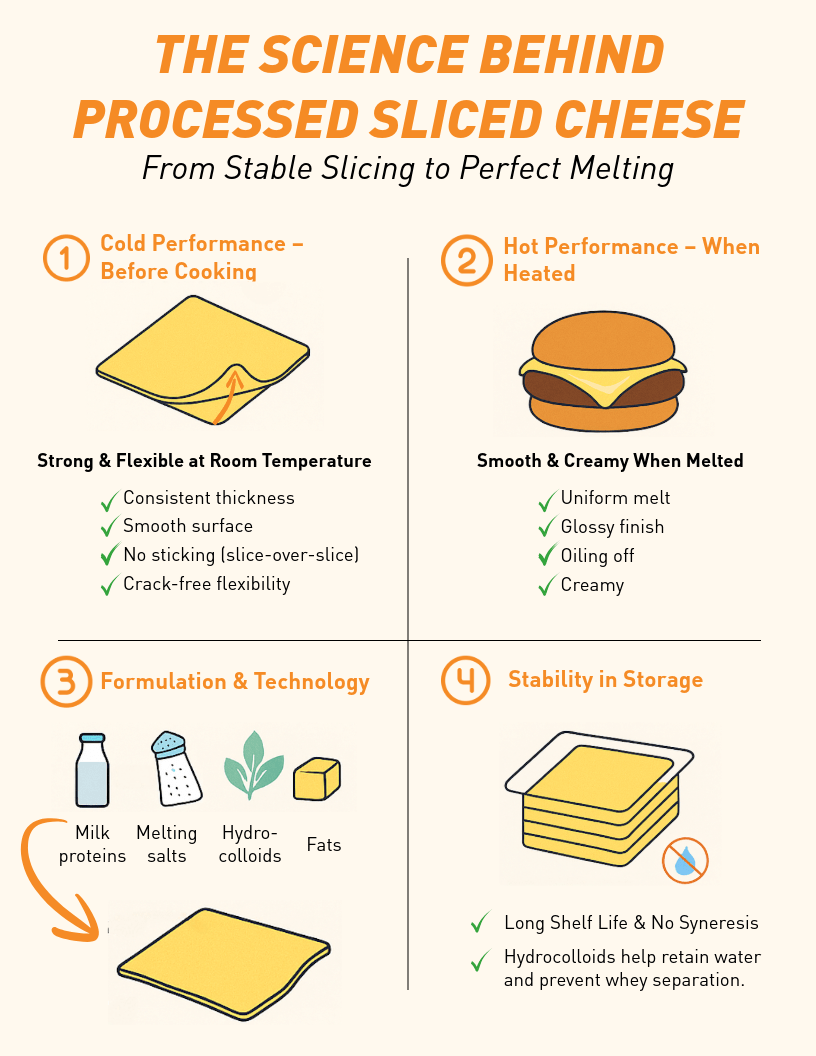
Processed slices have become essential in the food industry due to their advanced technological features. Unlike many natural cheeses, processed slices melt without fat separation.
In fast-paced industrial SOS settings, technical challenges include slicing and stacking quickly without sticking together, maintaining shape, and being easy to separate during packaging.
Achieving the ideal slice texture depends on the right stabilizing system. Lasenor’s SWISSGUM® D formulations are crafted to provide the desired structure for each application. These systems incorporate natural hydrocolloids such as:
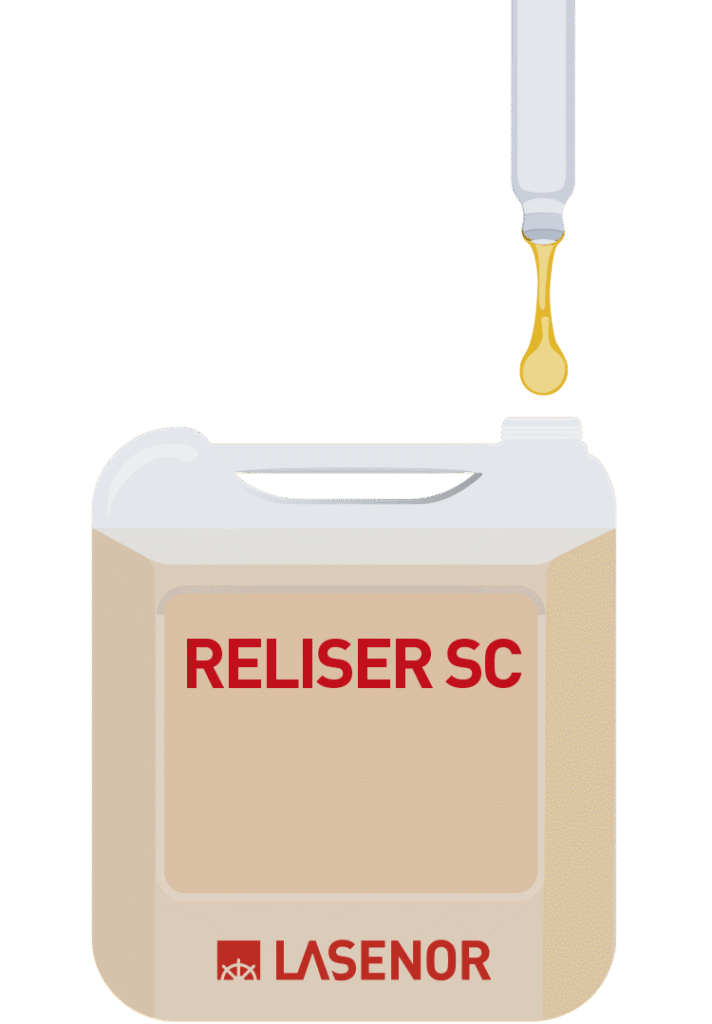
Slice adhesion can stop production and reduce quality in continuous SOS slicing lines. To address this, Lasenor’s RELISER® SC release agents form an edible, ultrathin barrier on each slice’s surface, preventing sticking. Made from high-purity vegetable lecithin (sunflower or soy) combined with food-grade vegetable oils, RELISER® SC is applied by spraying or rolling during slicing. The invisible film prevents adhesion without changing flavor, appearance, or aroma.
Operational benefits include:
Meeting modern market expectations for convenience, sensory quality, and sustainability requires a balance of formulation and processing. Lasenor provides an integrated, expert solution: SWISSGUM® D functional systems for customizing texture, elasticity, stability, and melt; and RELISER® SC release agents to enable industrial-scale manufacturing without sticking. Together, they help sliced-cheese producers stand out with superior products—in taste, texture, appearance, and ease of use. Lasenor’s complete portfolio of functional ingredients and processing expertise to “shape the perfect slice” that the global market demands.
Contact our team to support your product development for achieve slicing perfection!
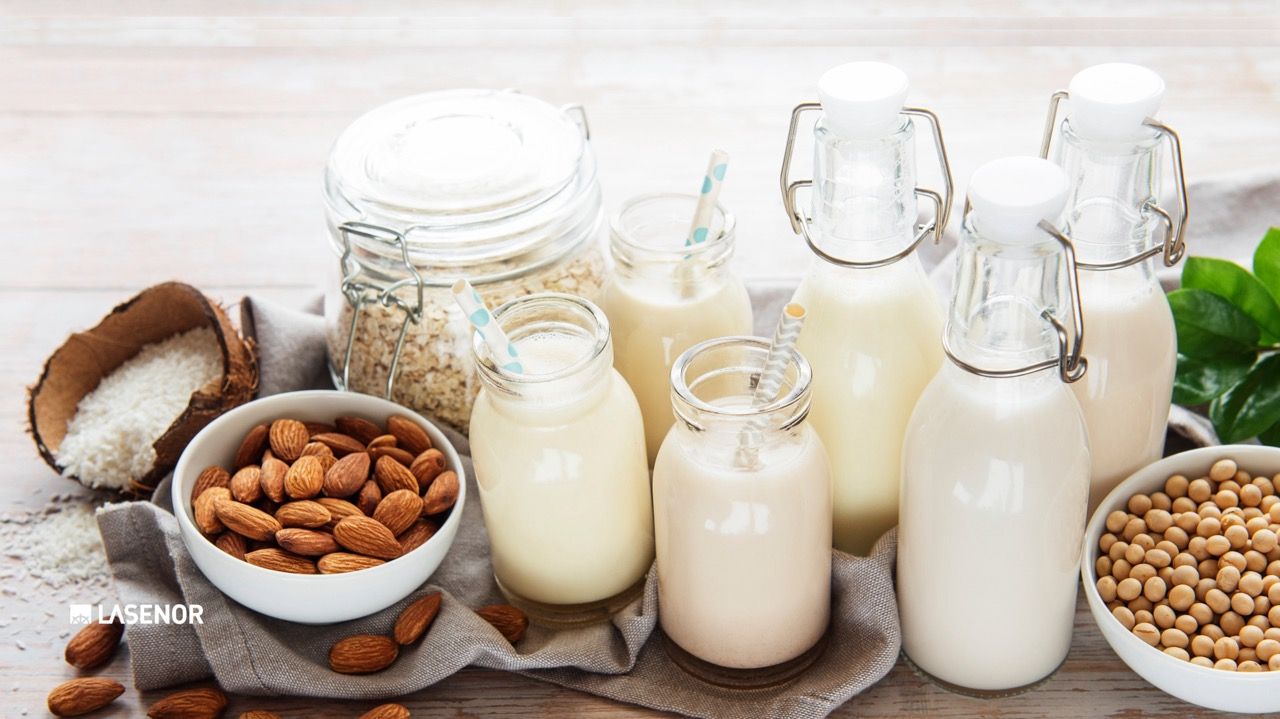
As consumers seek affordable daily indulgences, plant-based beverages are gaining popularity for their creamy textures, rich flavors, and functional benefits. Brands are innovating with foodservice-inspired drinks that offer both pleasure and nutrition. Lasenor supports this evolution with high-performance emulsifiers and functional systems that improve stability, texture, and overall product appeal.
As vegetarian and plant-based diets continue their global ascent, consumers are no longer just seeking alternatives — they crave functional, desirable, and indulgent experiences that rival traditional animal-based products. The increasing environmental awareness and demand for sustainable lifestyles are pushing brands to reimagine the sensory and nutritional appeal of plant-based formulations.

Figure 1. The percentage of consumers who report enjoying a treat-like drink or dessert at least once daily. Sample: 1,000 internet users aged 16–18 per market.
Lasenor is perfectly positioned to support the food industry with high-performance emulsifiers and functional systems in this dynamic scenario.
Initially focused on milk and meat replacements, the plant-based movement now covers a broader spectrum — from ready-to-drink wellness beverages to dessert-style options for indulgent moments.
According to 2025 market reports, treating oneself has become a daily habit. The rising cost of traditional indulgences is opening the door for plant-based beverages to position themselves as more affordable, yet premium-perceived alternatives.
These drinks are no longer seen as mere substitutes. Thanks to improvements in flavor and texture, they’ve evolved into desirable products, featuring creamy textures, complex flavors, and added functional benefits.
Young European consumers increasingly report that plant-based drinkable yogurts taste as good as dairy products. In the U.S., nearly 47% of households consume plant-based alternatives because of the taste. This allows brands to retain loyal customers and attract new audiences through sensorially rich product lines.
Due to the nature of their ingredients, plant-based beverages pose unique formulation challenges. Unlike dairy milk, they are aqueous dispersions with low solid content, leading to phase separation, sedimentation, and unstable emulsions.

Typically formulated with water and a plant base (almond, oat, soy, etc.), these beverages require phase stability to ensure a pleasant, uniform texture. VEROLEC® HE (soy) and GIRALEC® HE (sunflower) hydrolyzed lecithinand the SWISSGUM® D functional system are designed to emulsify and stabilize high-water-content beverages. Incorporating these LASENOR solutions into plant-based beverage production yields significant improvements in the following areas:
According to 2025 market research, plant-based beverages are increasingly considered dessert-style, combining flavors with creamy textures. Consumers are embracing new formats such as:
These options deliver pleasure, affordability, and versatility at home and in barista-style experiences.
We invite you to contact our team to explore how we can support your product development with tailored lecithin solutions.
Basic Information About Our Cookies
| Cookie | Duration | Description |
|---|---|---|
| CONSENT | 16 years 5 months 15 days 13 hours | These cookies are set through embedded youtube videos. They record anonymous statistical data about, for example, how many times the video is shown and what settings are used for playback. No sensitive data is collected unless you are logged into your Google account, in which case your options are linked to your account, for example. if you click "Like" on a video. |
| Cookie | Duration | Description |
|---|---|---|
| IDE | 1 year 24 days | Used by Google DoubleClick and stores information on how the user uses the website and any other advertisements before visiting the website. It is used to present users with advertisements that are relevant to them according to the user's profile. |
| test_cookie | 15 minutes | This cookie is set by doubleclick.net. The purpose of the cookie is to determine if the user's browser supports cookies. |
| VISITOR_INFO1_LIVE | 5 months 27 days | Youtube sets this cookie. It is used to track the information of YouTube videos embedded in a website. |
| YSC | session | These cookies are set by YouTube and are used to track embedded video views. |
| Cookie | Duration | Description |
|---|---|---|
| yt-remote-connected-devices | never | No description available. |
| yt-remote-device-id | never | No description available. |