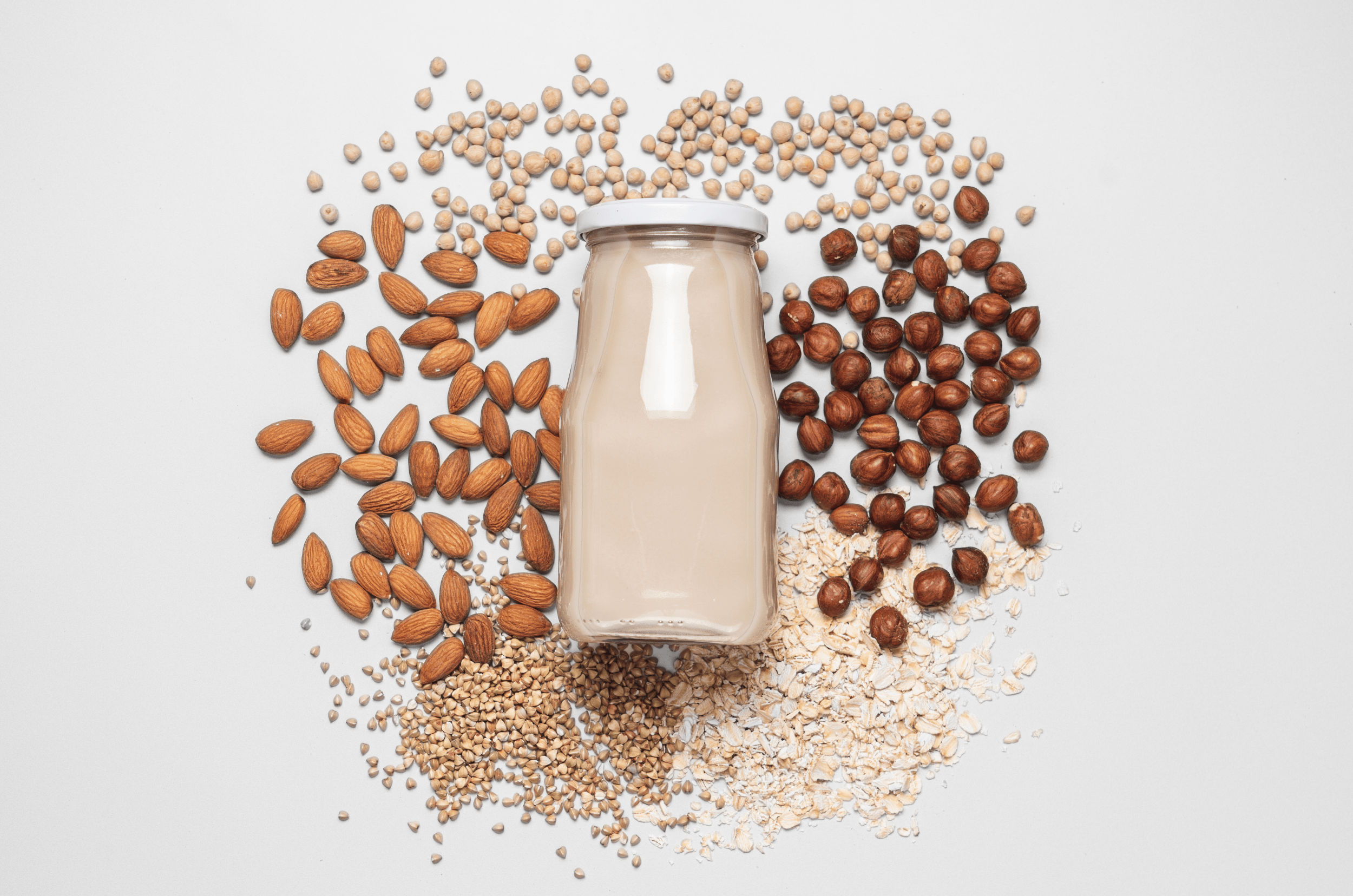
Plant-Based Decoding: Unveiling the Chemistry Behind a Creamy Flat White Coffee

As Google pays homage to the iconic flat white coffee on March 11th, it is the perfect time to uncover the science behind its luxurious creaminess. The key to this culinary alchemy is emulsifiers and stabilizers working in harmony to create that velvety microfoam atop your espresso.

the chemistry at play

A complex chemical reaction occurs when steaming milk to make a flat white. The heat causes the milk proteins to unravel, creating a network that traps air bubbles. Additionally, emulsifiers and stabilizers such as hydrolyzed lecithin and stabilizing systems added to plant-based drinks enhance this process even further. These ingredients enhance the velvety texture and contribute to the overall chemistry that transforms a simple cup of coffee into a symphony of flavors and consistency.

LECITHIN AND HYDROCOLLOIDS IN PLANT-BASED DRINKS

The market for plant-based beverages is experiencing significant global growth, projected to reach over $71,62.7 billion by the year 2030¹, primarily attributed to growing consumer demand for healthier and more sustainable alternatives to traditional dairy products. Consumers are increasingly opting for plant-based beverages due to health and environmental concerns, including lactose intolerance, food allergies, and the desire to reduce the consumption of animal-derived products². Plant-based beverages, such as almond, soy, coconut, oat, and others, are gaining popularity, representing a significant portion of the non-dairy beverage sector. This rise in demand is observed not only in developed countries but also in emerging economies.

The industry is responding to this growing demand with a wide range of plant-based beverage options, offering varieties in flavor, texture, and nutritional value. Additionally, innovations in the development of new products and improvements in existing formulations are underway to meet the changing needs and preferences of consumers.

Emulsifiers and stabilizers are like culinary magicians. They play a crucial role in ensuring the perfect texture, consistency, and appearance of many foods and beverages. In the world of coffee, they work their magic behind the scenes, creating that dreamy foam that makes your coffee experience so enjoyable.

When it comes to crafting a flat white with plant-based milk, hydrolyzed lecithin takes center stage. Hydrolyzed lecithin is a natural emulsifier derived from soy or sunflower (our GIRALEC HE range and VEROLEC HE range). It ensures a smooth blend of oil and water, producing a creamy foam that is just as good as dairy milk.

Additionally, hydrocolloids, especially our SWISSGUM D-3012, play a crucial role in stabilizing the foam, ensuring it stays fluffy and luxurious. These compounds are essential in plant-based milk, where protein content may vary, providing consistent results with every pour.

plant based milk

LOOKING AHEAD

A well-foamed flat white coffee not only looks appealing but also delivers a velvety texture that enhances the taste and aroma of the espresso.

Furthermore, hydrolyzed lecithin and stabilizing systems allow baristas to achieve consistent results across different batches, regardless of variations in plant-based drink composition or environmental factors. This reliability is essential for meeting the expectations of discerning coffee enthusiasts who demand perfection in every cup.

Next time you indulge in a heavenly flat white, take a moment to appreciate the science behind its creamy perfection. From dairy to plant-based options, emulsifiers and stabilizers work tirelessly to deliver that blissful sip, making every cup a masterpiece.

Let’s give a cheer to the often-overlooked heroes of the coffee industry – emulsifiers and stabilizers – for their crucial role in bringing us our daily dose of liquid happiness. 

___________________________

[1]Skyquest research report (2024). Global Plant-Based Beverages Market Size, Share, Growth Analysis, By Type(Soy, Coconuts), By Product(Plain and Flavored) – Industry Forecast 2023 – 2030.

https://www.skyquestt.com/sample-request/plant-based-beverages-market

[2] Food Research International (2023). https://www.sciencedirect.com/science/article/pii/S0963996923007895


Contact us for more information

If you’re interested in discovering more about how Lasenor can assist you in selecting the appropriate hydrolyzed lecithin and stabilizing systems for your needs, please don’t hesitate to contact us.

The Cool Rise of Organic Ice Creams

Amidst the hustle and bustle of Biofach 2024 in Nürnberg (Germany), one topic stood out as a sweet sensation: organic ice cream. As attendees flocked to the booths, discussions centred around the evolving landscape of organic ice cream production and consumption, with a particular spotlight on organic stabilizing systems. Let’s delve into the global trends surrounding this delectable treat.

Global Production of Organic Ice Creams

Organic ice cream production has been on a steady rise globally, mirroring the growing demand for organic products across various food sectors. Countries like the United States, Germany, France, and Italy have emerged as key players in this domain, boasting robust production facilities catering to both domestic and international markets.

According to recent data¹, the United States leads the pack in organic ice cream production, with a significant number of artisanal and large-scale manufacturers adopting organic practices. Germany² closely follows, renowned for its commitment to sustainability and organic farming methods. France and Italy² also contribute substantially to the global production, leveraging their rich dairy traditions to craft premium organic ice cream varieties.

organic ice creams

Consumption Patterns of organic ice creams

Consumer preferences for organic ice cream have transcended geographical boundaries, with demand surging across continents. North America and Europe remain primary markets for organic ice cream consumption, driven by factors such as health consciousness, environmental awareness, and the pursuit of superior taste experiences.

In North America³, the United States dominates organic ice cream consumption, fuelled by a discerning customer base seeking natural, wholesome indulgences. Canada³ also demonstrates a growing appetite for organic ice cream, reflecting a broader trend towards organic foods.

Across the Atlantic, European consumers⁴ exhibit a penchant for organic ice cream, particularly in countries like Germany, France, and the United Kingdom. The region’s sophisticated palate and emphasis on quality ingredients have propelled the popularity of organic ice cream to new heights.

Organic Stabilizing Systems: The Key to Creamy Perfection

Central to the allure of organic ice cream is the use of organic stabilizing systems, which play a crucial role in enhancing texture, mouthfeel, and shelf stability without compromising on organic integrity. Traditionally, stabilizers like guar gum, locust bean gum, and carrageenan have been employed in conventional ice cream production. However, the rising demand for organic options has spurred innovation in this space, leading to the development of organic alternatives.

Organic stabilizing systems, like our SWISSGUM BIO range, encompass a range of natural ingredients sourced from organic agriculture, such as organic guar gum, organic LBG, organic tara gum and organic starches. These ingredients serve as thickeners and emulsifiers, ensuring proper homogenization of ingredients and preventing ice crystal formation, thereby yielding a smooth, creamy consistency characteristic of premium ice cream.

SWISSGUM at Biofach 2024 in Nürnberg (Germany) showcased a diverse array of organic stabilizing systems tailored to meet the specific needs of organic ice cream formulations. From organic dairy stabilizers to plant-based alternatives, exhibitors highlighted the versatility and efficacy of these ingredients in achieving optimal product performance while adhering to organic standards.

organic ice creams

Looking Ahead: A Scoop of Innovation

As consumer demand for organic ice cream continues to soar, the industry remains poised for further innovation and growth. Manufacturers are actively exploring new formulations, flavour profiles, and sustainable packaging solutions to cater to evolving consumer preferences and environmental concerns.

Moreover, collaborations between producers, suppliers, and certification bodies are fostering greater transparency and trust within the organic ice cream supply chain, ensuring that products meet stringent organic criteria from farm to freezer.

In conclusion, the global fascination with organic ice cream is not just a passing trend but a reflection of shifting consumer values towards health, sustainability, and gastronomic pleasure. With a focus on organic stabilizing systems and a commitment to excellence, the future of organic ice cream looks undeniably delicious. As we savor each scoop, let us toast to a world where indulgence harmonizes with integrity, one organic cone at a time.

___________________________

[1] Organic Trade Association (2023). Organic Industry Survey. https://ota.com/market-analysis/organic-industry-survey/organic-industry-survey 

[2] European Commission. (2023). Organic Farming in the EU. https://agriculture.ec.europa.eu/data-and-analysis/sustainability-and-organic-farming/agricultural-markets-organic-sector_en 

[3] Mintel. (2023). Global Organic Ice Cream Market Report. https://store.mintel.com/report/the-future-of-ice-cream 

[4] Euromonitor International. (2023). Organic Food and Beverage Consumption Trends. https://www.euromonitor.com/organic-beverages

Contact us for more information

If you’d like to learn more about how Lasenor can help you select suitable stabilizing systems for your application, please contact us and we will provide you with all the necessary information.

Elevate your baking efficiency with LASENOR® BK-111: a revolutionary activated emulsifier

In the ever-expansive landscape of the baking industry, where diversity is paramount, a subtle yet profound shift is taking place. The imperative for production efficiency quietly transforms how bakers approach their craft. This evolution is not merely a passing trend but a strategic response to the ever-changing dynamics of a globalized market.

Adapting to Industrial Evolution

The bakery segment is a vast tapestry, encompassing many products, each presenting its own challenges and preferences across diverse countries. From timeless pound cakes to regional specialties, the market’s diversity necessitates innovative solutions that adapt to the evolving needs of both bakers and consumers.

As the baking industry trends towards a more industrialized production model and embraces globalization, manufacturers face the challenge of recalibrating recipes for machinability, cost-effectiveness, and extended shelf life. In response to this demand for efficiency, we proudly introduce LASENOR® BK-111 – a revolutionary activated emulsifier meticulously designed to meet the evolving demands of modern bakers.


activated emulsifier pound cake

LASENOR® BK-111: tailored solutions for today's challenges

Crafted specifically for high-fat cake recipes, including pound cakes, muffins, brownies, and more, LASENOR® BK-111 is poised to address bakers’ multifaceted challenges in today’s dynamic market. Setting itself apart in an efficiency-driven landscape, this activated emulsifier simplifies baking with easy powder-form handling.

LASENOR® BK -111 seamlessly integrates into both cakes and bakery mixes, allowing the addition of all ingredients simultaneously. This streamlines the process and significantly reduces mixing time while maximizing air incorporation. The result is consistently superior baked goods with an elevated texture, extended softness, and a fine crumb structure.

Empowering Modern Bakers with activated emulsifiers

In the face of a changing baking landscape, LASENOR® BK-111 emerges as a versatile solution, addressing the imperative for efficiency without compromising quality. Its ease of use and transformative impact on baked goods’ texture and shelf-life position it as an indispensable tool for bakers aspiring to high quality in an increasingly competitive market. LASENOR® BK-111 stands as a transformative ingredient, empowering bakers to navigate the demands of efficiency while preserving the essence of their craft.

activated emulsifier advantages

Experience the difference with LASENOR® BK-111 and usher in a new era of baking innovation!

To delve deeper into how LASENOR® BK-111 can revolutionize your baking experience or to request more information, please fill out the form below. Your path to elevated efficiency and exceptional results begins here.

    A Suggested Recipe for Margarine with Superior Whipping Properties

    In the world of baking, achieving the perfect crumb structure, appearance, and volume in cakes is an art form cherished by bakers and enjoyed by cake enthusiasts alike. As the demand for exquisite cakes and creamy filling creams continues to rise, the need for high-quality margarine with excellent whipping properties becomes paramount. This article presents a carefully crafted recipe for full-fat margarine that incorporates air effortlessly and guarantees softness for easy mixing.

    Introduction

    Incorporating air into margarine for creams and cakes is a crucial aspect of their formulation. Selecting the right emulsifiers is essential to achieve the desired softness and stability without the risk of oil separation.

    For optimal results, Lasenor recommends using distilled monoglycerides or mono- and diglycerides of fatty acids (E-471) in combination with polyglycerol esters (E-475). These combinations ensure perfect softness, stability, and air incorporation for your baking creations.

    Our cake margarine recipe

    This suggested margarine recipe is specially designed to elevate your baking creations, be it cakes or filling creams. One of the key goals of this formulation is to ensure the batter retains air splendidly, resulting in an enhanced crumb structure and appearance. Moreover, the dough volume experiences a delightful boost, creating light, airy cakes and a pleasure to indulge in.

    The Emulsifiers: VEROL IG-90 (Mono- and Diglyceride of Fatty Acids – E471) and VEROL P/PG (Polyglycerol Esters of Fatty Acids – E475)

    At the heart of this margarine recipe lies VEROL IG-90, a sunflower-based mono- and diglyceride of fatty acids (E471), chosen for its ability to stabilize emulsions and reduce whipping time. VEROL IG-90 ensures that air remains entrapped in the cake batter, leading to cakes with a delightful texture and volume.

    Another key ingredient that contributes to the margarine’s outstanding ability to retain air in the batter is VEROL P/PG, the Polyglycerol Esters of Fatty Acids (E475). Like its counterpart, VEROL IG-90, this emulsifier plays a crucial role in ensuring the batter retains its lightness and fluffiness.

    The Crystal Network Stabilizer: NORGRAS CRS

    To further enhance the stability and texture of the margarine, we introduce NORGRAS CRS, a crystallizer renowned for its prowess in forming a robust crystal network. By stabilizing fat blends, NORGRAS CRS guarantees that the margarine maintains its excellent whipping properties, making it ideal for a variety of baking applications.

    margarine cream

    Conclusions

    If you’re looking to take your baking to the next level, selecting the perfect margarine is key. This recipe for margarine with excellent whipping abilities is designed to meet the needs of both professional bakers and baking enthusiasts. By using VEROL IG-90, NORGRAS CRS, and VEROL P/PG, this high-fat margarine ensures a smooth consistency, effortless blending, and a delectable crumb structure.

    Do you want to know more about margarine emulsifiers?

    Unlock the full recipe! Leave us your contact information, and we'll promptly deliver the PDF recipe right to your inbox.

      UPDATE ON ADDITIVES E 471, 475, 476: COMMITTED TO QUALITY

      Recently, the European Food Safety Authority (EFSA) revised the specifications for additives E 471, E 475, and E 476. The updated regulations now include limits for Glycidyl esters (GE) and the total amount of 3-monochloropropanediol (3-MCPD) and 3-MCPD fatty acid esters, expressed as 3-MCPD. It is worth exploring Lasenor’s stance on this matter.

      Introduction

      As part of our ongoing commitment to transparency and regulatory compliance, we, at Lasenor, wish to keep our valued customers informed about recent updates regarding the specifications for additives E 471, E 475, and E 476. These revisions, as reevaluated by the European Food Safety Authority (EFSA), now include limits for glycidyl esters (GE) and the sum of 3-monochloropropanediol (3-MCPD) and 3-MCPD fatty acid esters, expressed as 3-MCPD.

      Keeping Pace with Regulatory Changes

      We take pride in being proactive and ensuring that our products consistently meet and exceed industry standards. As per the Commission Regulation (EU) 2023/1329 of June 29, 2023, which amends Annex II of Regulation (EC) No. 1333/2008 of the European Parliament and the Council concerning the use of polyglycerol polyricinoleate (E 476), and the Annex of Commission Regulation (EU) No 231/2012 regarding the specifications for glycerol (E 422), polyglycerol fatty acid esters (E 475), and polyglycerol polyricinoleate (E 476), we have promptly adopted the revised limits for E 476. This regulation was adopted by the European Commission and published in the Official Journal of the EU on June 30, 2023.

      Similarly, the Commission Regulation (EU) 2023/1428 of July 7, 2023, which amends the annex of Regulation (EU) No. 231/2012 concerning monoglycerides and diglycerides of fatty acids (E 471), has also been diligently implemented by Lasenor. This regulation was adopted by the European Commission on July 7 and published in the Official Journal on July 10.

      tablas polyglycerol 082023

      Table 1: New regulation main changes and Lasenor analysis plan

      Our Quality Assurance Director

      We understand that adhering to these regulations is crucial to maintaining our customers’ trust. Meritxell Arenas, our esteemed Quality Assurance Director, shares her perspective on the matter:

      “As the Quality Assurance Director at Lasenor, I ensure that our products consistently meet and exceed regulatory requirements. With these recent European Food Safety Authority updates, we have diligently reviewed and revised our processes to comply with the strictest limits for E 471, E 475, and E 476. Our commitment to quality and safety remains unwavering, and we continue to prioritize the well-being of our customers.”

      At Lasenor, our commitment to delivering high-quality products and maintaining regulatory compliance is at the heart of everything we do. With the support of our dedicated Quality Assurance Director, Meritxell Arenas, and the tireless efforts of our team, we remain steadfast in our pursuit of excellence. We value your trust in Lasenor and assure you that our products continue to meet the strictest standards, ensuring safety and satisfaction for all our customers.

      To gain further insight into our quality assurance efforts, kindly click on this link.

      Lasenor India Installs Solar Panels to Power Factory Operations

      Lasenor India is paving the way for sustainability and environmental consciousness with a significant stride toward embracing solar energy. The installation of a substantial array of solar panels on their factory roof showcases their dedication to reducing the carbon footprint and fostering a greener future.

      Nagpur factory powered by sun

      In a commendable stride towards sustainability and environmental consciousness, Lasenor India has taken a remarkable step by embracing solar energy. The company has successfully installed a substantial array of solar panels on the roof of its factory, making it a shining example of eco-friendly practices and clean energy solutions. This significant move showcases Lasenor India’s dedication to reducing its carbon footprint and highlights its commitment to a greener and more sustainable future.

      The installed capacity of the solar panels is an impressive 193 KW AC, providing a substantial renewable energy source for the factory’s operations. By harnessing the power of the sun, Lasenor India is taking a proactive approach to reduce its reliance on traditional electricity sources, thus curbing greenhouse gas emissions and contributing to the global fight against climate change.

      The decision to adopt solar power comes as no surprise, given the increasing global focus on sustainable practices, which have been wholeheartedly embraced by the Lasenor Group. As a forward-thinking organization, Lasenor has set a prime example for other sister companies to follow suit, encouraging a collective effort towards a more sustainable world.

      Since the installation of solar panels, the positive impact has been remarkable. As of today, the solar panels have helped the factory save an impressive 95,085 KW of energy. This energy-saving milestone not only underscores the effectiveness of solar power in meeting the factory’s energy demands but also exemplifies Lasenor India’s unwavering commitment to environmentally friendly practices.

      Solar Panels Lasenor India

      Lasenor India – Nagpur factory

      Lasenor Through carbon neutrality

      Beyond the immediate environmental benefits, the adoption of solar power also holds economic significance for Lasenor India. As a factory that operates continuously, utilizing solar energy during daylight hours helps offset electricity consumption from the grid, leading to reduced operating costs and enhancing the company’s overall economic sustainability.

      Moreover, Lasenor India’s embrace of solar power sends a powerful message to its employees, customers, and stakeholders. Investing in renewable energy and implementing eco-friendly practices showcases its strong commitment to corporate social responsibility. It demonstrates that businesses can play a pivotal role in combating climate change and fostering a cleaner, greener future for generations to come.

      logo Huella Carbono 600X390 2

      Aligned with the broader efforts of the Lasenor group to transition towards cleaner and more sustainable industrial practices, Lasenor India’s initiative is a testament to their dedication to creating a positive impact on the environment and the communities they serve.

      If you would like to learn more about our sustainability program, please click here.

      Lasenor Continues Collaborating with SJD Barcelona Children's Hospital

      Lasenor has renewed its commitment to social responsibility by continuing its collaboration with the SJD Barcelona Children’s Hospital. This partnership now supports two important programs: Cuida’m and Myroom. These initiatives seek to bring positive change to the lives of children who are dealing with significant health challenges. Lasenor’s continued involvement demonstrates its dedication to improving healthcare access and enhancing the quality of life for vulnerable communities.

      Cuida'm: Offering Treatment and Hope to Children from Developing Countries

      One of the programs in which Lasenor has maintained a meaningful collaboration with the SJD Barcelona Children’s Hospital is Cuida’m. This initiative seeks to provide life-saving treatment for children from developing countries who suffer from severe but curable diseases. Unfortunately, these children often lack the necessary economic resources to access the medical care they desperately need.

      cuidam
      cuidam

      In December 2024, we had the opportunity to meet Ernesto, a 7-year-old boy who is a success story within the Cuida’m project. Beyond the surgical process, psychological support can also transform a child’s life, providing not only physical health but also emotional well-being. This is the essence of Cuida’m: to promote many more cases like Ernesto’s and offer children in vulnerable situations the opportunity for a better future. Lasenor is pleased to contribute to this cause, helping ensure that after their recovery, children can return to their home country, healthy and with an improved quality of life.

      Myroom: Enhancing the Hospital Experience for Children

      In addition to its ongoing collaboration with the Cuida’m program, Lasenor continues to be involved in the Myroom initiative at the SJD Barcelona Children’s Hospital. This program focuses on enhancing the well-being and happiness of hospitalized children by providing them with access to engaging entertainment activities.

      With this participation in the Myroom program, Lasenor sponsors the activities in one of the hospital’s rooms for an entire year. These activities aim to create a nurturing and joyful environment for the children, fostering a sense of normalcy during their hospital stay.

      sello myroom rgb 2024 cat

      By supporting Myroom, Lasenor recognizes the importance of providing a holistic approach to pediatric healthcare, encompassing medical treatment and emotional well-being.

      Through these initiatives, we continue to extend our values beyond traditional business practices, fostering meaningful connections and investing in social and health projects that inspire brighter futures. This enduring commitment aligns with our long-term vision: to foster a world where corporate responsibility actively uplifts communities and promotes access to essential healthcare, emotional support, and growth opportunities for all.

      Colaborador 2024 CAST SJD

      LECITHIN NEWS Q2-2023

      Prices for non-GMO soya and sunflower lecithin have recently changed due to factors such as demand, recipe adjustments, and industry challenges. In India, non-GMO soya lecithin faces competition and inflation, while sunflower lecithin has shown resilience despite the conflict in Ukraine. The Lasenor Group is committed to finding solutions in this changing market, though there is still uncertainty around future prices and the potential impact of El Niño.

      INTRODUCTION

      The eagerly anticipated lecithin price correction, as highlighted in our latest edition, has materialized across Non-GMO soya and sunflower lecithin offerings. This development comes from various factors that have influenced the market dynamics.

      The market has observed a decline in demand, partly attributed to inflationary pressures and the ongoing trend of recipe optimizations. These combined elements have contributed to improved availability and, thus, an adjustment in pricing.

      Furthermore, it is worth noting that the lecithin market has faced challenges due to a lack of support from both the meal and the oil markets, which have experienced pressures and fluctuations. While the current market scenario presents certain complexities, we eagerly anticipate the potential impact of the developing El Niño event in Asia. The prospect of below-normal monsoon rainfalls may serve as a catalyst for changes in the market landscape, introducing new opportunities and avenues for exploration.

      Non-GMO Soya lecithin – Identity Preserved, a comprehensive analysis

      India, a key player in the Non-GMO soya lecithin market, is witnessing a combination of bearish and bullish factors shaping the landscape. Let’s delve into a more detailed examination of the prevailing dynamics:

      Bearish Factors:

      1. Price competition and pressure: The intense rivalry between sunflower and rapeseed oils has created a competitive environment that exerts downward pressure on soya oil prices. This scenario impacts the overall price of Non -GMO soya lecithin.
      2. Accumulated stocks and sluggish demand: Buyers in the market have amassed substantial stocks over the past months. Consequently, their urgency to make new purchases has diminished, intensifying the pressure on Indian crushers. These crushers are experiencing the erosion of vegetable oil prices, further adding to the market strain.
      3. Inflation and import duties: The Indian government continues to grapple with inflationary challenges. In an attempt to stabilize domestic prices, they have confirmed the absence of import duties on vegetable oils, creating an additional hurdle for the market.

      Bullish Factors:

      1. Farmer stockholding and El Niño anticipation: A recent survey by SOPA (Soybean Processors Association of India) reveals that farmers hold relatively high stocks of the 2022 soya bean crop. This strategic move is driven by their anticipation of potentially higher prices resulting from an impending El Niño event. These reserved soybean sales have restricted crushing activities, causing Indian meals to face challenges in terms of competitiveness in the global market.
      2. El Niño probability: The Indian Meteorological Department has pegged the probability of El Niño at 70% for June to August and 80% for July to September. Should this event manifest, there is a significant risk of drought, which would adversely impact the production of Kharif crops, including soybeans. This, in turn, could contribute to a recovery in prices. It is important to note that while the potential price surge resulting from the El Niño event is estimated to be around 10-15%, it is expected to be temporary and primarily confined to the monsoon period. Subsequently, prices are projected to revert to current levels or potentially even lower during Q4 2023.

      Sunflower Lecithin: empowering confidence and Reliability in the Market

      Despite the ongoing conflict in Ukraine, the sunflower lecithin market has mirroring the downward trend in soybean lecithin prices. This market resilience can be attributed to a combination of factors, including the availability of a substantial part of Ukrainian production and the compensatory efforts of European and Argentinian lecithin producers to offset volume losses resulting from the European ban on Russia.

      Two major factors clearly influence the sunflower lecithin market:

      1. Diverse market flows: Sunflower lecithin is witnessing two distinct flows. Firstly, Russian-origin lecithin is finding its way into the domestic market, as well as China and India, offering competitive pricing. Secondly, non-Russian origins are primarily being delivered to Europe, the USA, and South America.

      1. Supply and demand balance: The market has observed demand erosion for sunflower lecithin due to elevated prices and supply uncertainties. This shift in demand has allowed for a more stabilized supply, enabling crushers and lecithin processors to align with the prevailing soybean lecithin market trends while striving to retain and regain market share.

      While price dynamics are gradually reverting to the usual gap of approximately EUR 0.50/kg between the two botanical origins, the main challenge for sunflower lecithin players lies in demonstrating that availability is secure and will remain so.

      Sunflower lecithin has long been the preferred choice for the food sector for two primary reasons:

      • Firstly, sunflower is inherently non-GMO (unlike rapeseed and soybean), ensuring food safety and meeting consumer demand for GMO-free products.
      • Secondly, sunflower lecithin is non-allergenic, further bolstering its positive marketing positioning and promoting consumer confidence.

      The Lasenor Group has been strategically establishing a robust network and building production facilities in close proximity to suppliers and customers. Currently, we supply our customers with locally produced sunflower lecithin from the following facilities:

      2023.06 LSRNWS Lecithin news Q2 2923

      This well-defined network has proven immensely valuable during recent market challenges, enabling us to provide effective solutions to our customers.

      Conclusion

      The market for Non-GMO lecithin is returning to normal conditions, with a good supply promoting healthy competition among suppliers.

      However, it is uncertain how much prices will adjust by the end of the year, especially with the possibility of an El Niño event that could change the game in the coming months.

      At Lasenor, we remain dedicated to monitoring market dynamics, providing timely insights, and offering comprehensive support to empower informed decision-making. We invite you to partner with us and unlock the true potential of your products in this evolving market.

      For a better understanding of the lecithin market evolution, have a look over our previous edition of the Lecithin News (Lecithin News Q1 – 2023)

      Feel like checking our sunflower lecithin for bread and bakery or for pasta and cereals?

      LECITHIN NEWS Q1-2023

      The Non-GMO lecithin market is currently facing significant challenges in 2022. Limited availability and high prices caused by the conflict in Ukraine and peanut cross-contamination in India have contributed to an uncertain market. Despite Lasenor Group’s efforts to keep prices fair, the situation remains challenging. However, we anticipate positive developments in Q2 2023, including government support for the local vegetable oil industry in India and the impact of the drought in Argentina on soya meal production. It’s worth noting that the sunflower lecithin market remains small due to strict EU sanctions on Russian lecithin.

      MARKET OVERVIEW

      The Non-GMO lecithin market experienced an unprecedented challenge in 2022. Two unexpected factors hit our relatively small market of approximately 100 000 t/annum:

      • The conflict in Ukraine, which started in February 
      • Peanut cross-contamination in India.

      Consequently, the market has been under extreme pressure from both the availability and price standpoint. 

      It is worth highlighting that Lasenor has adopted a fair position in such market conditions, doing our best to minimize the price hike as much as possible, considering that these price levels are not long-term sustainable for the industry.

      Since Autumn 2022, the new Indian crop has been carefully monitored with the hope that it will have a positive impact on the market and bring ease to prices. Even if the Soy harvest was as good as expected (11.3 million t in 2022  v/s 10.5 million t in 2021) and despite a slight price decrease end September-beginning October, lecithin prices remained at a high level as a result of tight availability in India.

      With Inflation becoming a real drawback to the agribusiness sector, the Indian government was forced to remove import duties on soya meal and soya oil to support the domestic market. These measures discouraged the crushing activity and thus did not result in a price downtrend for soy-derived commodities that the market had been expecting. Instead, due to low lecithin availability, the prices went up again in India, thus reaching almost spring-summer levels in December 2022. This was also driven by a bullish soya complex oriented by solid demand in the USA, a severe drought in Argentina, and an expected increase in Brazil´s biodiesel output starting from February 2023.

      Non-GMO Soya lecithin – Identity Preserved

      Global and internal market conditions have recently improved, which signals positive developments in the market by Q2 2023:

      • To support the local vegetable oil industry, the Indian government announced on January 11th, 2023, the removal of the tariff rate quota for imports of soya oil with effect on 01.04.203. Material purchased until this date will be allowed to be imported until 30.06.2023. Import duty would come back to 5.5% on purchases done starting 01.04.2023. This may allow local production of soyabean oil to be competitive on the domestic market with the condition that imported soyabean oil would remain at current levels or higher.
      • The severe drought in Argentina has solidly impacted Argentinian soya meal production. Soya meal being scarce in this country, it also has become expensive. Therefore, Indian soya meal is now finding its way to be sold in AMEA at a competitive price v/s Argentinian material, which has a positive impact on Indian crushing and, consequently, on lecithin production.
      • The price gap between soya oil and palm oil has yet to be sustainable. Price ease on palm oil started this summer, and India has been importing large amounts from Indonesia. This had an accentuated effect pushing prices of local oilseeds and vegetable oils down.
      • The carry-over of the Soy harvest 2021 is quite substantial (1,45 million t), with 2022 better than average. This means that the total amount of beans to be crushed is ample.

      In such a condition, better availability could be expected in Q2 2023, leading to price ease. However, it remains to be seen which is the quality of the 2021 crop beans stored until now. Quality issues will then be a key factor to be monitored. This will play a major role in the lecithin market orientation in India.

      Sunflower Lecithin

      The conflict in Ukraine is still ongoing, with no positive end expected in the short term.

      The power outage in the Ukrainian electricity system raises the risk of low sunflower seeds crushing this year. Thus, lecithin production will remain limited and concentrated in the Western part of the country.

      Moreover, the threat we mentioned in our last issue has happened: the 8th package of sanctions from the EU against Russia was published in October 2022 and includes all lecithin varieties. This means that importing lecithin from Russia into the EU has been strictly prohibited since 6th January 2023, while Russian material was the most robust alternative in volume to Ukrainian sunflower lecithin.

      Additionally, the EU has set up a Directive proposal to harmonize criminalization of the violation of the EU sanctions among Member States. The proposed Directive will establish the same level of penalties in all Member States. Thereby it will close existing legal loopholes and increase the deterrent effect of violating EU sanctions in the first place.

      The main elements of the proposal include a list of criminal offenses that violate EU sanctions, such as circumventing an EU restrictive measure: this means bypassing or attempting to bypass restrictive measures. This measure now strongly affects the European market, making lecithin produced by the EU and Argentinian the only sources of sunflower lecithin.

      Thanks to Lasenor network in these two areas and the strict volume allocation plan set up at the end of 2022, we expect to supply regular customers with the necessary quantities usually purchased to Lasenor.

      Conclusion

      Our market will still face some uncertainty in the coming months.

      Even if, from the availability point of view, the picture seems to look good in India by Q2 2023, it remains to be seen if the soya meal prices will stay at high levels and thus continue positively impacting Indian crushing.

      It is worth underlining that recent bearishness in vegetable oil prices has boosted Indian imports, leading to record stocks of oils and fats: 3.9 million t end of December v/s 1.3 million t a year ago. This may limit crushing activity during Q1 2023 until stocks are absorbed.

      Potential crushing increase in India is related to the production of soya meal, thus to the feed industry where peanuts contamination is not an issue. Then, the material available for food application will be less abundant, and lecithin processors will still have to monitor this parameter closely.

      As sunflower and IP soybean lecithin markets are communicating vessels, the tightness of non-Russian sunflower lecithin will also impact the global Non-GMO lecithin market. Therefore, we do not expect a sharp price decrease by Q2 2023 and would rather speak about a price correction if the conditions described in this edition materialize.

      Do you want to take a look at our Non-GM soy lecithins for chocolate and cocoa based products?

      Lasenor Extends Packaging Life and Reduces Waste

      Lasenor is a forward-thinking company committed to sustainability that recognizes the importance of promoting the circular economy to create added value and reduce waste.

      With a focus on extending the useful life of packaging materials, Lasenor has implemented an innovative approach to minimize environmental impact. Through a partnership with Mauser Iberia Reconditioning, we ensure the reuse of Intermediate Bulk Containers (IBCs) while maintaining their food-grade status. This collaboration significantly reduces the carbon footprint associated with packaging, contributing to a more sustainable future.

      Embracing Circular Economy Principles for Packaging Management

      In line with its commitment to sustainable practices, Lasenor acknowledges that sharing, reusing, repairing, and recycling materials and products are crucial steps in promoting a circular economy. By adopting these principles, the company aims to create added value while minimizing waste generation.

      In pursuit of this goal, Lasenor has focused on optimizing the lifespan of the IBC packaging received, establishing a direct partnership with Mauser Iberia Reconditioning. Through this collaboration, Lasenor sends used IBCs to Mauser Iberia’s facilities, located within 100 km of Lasenor’s operations in the Tarragona area. At Mauser’s facilities, the quality of the IBC cages is closely monitored. If the quality meets the required standards, the bodies of the IBCs are replaced with new ones. It is important to note that the body of the IBC, which comes into contact with the product, is not reused, ensuring the highest quality standards for both companies involved.

      Replacing the original body with a new one ensures the utmost safety when reusing the IBC cage.

      The Result: IBCs with Reused Cages and Reduced Carbon Footprint

      As a result of this collaboration, Lasenor, and Mauser Iberia produce IBCs with a new body and a cage+pallet that has been reused for a second life. This innovative approach not only extends the lifespan of packaging materials but also significantly reduces the carbon footprint associated with the IBCs.

      In fact, the use of IBCs with reused cages represents an impressive 66% reduction in the carbon footprint. This reduction is equivalent to saving 95 kg of CO2 emissions for each unit of reused IBC. By implementing this sustainable packaging management strategy, Lasenor demonstrates its commitment to environmental responsibility and actively contributes to a more sustainable future.

      Captura de pantalla 2023 06 30 a las 18.11.58

      Discover more about our sustainability strategy by clicking here.