



The market for instant powders continues to expand across a wide range of applications, from cocoa beverages and dairy powders to protein supplements, meal replacements, and nutritional products. Although formulations and target consumers may vary considerably, all these products share a common expectation: they must be easy to prepare and deliver a consistent drinking experience.
Consumers expect powders to disperse rapidly, mix smoothly, and achieve a homogeneous appearance without excessive stirring. When these expectations are not met, the perception of product quality can be negatively affected, regardless of the final product’s nutritional profile or flavor.
In today’s competitive market, convenience has become a key purchasing driver. Consumers are looking for products that deliver reliable results every time they prepare them, whether at home, at work, or on the go.
For manufacturers, this means that reconstitution performance is no longer just a technical requirement. It has become an important element of the overall consumer experience.
Achieving excellent instant properties is becoming increasingly challenging as powder formulations evolve.
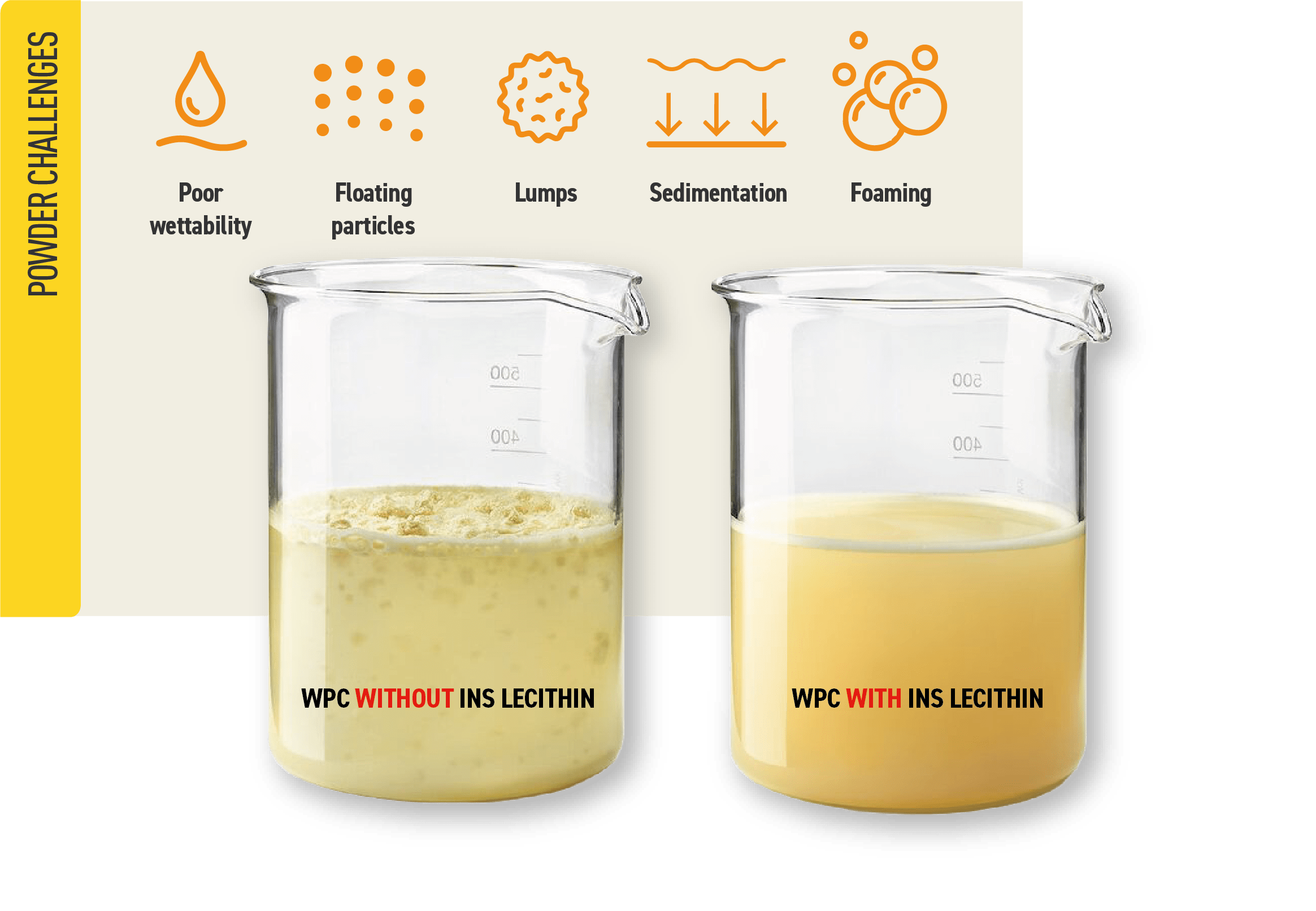
Common challenges include poor wetting, floating particles, lump formation and inconsistent dispersion. These issues can negatively impact product perception and reduce consumer satisfaction, even when the nutritional and sensory profile of the product is excellent.
As formulations become more sophisticated, selecting the right functional ingredients is increasingly important to ensure consistent performance.
Lecithin is one of the key ingredients used to improve the reconstitution behaviour of instant powders.
By modifying the interaction between powder particles and liquids, lecithin helps enhance wettability, improve sinkability and promote a more uniform dispersion. The result is a powder that incorporates more easily into water or milk, providing a smoother and more consistent preparation experience.
However, not all instant powders require the same lecithin solution. The effectiveness of lecithination depends on factors such as formulation composition, fat content, processing conditions and final product requirements.
A high-fat cocoa powder presents different challenges than a protein-rich nutritional beverage. Similarly, dairy-based and plant-based formulations often require different approaches to achieve optimal instant properties.
The selection of the appropriate lecithin can help optimise powder performance while maintaining process efficiency and product consistency. Different lecithin profiles can be tailored to meet the needs of a wide variety of applications, ensuring the desired balance between wettability, dispersion and overall preparation performance.
Ultimately, consumers do not evaluate the technology behind an instant powder. They evaluate how easily it mixes, how it looks in the glass, and how consistently it performs each time they prepare it.
Delivering this experience requires the right combination of formulation expertise and functional ingredients.
Through specialized lecithin solutions and extensive application expertise, Lasenor helps manufacturers transform reconstitution performance into a tangible product advantage, producing instant powders that meet today’s consumers’ expectations and support long-term brand success.
Let’s create the best approach for your instantanization.
Contact us and take your innovation to the next level.

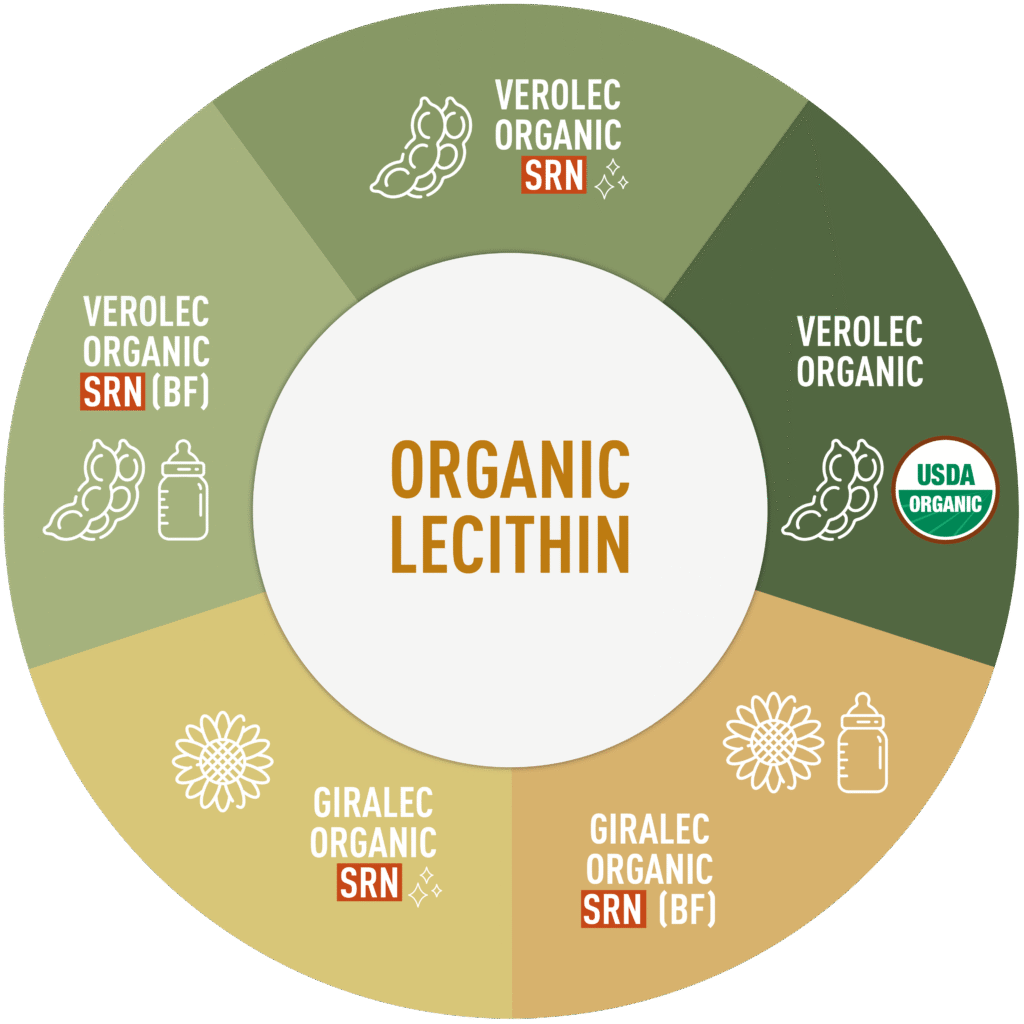
Organic lecithin is a certified soy or sunflower emulsifier produced under EU/US organic standards with full traceability. It supports the shift toward sustainable food systems as promoted by FAO/WHO Codex. Used in bakery, chocolate, cookies, margarines, plant-based drinks, and instant powders, it enhances performance and final product quality. As organic demand grows, EU/US rules require organic lecithin when available. Lasenor meets this need by transferring know-how to crushers, monitoring residues, and providing trusted expertise across the lecithin value chain.
Years of conventional farming have led to soil and water pollution. The heavy use of pesticides and synthetic inputs damages ecosystems and biodiversity, posing risks to human health as well. These consequences highlight the urgent need for a more sustainable agricultural model that can consistently provide enough food over the long term.

Organic farming provides such a model. As defined by the FAO/WHO Codex Alimentarius Commission (1999), it is a holistic production system that enhances the health of agro-ecosystems, biodiversity, biological cycles, and soil biological activity by relying, wherever possible, on agronomic, biological, and mechanical methods rather than synthetic materials.
The growing awareness of health risks and the importance of environmental protection has accelerated the shift toward organic production. Global demand for organic foods continues to rise, and these products are now readily available not only in specialty stores but also in mainstream supermarkets. While the production and sales of organic goods are primarily concentrated in highly developed markets, many less-developed countries are becoming significant producers and exporters of organic products.
Lecithin is a natural mixture of phospholipids (e.g., phosphatidylcholine, phosphatidylethanolamine) widely used in food as an emulsifier, dispersant, and processing aid. In food, it typically comes from soy or sunflower, in fluid or de-oiled forms.
Organic lecithin is produced from certified-organic crops and audited processes (EU/US standards), ensuring full supply-chain traceability.
Organic oil extraction cannot use petrochemical solvents, such as hexane. Instead, oil, and therefore lecithin, is obtained via mechanical methods (e.g., expeller pressing at controlled temperature). Mechanical extraction generally yields less lecithin than conventional solvent processes, which affects availability and price.
Two structural constraints drive cost and scarcity:

Average lecithin yield (per 1 metric ton of oil)
In food, organic lecithin serves as a versatile emulsifier and processing aid across multiple categories.
Not all crushing companies have the technology or the interest to obtain crude organic lecithin suitable for food-grade lecithin specialists. Lasenor provides the technical know-how to crushers to complete the process and get proper crude organic lecithin.
To secure the integrity and quality of certified-organic lecithin, Lasenor operates a residue analysis program that confirms reliability and compliance with organic standards.
Organic development starts here — contact us to know our solutions!

In the rapidly evolving field of food supplements, lecithin has emerged as a key ingredient thanks to its natural origin and wide range of physiological benefits. Far beyond its traditional role as an emulsifier, its richness in phospholipids—such as phosphatidylcholine and phosphatidylserine—positions it as a valuable ally in supporting cognitive, liver, and cellular health. This article explores lecithin’s composition, biological functions, and potential in nutraceutical formulations, highlighting Lasenor’s technological approach to meet modern consumer demands for efficacy and well-being.
Lecithin is a natural, complex mixture of phospholipids (PL), triglycerides, and other compounds such as glycolipids, free fatty acids, and carbohydrates. It is obtained through the water degumming of crude vegetable oils, followed by the separation and drying of the hydrated gums. The phospholipid fraction of lecithin is primarily responsible for its structural and functional roles.
In today’s health-conscious market, lecithin has evolved from a technical emulsifier to a multifunctional ingredient in food supplements, valued for its natural origin and physiological benefits.
Lecithin has long been recognized by the global nutritional community, particularly in the form of dietary supplements derived mainly from soybean lecithin. Due to its composition, including various phospholipids, vitamins, and fatty acids, lecithin participates in various physiological activities, from molecular-level interactions to organ-level functions.
Phospholipids in lecithin, especially phosphatidylcholine (PC), serve several critical physiological roles. Clinical studies have shown that choline deficiency can result in liver damage, even in the presence of adequate folate and vitamin B12. This highlights the essential role of dietary choline derived from PC in maintaining liver function and overall health.

From a bioactive perspective, lecithin contains phosphatidylcholine (PC) and phosphatidylserine (PS), essential for the integrity of neuronal membranes and neurotransmitter function.
Phospholipids, the key components of lecithin, are built on a glycerol backbone. Attached to this backbone are two fatty acid chains, linked through ester bonds, which form the molecule’s hydrophobic “tail” region. The third position of the glycerol is bonded to a phosphorus-containing head group, which is hydrophilic. This unique structure gives the molecule an amphiphilic nature, meaning it has both water-attracting and fat-attracting properties. This essential feature allows phospholipids to form the structural basis of cell membranes and function as natural emulsifiers.

PC is a source of choline, an essential nutrient for acetylcholine synthesis, a neurotransmitter critical for memory and learning processes. Although clinical studies on its efficacy in neurodegenerative diseases have yielded mixed results, there is evidence of benefits for individuals with mild memory complaints or age-related cognitive decline. Moreover, lecithin appears to elevate choline levels in the brain more efficiently and safely than other direct sources, without producing toxic byproducts.
In parallel, PS has shown greater potential in preclinical and clinical studies. In animal models, it has been demonstrated to restore acetylcholine release, improve memory, and support neuronal function. Studies in humans, including recent open-label studies, have shown mild but consistent cognitive improvements in older adults.
Lasenor, with recognized experience in developing and applying lecithin and emulsifiers, offers a specialized range for the nutraceutical sector. Its portfolio adapts to the various dosage forms and technical needs of supplement manufacturers:
Lasenor’s lecithin combines technological backing, source security, and nutritional functionality, making it an ideal solution for brands seeking innovative, effective, and well-tolerated supplements. As an excipient or an active ingredient, lecithin adds value to formulations focused on mental wellness and overall health.
With a strong commitment to quality, innovation, and traceability, Lasenor positions itself as a strategic partner in developing lecithin-based nutraceutical products that meet the demands of the modern consumer.
We invite you to contact our team to explore how we can support your product development with tailored lecithin solutions.

Instant powders products continue to gain popularity due to their convenience, variety, and high-quality results after reconstitution. The global superfood powders market was valued at $6.57 billion in 2022 and is projected to grow at a 7.3% CAGR through 2030, while the global milk powder market is expected to reach $65.3 billion by 2030, growing at a 7.33% CAGR. This surge reflects the increasing demand for instant foods like milk, coffee, cocoa drinks, soups, desserts, and health supplements, which align with the fast-paced lifestyles of modern consumers.
Lecithin for instant products is a key technological ingredient used in the production of instant products, ensuring optimal reconstitution in liquids such as water or milk. When powders like cocoa or nutritional beverages are poured into a liquid, they must be efficiently wetted and submerged—a property known as wettability. Lecithin plays a crucial role in improving this process by enhancing the powder’s ability to sink (sinkability) and ensuring uniform dispersion of particles, which contributes to better solubility and dispersibility.
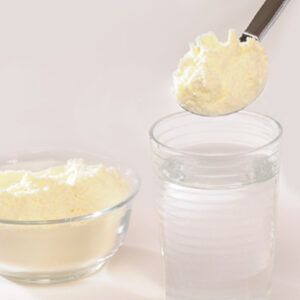
Beyond the initial mixing, lecithin also stabilizes the solution, maintaining a homogeneous texture even when stirred with a spoon. To achieve the best instant properties, lecithin should be carefully selected, as its effectiveness depends on multiple factors, including the production process of the instant powders and their specific application. The right combination of lecithin ensures that wet particles fully submerge and integrate smoothly, delivering the desired texture and consistency in instant food and beverage products.
The production of instant powders involves three key processes: simple mixing, spraying, and spray-drying, each offering different benefits depending on the final application. In the simple mix process, all powdered ingredients are blended using equipment like ribbon blenders or cone blenders. Lecithin is added either in powder form or as a liquid diluted in oil, coating the particles with a thin layer of phospholipids to enhance their instant properties.


CONE BLENDERS
RIBBON BLENDERS
The spraying process takes lecithin application a step further. After pre-blending the main components, lecithin is pumped through specialized nozzles—such as multiheaded, high-pressure, or three-head atomizing nozzles—ensuring an even distribution over the powder. This method improves wettability and sinkability by creating a more uniform lecithin coating.
The most advanced method, spray-drying, involves dissolving the ingredients into a solution, atomizing them through nozzles, and subjecting the particles to a fluid bed step for agglomeration. Here, in the first step of the fluid bed, is where our lecithins for instant products are added. This high-energy process leads to particle collision, adhesion, fusion, and evaporation, resulting in coarser granules with irregular shapes, higher density, and improved dispersibility.

SPRAY-DRYING PROCESS
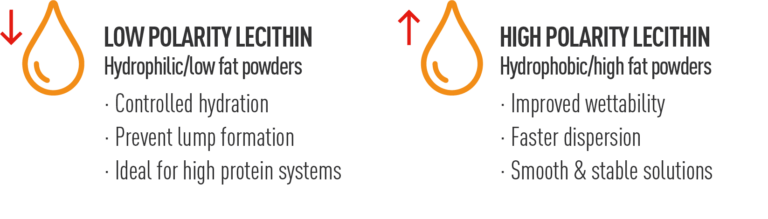
The effectiveness of lecithination depends on the type of product being instantized, as different formulations require specific lecithin polarities. For products with high-fat content, such as whole milk powders, buttermilk powders, and cocoa powders, Lasenor INS SP range. This ensures better interaction with the fat components, enhancing wettability, sinkability, and dispersion in liquids.
Conversely, products with lower fat content, such as skimmed milk powders, whey protein concentrates, caseinates, and cocoa-containing drink powders, benefit from Lasenor INS range. This adjustment allows for improved solubility while maintaining the product’s desired texture. Regardless of the lecithin’s source or polarity, the viscosity of the final product can be fine-tuned to meet the processing equipment’s requirements, ensuring optimal performance across various applications.

The instantization process plays a crucial role in enhancing the solubility, dispersibility, and stability of powdered products, with lecithin being a key component in achieving these properties. Whether through simple mixing, spraying, or spray-drying, the selection of the right lecithin type—based on polarity and product formulation—ensures optimal performance across various applications, from high-fat cocoa powders to low-fat protein concentrates.
Lasenor offers the most advanced lecithin solutions, designed to meet the specific needs of each instantized product. With a deep understanding of formulation requirements and processing techniques, Lasenor provides high-quality lecithin that guarantee superior functionality, ensuring perfect reconstitution, improved stability, and enhanced consumer experience in a wide range of instant food and beverage products.
If you have any questions, feel free to contact us. We offer the best options to develop the ideal solution for your application.
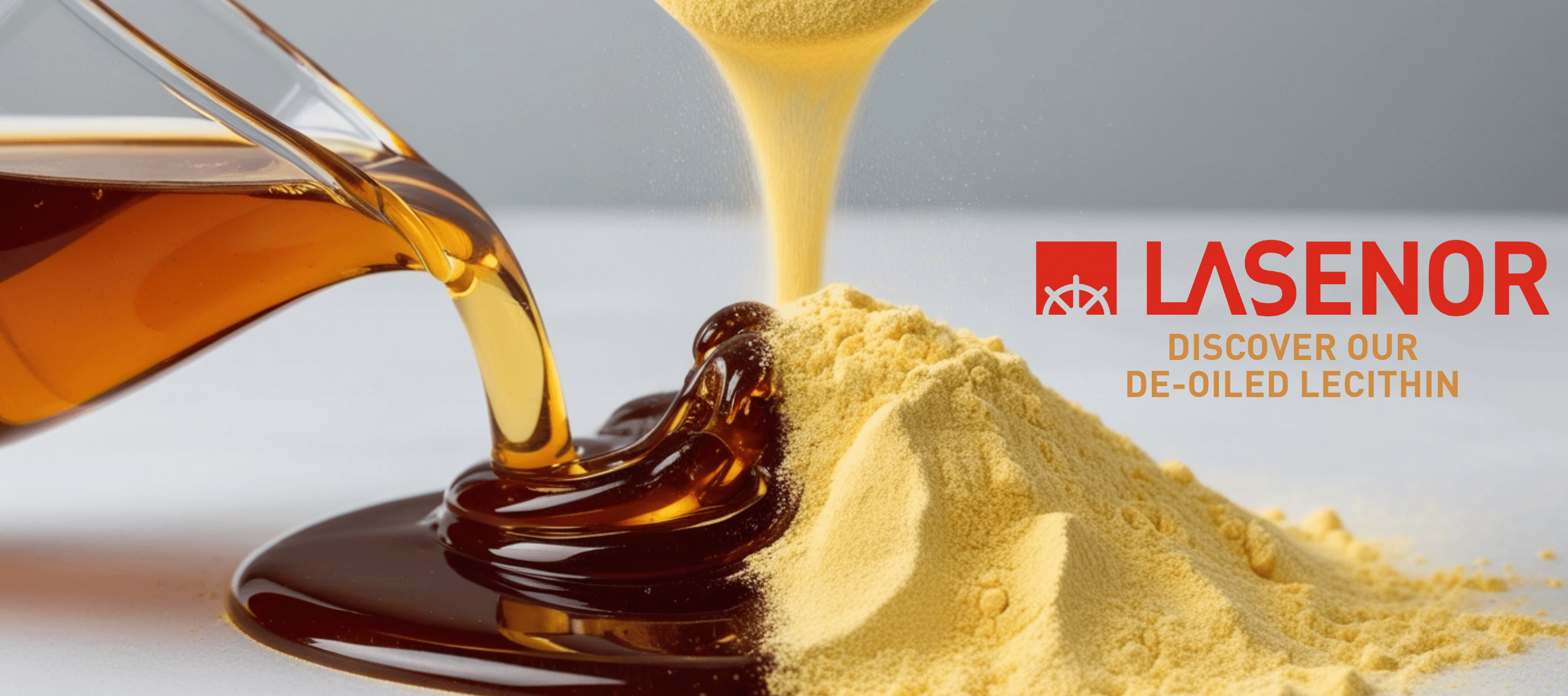
Explore how Lasenor, a leader in lecithin processing, provides high-quality de-oiled lecithin for various applications. Discover how our advanced technology and sustainable practices can optimize your products and processes.
In the dynamic world of the food industry, Lasenor stands out as a specialist in lecithin processing. Our company offers a wide range of specialty lecithin, providing innovative solutions that meet the latest market demands and the needs of our domestic and international clients.
Since our inception, we have focused on the responsible sourcing of raw materials. Over the years, we have established our supply network and built factories in key lecithin-producing regions. This strategy allows us to exert greater control over the process and ensure sustainable practices throughout the supply chain.
Lecithin is a natural compound found in various plant and animal sources, such as soybeans, eggs, sunflowers, and rapeseed. It is essential in the food industry because it can emulsify and blend ingredients that would normally not combine. This makes it a valuable resource in producing various products, including chocolates and baked goods.

In addition to its emulsifying properties, lecithin offers nutritional and functional benefits. It helps improve the texture, freshness, and stability of foods. In the pharmaceutical industry, lecithin is a stabilizing and emulsifying agent in drug formulations. Likewise, in animal nutrition, it helps improve digestibility and nutrient absorption.
Lecithin production involves several physical, enzymatic, and chemical processes that ensure its quality and functionality. One key process is standardization, which ensures that all parameters (physicochemical, organoleptic, microbiological, and sanitary) meet specifications during production. This rigorous control ensures that the lecithin is safe for use and consumption in various applications.
De-oiling is a process used to obtain pure lecithin powder. First, crude lecithin is mixed with acetone, which dissolves oils and triglycerides but not the desired phospholipids. The mixture is then cooled to precipitate the phospholipids. They are separated by filtration, and the phospholipids are washed with cold acetone to remove any remaining oil. Finally, the de-oiled lecithin is dried to remove the acetone, which is recovered and reused.

Lasenor – Lecithin Pilot Plant
De-oiled lecithin has a higher concentration of phospholipids compared to fluid lecithin. It has low residual oil content and a superior odor and flavor profile. The advantages of de-oiled lecithin include removing oil in the final formula, which is critical for many applications, and its powdered form, which facilitates handling and addition in various production processes.
Due to these advantages, de-oiled lecithin is widely used today in the food industry in numerous applications, such as baking, cookies, cocoa powder, non-dairy powdered mixes, cereal bars, plant-based beverages, whipped cream, and meat preparations. Along with its well-known emulsifying properties, the high purity of the product allows its application in pharmaceuticals and dietary supplements. The nutritional value of lecithin, containing active substances (choline, polyunsaturated fatty acids, inositol, etc.), makes it a significant supplement in normal diets and is highly valued in specific treatments (cholesterol, etc.).

De-oiled process and Lasenor products
At Lasenor, we offer a variety of de-oiled lecithin to meet diverse needs:
– VEROLEC® P: De-oiled soybean lecithin.
– GIRALEC® P: De-oiled sunflower lecithin.
– GIRALEC® HE-60 P: Hydrolyzed and de-oiled sunflower lecithin.
These de-oiled lecithin are designed to deliver optimal performance in their respective applications.
Discover how Lasenor’s de-oiled lecithin can enhance the quality and efficiency of your products!
Contact us today for more information and personalized solutions.

Instant products are becoming increasingly popular among consumers due to their extensive range and optimal results obtained after reconstitution. Milk, coffee, cocoa drinks, desserts, soups, and health supplements are examples of foodstuffs available in the supermarket that suit our modern way of life. In addition, various functional ingredients in the food industry undergo the instantizing process to achieve a technological effect, such as proteins, whey powder, cocoa powder, caseinates, and many others.
Instant products are manufactured using technological components such as Lasenor’s specialty lecithin that play a crucial role in providing instant properties:


The selection of the most appropriate lecithin for the instantazing is not apparent at first sight. Optimal performance can only be achieved through combining several factors, the most important being the production process of the instant powders and the correspondent application.
It is essential to know if the lecithination process will occur in a dry mix (simple mechanical mix) or if the lecithin is sprayed together with the product to be powdered in a spray-drier or sprayed in a fluid bed after spray drying.
In a dry mix case, all the powder-form ingredients are mixed in a blender (ribbon blender, V-blender, cone blender…), and lecithin is added in powder form or liquid form diluted in oil. The mix is homogenized, and the particles are covered with a thin layer of phospholipids.
For the spray-drying process, a solution is prepared with all the required components (such as proteins, caseinates, and glucose…) and is atomized through nozzles in a tower. In the fluid bed, fine particles can be recovered in cyclones and returned to the drying chambers to carry out agglomeration. This process fuses the particles into agglomerates with capillary channels, allowing the liquid to flow inside, producing a wetting action. It is in this second drier where lecithin is usually sprayed, either in an aqueous solution or in oil-diluted form.
It is also essential to know the type of product to be instantized to maximize the effect of the lecithination. Its hydrophilic nature determines the degree of polarity of the lecithin to be used.
High polarity lecithin is recommended for products with high-fat content:
Lower polarity lecithin is recommended for products with lower fat content:

No matter the source or the polarity, the product’s viscosity can be adjusted to satisfy the equipment’s restrictions.
Infant formula
Lecithin is used in baby food mainly for the production of infant formula. These are usually prepared for bottle-feeding in a powdered form that is mixed with water or another liquid and is generally considered a substitute for breast milk (Mian K. Sharif, … Faiz-ul-Hassan Shah, in Food Processing for Increased Quality and Consumption, 2018).
The microbiological and contaminant parameters are the main difficulties associated with producing baby food lecithin. In our factories in Barcelona (Spain) and Nagpur (India), the presence of a wholly equipped “clan room” allows us to ensure that, once the lecithin has been prepared via a unique thermal treatment process, no subsequent microbiological contamination of the product will be possible.

Clean room – LASENOR Olesa de Montserrat
Lasenor is a specialist in developing tailor-made lecithin according to consumers’ needs regarding the vegetable source (soy or sunflower), degree of polarity, and viscosity.
If you’d like to learn more about how Lasenor can help you and select the suitable emulsifiers for your application, please contact us.
Discover more about Lasenor Lecithin for instant powders

Reducing fat and sugar content are some of the current trends of the food industry to combat obesity and make its products more attractive to health-conscious consumers.
One of the products that meets the demands of this type of consumer and their needs are reduced fat cookies.
It is widely known that fat is one of the main ingredients of cookies, along with sugar and flour. This determines its qualities in terms of hardness or softness, texture, flavor, shape, appearance, etc.
In cookie dough, emulsifiers are used with the aim of achieving a homogeneous mixture of the water-soluble and fat-soluble ingredients of the recipe, improving their dispersion and, as a result, improving the viscosity of the dough. As such, the choice of emulsifier is essential to obtain the intended product. Depending on the recipe and the proposed properties of the dough, it can act as an aerating agent that traps air or forms complexes with other dough components such as starch or protein. Emulsifiers can also modify the crystallization of fats or improve the flow properties of the dough.
Throughout the cookie production process, lecithin has been widely used as a natural emulsifier. Its use makes it easier to obtain a softer dough and reduces the fat content of the cookie without compromising the quality of the product.
Lecithin, in its most common form, is a highly viscous liquid that must be added to the fat phase of the cookie, as it is not fully water-soluble and cannot be mixed with flour or sugar.
To improve handling and facilitate direct addition to the dough, Lasenor has developed the LECISOL range. It is a powdered product containing 50% hydrolyzed sunflower lecithin pulverized over wheat or rice flour and an anti-caking agent. Hydrolyzed lecithin is used because it has a higher polarity than standard lecithin, which allows a seamless integration of all the cookie ingredients.
Therefore, given the hydrolyzed nature of LECISOL and its powder form, it is designed to be suitable for cookie manufacturers due to the following properties:
The latest technical studies carried out by Lasenor’s R&D department show that LECISOL can also help producers to reduce the fat content of cookies without compromising the hardness of the product.
This is demonstrated by the technical tests carried out on Marie cookies and Shortbread (made with butter and with palm oil), based on different percentages of fat content reduction.
Marie biscuits
These are cookies with a relatively low sugar content (20% of flour weight) and fat content (16-20% of flour weight). Sodium metabisulfite and other salts can be used to prepare the dough for its production.

The reduction of fat increases the hardness of the cookies. However, as can be seen in the graph:
Shortbread
Shortbread is a brittle cookies due to its high amount of fat, which contains a high level of saturated fatty acids (SFA). Their recipes can vary greatly depending on the fat content (ranging from 20 to 60% of the flour weight) and the sucrose percentage (ranging from 25 to 55% of the flour weight).
The main source of fat is usually butter, but to reduce costs, other oils can sometimes be used as well.
Since the dose of LECISOL can vary depending on the fat source used, two recipes were tested in the Lasenor trials: a first recipe with butter and a second with palm oil.
In both cases, a 10% and a 20% fat reduction were tested, because a higher fat
reduction (above 20%) was not taken into consideration due to the dough increasing in grittiness and losing plasticity.
The following graphs will be placed side by side with the explanations so that it is clear that one graph is with butter and the other with palm oil.

As shown in graph 2:

By adding 1% LECISOL, the hardness of the cookie with a fat reduction of 10% is at the same level as the control. A fat reduction up to 20% when increasing the LECISOL dosage up to 2%.
The sensory analysis concluded with 95% certainty that when LECISOL is added to the fat-reduced Shortbread, no organoleptic changes are perceived.
All the results obtained in these trials demonstrate that the use of LECISOL hydrolyzed lecithin powder allows for reduction in fat content without any modification of the process and at the same time allows for other ingredients to be added.
This is an important innovation for food industry manufacturers and customers who are aware of the need to consume more natural and healthier products.
Check out our lecithins emulsifiers for cookies.

Organic agriculture is the leading alternative to more conventional agriculture, which has caused soil and water pollution for decades and, in some cases, has also had an impact on human health.
The market and demand for organic food is growing steadily around the world, with consumers demanding more sustainable and healthier products than ever before. As a result, organic products are becoming increasingly popular and can now be found, not only in specialty stores, but also in almost all supermarkets.
Although the production and sale of organic food is most popular in more developed countries, less developed countries have become important producers and exporters of organic products. Research shows that organic products generate economic growth and reduce poverty levels, as well as being seen as a key tool for stimulating rural economic development.
To support this growing demand for organic products, the industry is coming together to build a secure supply chain, assisting in the development of programs to help farmers make the transition to organic.

To ensure that “organic” means the same thing in all countries, a growing number of governments began supporting organic agriculture beyond regulation, increasing the number of government policies and programs in favor of developing organic agriculture. National standards for organic products were desired by both producers and consumers to clear up confusion in the marketplace and protect against mislabeling or fraud. In this regard, the European Union and the United States are the two leading examples worldwide.
European Union
The current European requirements for organic production are established by Regulation (EC) No 834/2007, which defines the objectives and principles of organic agriculture and production, as well as by two implementing regulations (EC), 889/2008 and 1235/2008, detailing organic production, labeling, control rules and import. All products labeled organic and sold in the EU must be produced in accordance with these regulations. Although this was not initially the case as a result of their limited availability, from January 1st 2019, lecithin used in organic food products must be sourced from organic farming.
United States
In this country, certified organic foods are produced in accordance with federal standards established by the Department of Agriculture (USDA) and the National Organic Program (NOP). Thanks to a series of implemented equivalency agreements, organic products certified by the USDA or European Union (EU) can be sold, labeled and represented as organic in their respective territories, accompanied by an organic import certificate from their authorized regulatory bodies.

The market segment for organic products is growing rapidly and, as a result, the demand for organic lecithin is also increasing.
Whereas in traditional production, lecithin is extracted from soybean, sunflower or rapeseed oil using hexane, in organic lecithin production, no solvent is permitted when extracting the oil from the original seeds.
This condition means that conventional crushing methods using hexane as solvent have to be replaced by fully mechanical processes, the most typical of which are temperature-controlled expellers.
Currently, organic lecithin production faces two main problems:

Lasenor’s organic lecithins
Our company specializes in the development of lecithin tailored to the needs of its customers, offering them different botanical origins as organic food manufacturers.
Lasenor’s solutions meet all the standards of the applicable regulations and allow customers present in the organic market to use high quality lecithins in the production of their products, according to the following characteristics:
Finally, some of the competitive advantages that Lasenor’s organic lecithins offer to its customers are the following:
Basic Information About Our Cookies
| Cookie | Duration | Description |
|---|---|---|
| CONSENT | 16 years 5 months 15 days 13 hours | These cookies are set through embedded youtube videos. They record anonymous statistical data about, for example, how many times the video is shown and what settings are used for playback. No sensitive data is collected unless you are logged into your Google account, in which case your options are linked to your account, for example. if you click "Like" on a video. |
| Cookie | Duration | Description |
|---|---|---|
| IDE | 1 year 24 days | Used by Google DoubleClick and stores information on how the user uses the website and any other advertisements before visiting the website. It is used to present users with advertisements that are relevant to them according to the user's profile. |
| test_cookie | 15 minutes | This cookie is set by doubleclick.net. The purpose of the cookie is to determine if the user's browser supports cookies. |
| VISITOR_INFO1_LIVE | 5 months 27 days | Youtube sets this cookie. It is used to track the information of YouTube videos embedded in a website. |
| YSC | session | These cookies are set by YouTube and are used to track embedded video views. |
| Cookie | Duration | Description |
|---|---|---|
| yt-remote-connected-devices | never | No description available. |
| yt-remote-device-id | never | No description available. |